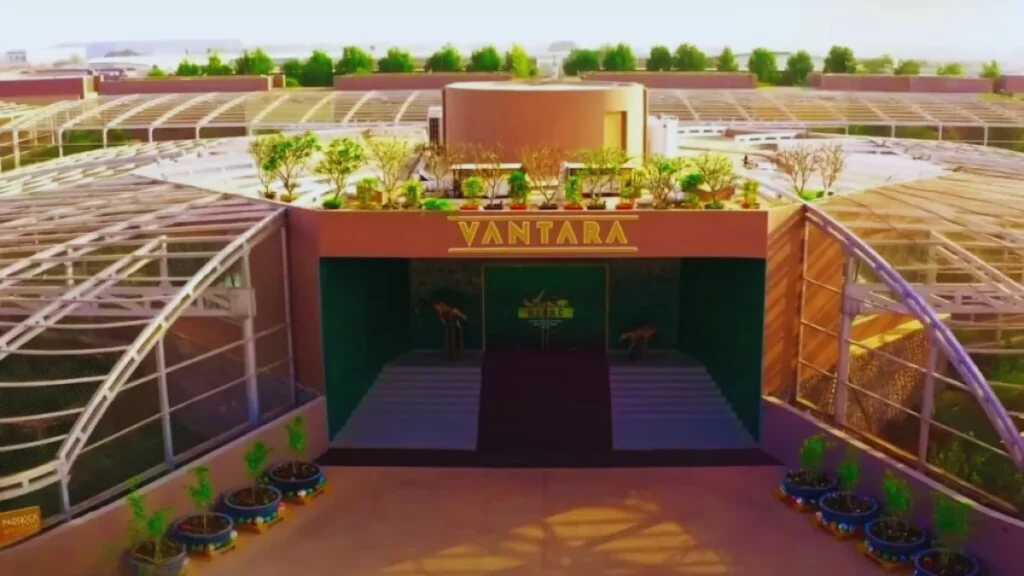
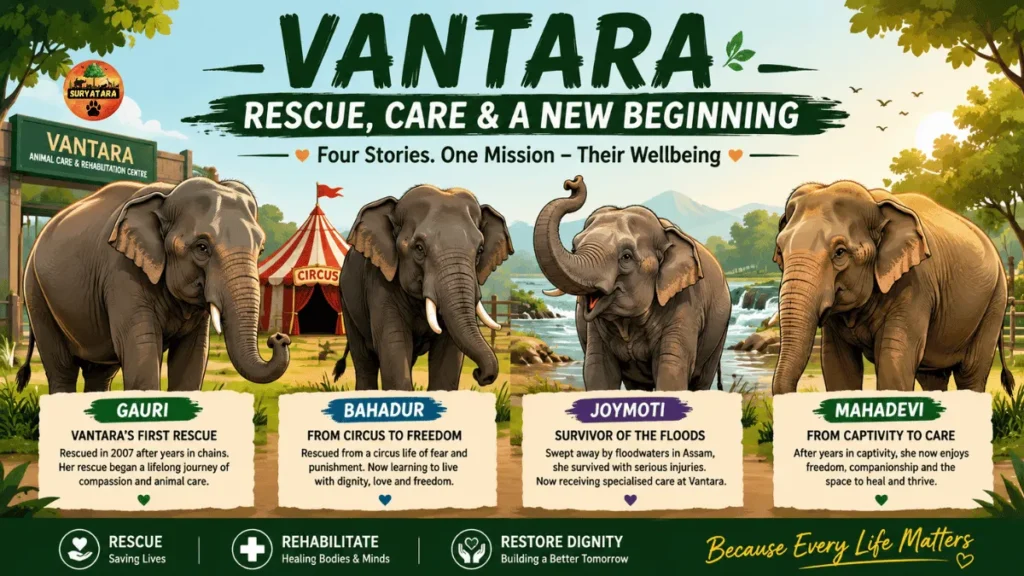
Vantara: Elephants are among the most intelligent and social animals on Earth, but many have spent years facing captivity, exploitation, physical punishment and dangerous living conditions. For some, the road to safety begins after years of suffering, while others are rescued during emergencies such as floods and natural disasters. At Vantara, these different journeys come together through a focus on rescue, veterinary treatment, rehabilitation and long-term care.
The stories of Gauri, Bahadur, Joymoti and Mahadevi reflect four very different circumstances. One was rescued after years in chains, another spent years performing in a circus, one survived a devastating flood before being brought in for specialised treatment, and another is now rebuilding her life after prolonged captivity.
Gauri: The Rescue That Began a Journey
Gauri holds a special place in the story of Vantara. She was rescued in 2007, when Anant Ambani was still a teenager. Her rescue followed years spent in chains and became an important turning point in his personal connection with animal welfare.
Vantara describes Gauri as its “First Rescue.” Her story represents the beginning of an animal-care journey that eventually developed into the broader vision behind Vantara.
After being removed from the conditions she had experienced for years, Gauri became part of a larger effort centred on providing animals with safety, care and an opportunity to recover. Her journey is closely associated with the early foundation of Vantara’s approach to elephant rescue and rehabilitation.
Bahadur: Life After Circus Captivity
Bahadur’s story comes from a very different background. He spent years in a circus environment, where he was forced to perform tricks that were not natural to elephants. His training was reportedly accompanied by threats and physical punishment, leaving him with a life shaped by fear rather than freedom.
Following his rescue, rehabilitation became an important part of Bahadur’s new life.
At Vantara, the focus is on providing him with an environment where he can move around, explore his surroundings and interact without the pressure and punishment associated with his earlier experiences. The change is significant because rehabilitation is not simply about removing an animal from a difficult situation. It also involves creating conditions in which the animal can gradually regain confidence and experience a more natural way of living.
Bahadur’s journey therefore represents the transition from a life of forced performances to one centred on care and rehabilitation.
Joymoti: Surviving the Assam Floods
Joymoti’s rescue is one of the most extraordinary recent elephant rescue stories connected with Vantara.
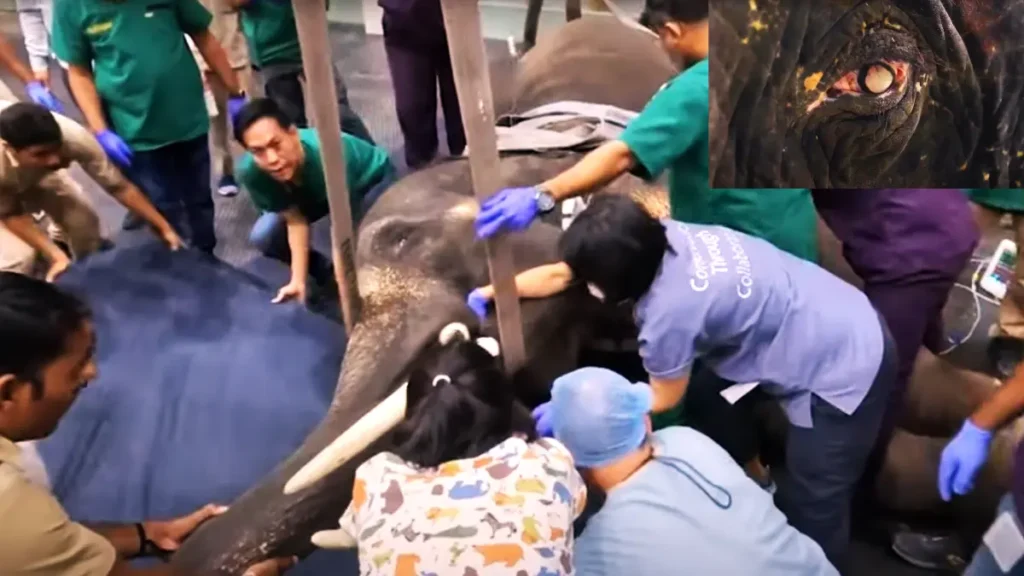
The 53-year-old female elephant was swept approximately 55 kilometres by floodwaters from Nagaland into Assam in July 2026. Despite surviving the powerful floodwaters, she suffered serious injuries during the ordeal. Among her injuries was damage that left her blind in one eye.
Following her rescue, arrangements were made to airlift Joymoti to Vantara in Jamnagar so that she could receive specialised veterinary treatment. She arrived at Vantara in August and began receiving medical care for the injuries sustained during the flood.
Her case highlights the importance of specialised treatment for animals that survive extreme natural disasters. After such an ordeal, recovery can require close veterinary attention, supportive care and a safe environment where the animal can regain strength.
For Joymoti, the journey from the floodwaters of Assam to specialised care in Jamnagar marked a new chapter after a life-threatening experience.
Also read: Vantara Animal Exchange: Thiruvananthapuram Zoo to Receive Zebra Pair Ahead of Onam
Mahadevi: From Captivity to Care and Rehabilitation
Mahadevi’s journey is another example of an elephant moving from years of captivity into an environment focused on care and rehabilitation.
After spending years in captivity, Mahadevi is now at Vantara’s Radhe Krishna Temple Elephant Welfare Trust, where she is receiving care in surroundings designed to give her greater freedom of movement and opportunities to interact.
Her rehabilitation is focused on allowing her to rediscover behaviours that were restricted during her years in captivity. She has the space to walk without chains, explore her surroundings and develop social bonds. These basic freedoms can play an important role in an elephant’s wellbeing, particularly after a prolonged period in confined conditions.
Mahadevi’s story is ultimately about creating the conditions for recovery. Rather than being defined only by her past, her life at Vantara is centred on her present care and the opportunity to experience a more secure environment.
Four Elephants, Four Different Journeys
The stories of Gauri, Bahadur, Joymoti and Mahadevi show that there is no single path to elephant rescue and rehabilitation. Gauri’s rescue helped shape the beginnings of Vantara’s animal-care journey. Bahadur is rebuilding his life after circus captivity. Joymoti is recovering from injuries sustained during a devastating flood, while Mahadevi is adapting to life after years of captivity.
Despite their different backgrounds, each story has the same central theme: the move from difficult circumstances towards safety, specialised care and rehabilitation.
For these gentle giants, rescue is only the beginning. Their journeys continue through veterinary treatment, rehabilitation, social interaction and the chance to live in surroundings where their wellbeing remains at the centre of their care. Vantara’s elephant stories therefore offer a glimpse into the different challenges involved in helping rescued animals recover and begin a new chapter in their lives.