Annual Closure Aimed at Protecting Wildlife and Ensuring Visitor Safety
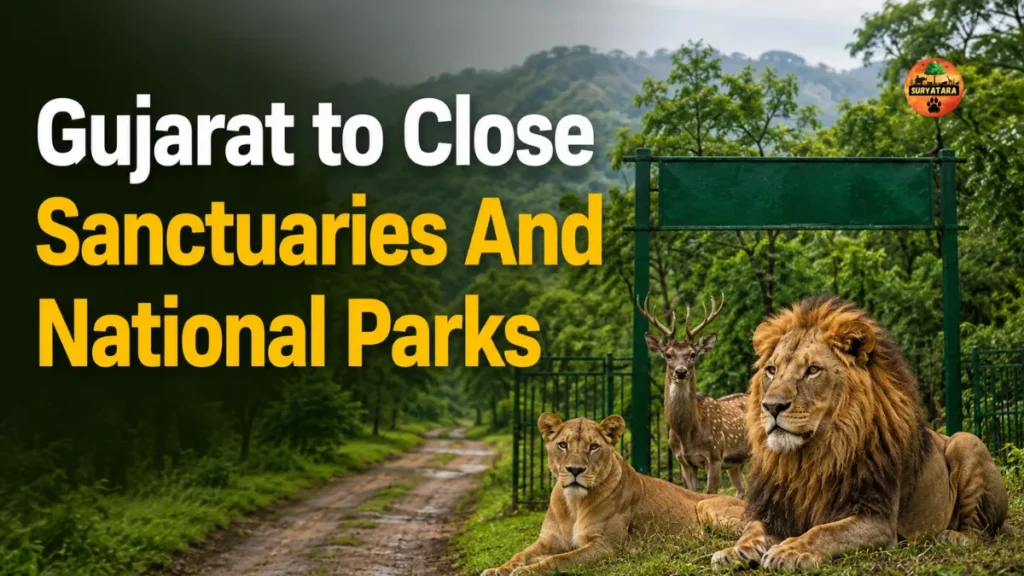
Sanctuaries And National Parks: As Gujarat prepares for the arrival of the monsoon season, the state’s Forest Department has announced the temporary closure of all wildlife sanctuaries and national parks to tourists beginning June 23, 2026. The decision, which follows a long-standing annual practice, is intended to safeguard both visitors and wildlife during a period marked by heavy rainfall and increased ecological activity.
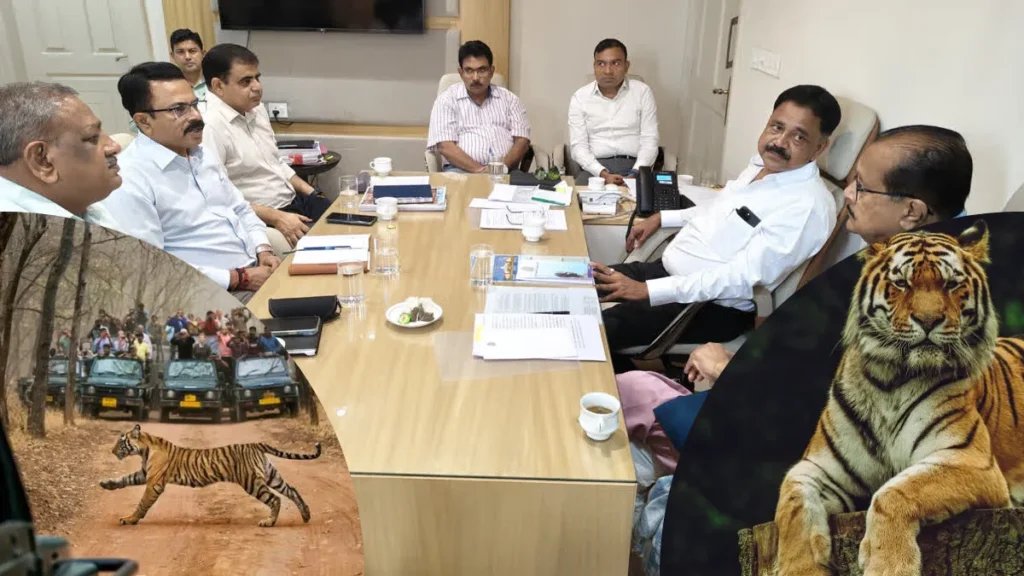
The directive was issued by Chief Wildlife Warden Dr. Jaipal Singh, who instructed officials across the state’s protected areas to implement the closure and make the necessary arrangements. The order applies to all tourism-related activities within Gujarat’s protected forest regions until further notice.
Monsoon Conditions Prompt Seasonal Restrictions
Forest officials said the closure is primarily driven by safety concerns associated with the monsoon. During this period, many forested areas experience intense rainfall, resulting in waterlogging, overflowing streams, slippery routes, and the risk of sudden flooding. Such conditions can make wildlife tourism and safari operations unsafe for visitors.
As a result, access to protected areas is routinely restricted during the rainy season. The temporary suspension of tourism allows authorities to minimize risks while preserving the natural environment during one of the most sensitive times of the year.
Visitors planning trips to wildlife destinations across Gujarat, including the well-known Velavadar Blackbuck Sanctuary in Bhavnagar district, will not be able to participate in jungle safaris once the closure comes into effect.
Important Season for Wildlife Conservation
Beyond visitor safety, the annual shutdown of Sanctuaries And National Parks plays a crucial role in wildlife conservation. The monsoon months coincide with the breeding and nesting season for many animal and bird species. During this time, wildlife requires a disturbance-free environment for reproduction, nesting, and raising young offspring.
Conservation experts note that reducing human activity in protected habitats helps minimize stress on animals and improves breeding success. Limiting tourist access also allows ecosystems to recover naturally during a period of rapid vegetation growth and increased biological activity.
By temporarily closing these protected areas, forest authorities aim to create favorable conditions for wildlife while maintaining the long-term health of Gujarat’s biodiversity.
Action Taken Under Wildlife Protection Laws
The Forest Department stated that the closure has been implemented under Sections 28 and 33 of the Wildlife (Protection) Act, 1972. These provisions empower authorities to regulate access and activities within protected areas when required for conservation and management purposes.
Officials responsible for managing wildlife reserves, sanctuaries, and national parks have been directed to strictly enforce the order and ensure compliance across all locations covered by the directive.
Until a new notification is issued, tourism activities, including safari operations and visitor entry, will remain suspended in the affected areas.
Also read: Project Cheetah: India’s Cheetah Population Crosses 50 After New Cubs Born at Kuno National Park
Closure to Affect 4 National Parks and 23 Wildlife Sanctuaries
The seasonal restriction will be enforced across Gujarat’s network of protected areas, including four national parks and 23 wildlife sanctuaries. Traditionally, many of these destinations close to tourists between June and September each year as part of monsoon management and conservation efforts.
In previous years, closures often began around mid-June. However, with the monsoon arriving later than usual in some parts of the state, authorities have scheduled the 2026 closure to take effect from June 23.
The move reflects the state government’s continued focus on balancing tourism with environmental protection. Gujarat is home to several ecologically significant habitats that support diverse wildlife populations, making seasonal management measures an important component of conservation planning.
Also read: Choosing the Right Wildlife Photography Camera: A Complete Field Guide for Serious Nature Shooters
Visitors Advised to Check Updates Before Planning Trips
Tourists and wildlife enthusiasts are encouraged to monitor official announcements from the Gujarat Forest Department before planning visits to protected areas. The reopening of Sanctuaries And National Parks will depend on weather conditions, habitat assessments, and administrative decisions following the monsoon season.
For now, the annual closure marks the beginning of a critical period for wildlife conservation, allowing Gujarat’s forests and their inhabitants to thrive with minimal human disturbance during the months ahead.