Endangered Species Conservation : In a major boost to wildlife protection efforts, the Tamil Nadu government has announced a complete restructuring of its ₹50-crore Tamil Nadu Endangered Species Conservation Fund (TNESCF). The initiative marks a strategic shift aimed at bringing scientific rigor, better accountability, and focused conservation action across the state’s fragile ecosystems.
A New Institutional Framework for Endangered Species Conservation
According to an official order issued by Supriya Sahu, the Additional Chief Secretary of the Department of Environment, Climate Change, and Forests, the administration of the fund has been transferred from the State Forest Development Agency (SFDA) to the Advanced Institute for Wildlife Conservation (AIWC) in Vandalur.
This restructuring is designed to provide more scientific and institutional strength to Tamil Nadu’s ambitious Endangered species conservation efforts.
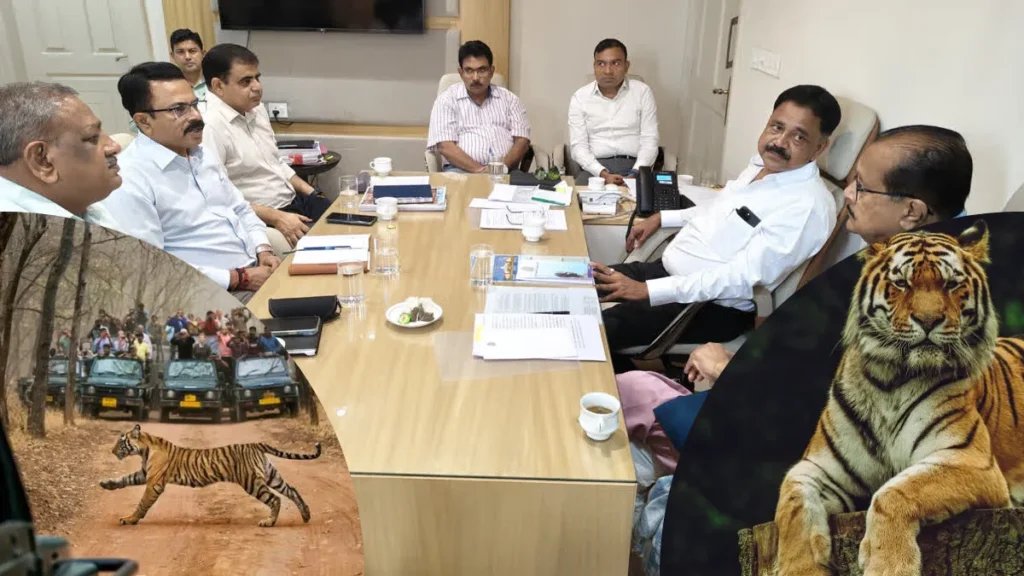
Under the new structure, two key committees — a Governing Committee and an Executive Committee — have been formed to oversee and manage the program effectively.
High-Level Oversight: The Governing Committee
The Governing Committee, chaired by the Chief Secretary of Tamil Nadu, will meet once every four months to provide strategic guidance to the fund. It includes senior officials from major departments such as Finance, Industry, and Environment, as well as several notable conservationists and philanthropists.
Among the prominent members are Rohini Nilekani, Mallika Srinivasan, J.K. Patterson Edward, S. Balachandran, and K. Jayakumar — all recognized for their long-standing commitment to environmental sustainability and biodiversity protection.
The Principal Chief Conservator of Forests and Chief Wildlife Warden will serve as the Member-Convener, ensuring smooth coordination between field officers and the committees.
Operational Command: The Executive Committee
An Executive Committee, led by the Additional Chief Secretary for Environment, Climate Change, and Forests, will handle daily operations, approve project proposals, and monitor on-ground implementation.
This committee includes representatives from the AIWC, Tamil Nadu Pollution Control Board, and senior officials from the Forest Department.
The structure is intended to make project execution faster and more transparent, ensuring that conservation resources reach the species and habitats most in need.
Financial Backbone: From ₹5 Crore to ₹50 Crore
The TNESCF was first launched in 2023 with an initial seed amount of ₹5 crore.
Following its initial success and growing demand for broader coverage, the Tamil Nadu government expanded the corpus tenfold — to a substantial ₹50 crore fund — signaling a strong political and financial commitment to biodiversity preservation.
This fund will support projects that focus on:
- Species recovery and reintroduction programs
- Habitat restoration in degraded forest areas
- Community-based conservation initiatives
- Scientific research and monitoring of threatened species
- Mitigation of human-wildlife conflict
The government also plans to attract additional public and private funding, encouraging corporate social responsibility (CSR) investments into Endangered species conservation programs.
Focus on Lesser-Known Endangered Species
The first phase of the TNESCF will concentrate on four lesser-known endangered species unique to Tamil Nadu’s ecosystems.
Each of these species faces distinct ecological challenges — from habitat fragmentation and poaching to invasive species and pollution.
While the government has not yet disclosed all four species publicly, conservation experts suggest that the focus could include lesser-known amphibians, freshwater fishes, small mammals, or rare flora endemic to the Western and Eastern Ghats.
These landscapes are globally recognized as biodiversity hotspots, home to a rich mix of endemic and endangered species that play crucial roles in maintaining ecosystem balance.
Scientific and Community-Driven Approach
Officials emphasize that this initiative goes beyond funding — it is about transforming conservation management through science, data, and community participation.
Under the AIWC’s leadership, conservation projects will include:
- DNA-based monitoring of endangered species populations.
- Geospatial mapping of critical habitats.
- Restoration of degraded ecosystems through native vegetation.
- Public awareness campaigns in nearby communities to reduce human-animal conflict.
- Citizen science programs that engage students and volunteers in biodiversity monitoring.
Dr. R. Suresh Kumar, a wildlife biologist associated with the AIWC, stated,
“This model will combine field research, technology, and public participation. Endangered species conservation requires data-driven strategies, and Tamil Nadu is setting an example for other Indian states to follow.”
Global Context: Aligning with International Biodiversity Goals
Tamil Nadu’s initiative comes at a crucial time when the world is racing to meet the targets of the Kunming-Montreal Global Biodiversity Framework (2022) — a United Nations agreement that calls for protecting at least 30% of the planet’s land and oceans by 2030.
Experts note that India, being one of the 17 megadiverse countries, plays a vital role in achieving these global biodiversity goals.
Programs like the TNESCF directly support India’s National Biodiversity Action Plan and the Convention on Biological Diversity (CBD) commitments.
“Endangered species conservation isn’t just about saving animals; it’s about preserving the ecological integrity that sustains human life,” said Mallika Srinivasan, industrialist and environmental philanthropist.
Threats to Tamil Nadu’s Biodiversity
Despite its ecological wealth, Tamil Nadu faces severe biodiversity challenges, including:
- Urban expansion and loss of natural habitats.
- Industrial pollution affecting rivers and wetlands.
- Illegal wildlife trade targeting rare species.
- Climate change impacts such as erratic monsoons and rising sea levels.
- Invasive species threatening native flora and fauna.
According to the State Forest Department, over 80 species in Tamil Nadu are listed as endangered or critically endangered under the IUCN Red List — ranging from the Grizzled Giant Squirrel and Lion-tailed Macaque to rare orchids and medicinal plants.
Also read: Gujarat Bets Big on Tourism with Upcoming Lion-Leopard Safari Parks
Collaborative Partnerships and CSR Integration
The Tamil Nadu government plans to expand conservation financing by engaging corporates, universities, NGOs, and local communities.
Companies will be encouraged to contribute through CSR initiatives aligned with Endangered species conservation and sustainable development goals (SDGs).
In addition, partnerships with global institutions such as the World Wildlife Fund (WWF) and the International Union for Conservation of Nature (IUCN) are under consideration to ensure the adoption of best global practices.
Local Empowerment: Community as Custodians of Nature
One of the TNESCF’s pillars is community engagement.
By involving tribal groups, local farmers, and youth organizations, the government aims to build a network of citizen stewards for forest and wetland protection.
Pilot programs are being developed in the Nilgiri Biosphere Reserve and Gulf of Mannar Marine Biosphere Reserve to promote community-based eco-restoration.
These initiatives include creating eco-friendly livelihoods such as honey production, medicinal plant cultivation, and eco-tourism — reducing dependence on exploitative practices like logging and poaching.
Also read: Project Cheetah India: How India Brought Back the World’s Fastest Animal After 70 Years
Technology Meets Tradition
Tamil Nadu’s conservation approach blends traditional ecological knowledge with modern scientific tools.
The use of remote sensing, drone-based habitat mapping, and AI-assisted species identification will strengthen the monitoring of endangered species populations.
This integration will help detect changes in land use, track migration patterns, and predict potential risks due to climate change.
A Blueprint for the Future
Environmentalists have lauded the TNESCF as a model initiative that other Indian states — and even developing nations — can replicate.
By combining policy innovation, scientific expertise, and community participation, Tamil Nadu is charting a new path for Endangered species conservation in the 21st century.
“Conservation funding in India has often been fragmented and reactive,” said Dr. J.K. Patterson Edward, an expert on coastal ecosystems.
“Tamil Nadu’s approach is proactive — it builds an institutional foundation for long-term biodiversity security.”
Also read: India’s Success in Rhino Conservation: Kaziranga Leads with 70% of Global Population
Conclusion: A Long-Term Vision for Living Planet Protection
Tamil Nadu’s ₹50-crore fund represents more than just financial support — it symbolizes a commitment to coexistence, ensuring that future generations inherit a planet teeming with life.
If successful, this initiative could redefine how India and the world approach Endangered species conservation — blending science, governance, and social willpower into one cohesive framework for saving our shared natural heritage.