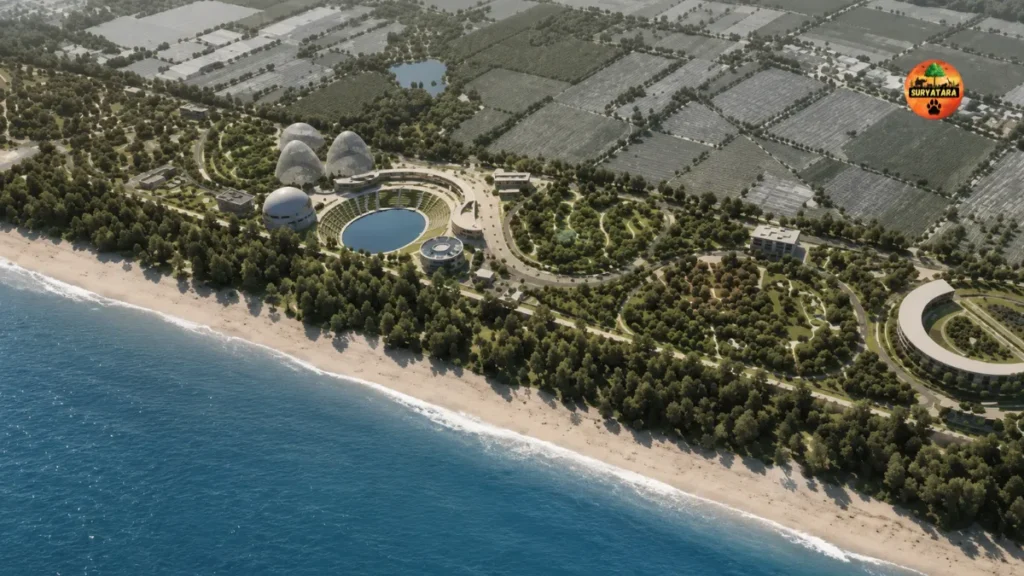
Ajwa Safari Park is set to become one of Gujarat’s most ambitious wildlife and tourism projects after receiving official approval, paving the way for construction near Vadodara. Planned across nearly 150 acres at Ajwa, around 20 kilometres from the city, the upcoming safari park aims to strengthen wildlife conservation, environmental education, and tourism while creating thousands of employment opportunities.
The project has been under discussion for several years and was awaiting regulatory clearances. With approvals now in place, authorities expect the first phase to be completed within the next one-and-a-half to two years. Once operational, the park is expected to become a major attraction on Gujarat’s growing tourism circuit alongside destinations such as the Statue of Unity and Champaner-Pavagadh.
Major Tourism Project for Eastern Vadodara
The Vadodara Municipal Corporation (VMC) is developing Ajwa Safari Park as part of a broader effort to promote eco-tourism in the eastern corridor of the city. Officials believe the project will encourage visitors to extend their stay in central Gujarat by connecting multiple tourist destinations through a single travel circuit.
The safari park is expected to attract families, wildlife enthusiasts, students, photographers, and domestic as well as international tourists looking for a modern wildlife experience close to Vadodara.
Initially, the project was proposed under a Public-Private Partnership (PPP) model. However, after that plan did not move forward as expected, the municipal corporation decided to implement the project independently.
Years of Planning Finally Move Forward
According to VMC Zoo Curator Pratyush Patanwadia, the safari park has been in the planning stage for nearly seven to eight years. With the necessary approvals from the Central Zoo Authority (CZA) now secured, the project has entered the implementation phase.
He said the park will be developed around the concept of a world-class tropical zoo, designed to provide visitors with an immersive wildlife experience while ensuring modern standards for animal care and habitat management.
Officials also hope the safari park will complement nearby tourist destinations, allowing visitors to plan three- to four-day trips covering Ajwa, Kevadia, and the UNESCO World Heritage Site of Champaner-Pavagadh.
Expansion Beyond the Existing Sayaji Baug Zoo
Vadodara is already home to the historic Sayaji Baug Zoo, but expansion of the existing facility has become increasingly difficult due to space limitations within the city.
To overcome this challenge, Ajwa Safari Park has been approved as a satellite extension of the Sayaji Baug Zoo under the Central Zoo Authority’s satellite exchange facility. The new park will provide enough space to house larger animal species that cannot be accommodated in the existing zoo.
This expansion is expected to significantly improve animal welfare while giving visitors access to a wider range of wildlife.
Visitors Can Expect Animals from Four Continents
One of the biggest attractions of Ajwa Safari Park will be its diverse collection of animals representing different parts of the world.
The proposed park will feature themed wildlife zones showcasing species from:
- South Asia
- Africa
- Australia
- South America
Visitors are expected to see iconic animals including Asiatic lions, Royal Bengal tigers, leopards, bears, several deer species, elephants, giraffes, and zebras. Authorities also plan to introduce a variety of international bird species within a large walk-through aviary.
The project aims to offer a combination of Indian wildlife and carefully selected exotic species while complying with wildlife management regulations.
Modern Safari Designed Around International Standards
Unlike Kevadia, where natural hills and uneven terrain already exist, the Ajwa site is located on relatively flat land.
To recreate a natural safari environment, planners intend to develop artificial hills, valleys, forests, and landscape features that closely resemble the habitats of different animal species. The goal is to provide animals with spacious, naturalistic enclosures while enhancing the visitor experience.
The safari will be designed according to the latest Central Zoo Authority guidelines, focusing on animal welfare, conservation, visitor safety, and sustainable operations.
Walk-Through Aviary Among Key Attractions
Apart from large mammals, one of the signature attractions will be a modern aviary where visitors can walk inside an enclosed habitat filled with free-flying birds from India and abroad.
The immersive design will allow visitors to observe colourful bird species at close range while listening to their natural calls, creating an educational experience for children, students, and bird lovers.
Eco-Friendly Transport and Visitor Facilities
Officials have proposed several visitor-friendly facilities to ensure a comfortable and environmentally responsible experience.
These include battery-operated eco-friendly vehicles that will transport visitors through various safari zones while reducing pollution inside the park.
Additional facilities planned for the project include:
- Walking trails
- Scenic viewpoints and selfie spots
- Drinking water stations
- Rest areas
- Visitor amenities designed for families and tourists
The safari’s location near Atapi Wonderland is also expected to encourage tourists to visit multiple attractions during a single trip.
Educational Focus on Wildlife Conservation
Beyond tourism, Ajwa Safari Park is expected to serve as an important centre for environmental education.
Schools, colleges, and educational institutions are likely to use the facility for field visits, allowing students to learn about biodiversity, wildlife conservation, ecosystems, and sustainable environmental practices through practical exposure rather than classroom lessons alone.
Officials believe the project can play an important role in raising awareness about wildlife conservation among younger generations.
Investment Expected to Generate Strong Economic Returns
The Vadodara Municipal Corporation has allocated an initial ₹10 crore for the early phase of construction, including habitat development and other essential infrastructure.
Additional support for surrounding tourism infrastructure has also been provided through earlier grants from the state’s tourism department.
According to project estimates, once fully operational, Ajwa Safari Park could generate annual direct revenue of approximately ₹85 crore to ₹100 crore.
When indirect economic activity such as hospitality, transport, retail, and tourism-related businesses is included, the overall economic impact is projected to reach between ₹136 crore and ₹250 crore annually.
Officials have described the project as one of the state’s strongest long-term revenue-generating tourism initiatives.
Also read: Gujarat Museums Welcome More Than 16 Lakh Visitors as Technology Redefines Heritage Tourism
Thousands of Jobs Expected
The safari park is planned to open in three phases.
Authorities estimate that the project could create between 3,375 and 4,500 employment opportunities. This includes approximately 900 to 1,200 direct jobs in park operations, animal care, administration, hospitality, and maintenance, along with several thousand indirect jobs.
The project is also expected to stimulate investment in hotels, resorts, eco-lodges, restaurants, transport services, and weekend tourism around Ajwa Road and nearby areas.
Ajwa Safari Park Set to Transform Vadodara’s Tourism Landscape
With official approval now secured, Ajwa Safari Park marks a significant step toward expanding Gujarat’s wildlife tourism infrastructure beyond existing attractions. By combining conservation, education, recreation, and eco-friendly tourism, the project aims to offer visitors an immersive safari experience while contributing to regional economic growth.
If construction progresses as scheduled, the first phase could welcome visitors within the next two years, giving Vadodara a landmark destination featuring wildlife from across four continents and strengthening Gujarat’s position as a leading eco-tourism state in India.