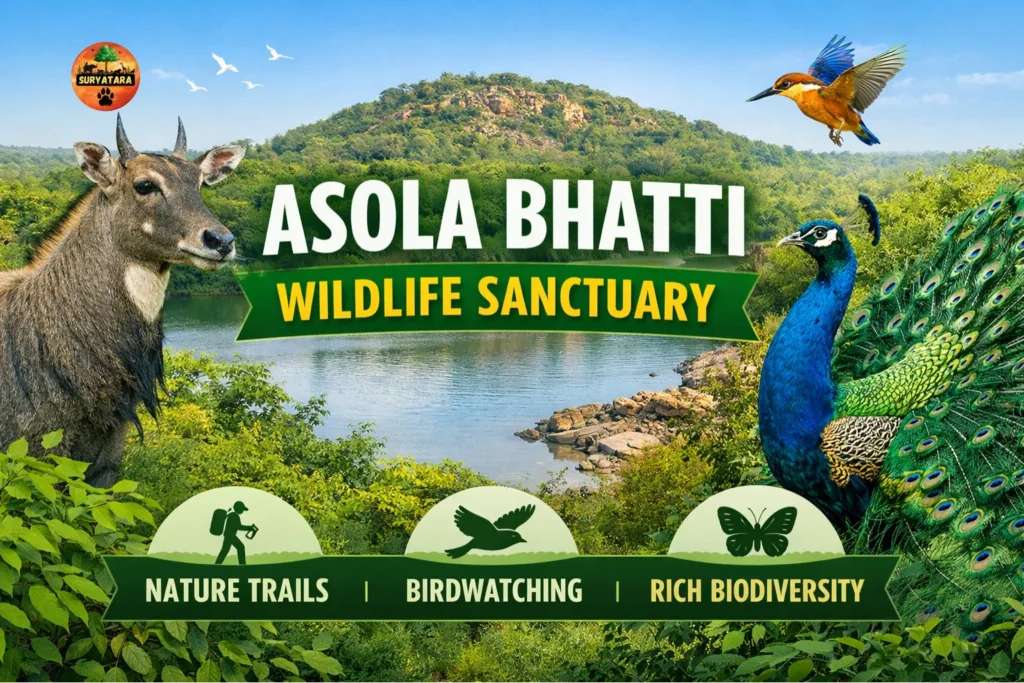
Asola bhatti wildlife sanctuary is one of the most important green spaces in the Delhi-NCR region, offering a rare mix of forests, wildlife, history, and peaceful natural surroundings. Located on the southern edge of Delhi near the Aravalli hills, this sanctuary plays a vital role in protecting biodiversity while also giving city residents a chance to reconnect with nature.
Spread across Delhi and parts of Faridabad in Haryana, the sanctuary is often called the “lungs of Delhi” because of its contribution to cleaner air and ecological balance. Unlike crowded tourist parks, this area remains calm, raw, and close to nature, making it ideal for nature lovers, birdwatchers, students, and anyone seeking a quiet escape from city life.
Location and Overview of Asola Bhatti Wildlife Sanctuary
Asola bhatti wildlife sanctuary is located in South Delhi, close to areas like Tughlakabad, Mehrauli, and Sangam Vihar. It extends into Faridabad and covers a large section of the northern Aravalli range. This location makes it easily accessible for people living in Delhi, Gurgaon, Noida, and nearby cities.
The sanctuary was officially notified as a wildlife sanctuary in 1986. Before protection, much of this land was affected by mining and human activity. Over time, conservation efforts helped restore vegetation, revive water bodies, and support wildlife habitats. Today, it stands as an example of how damaged land can slowly return to life through proper care and protection.
Natural Landscape and Environment
The landscape of Asola bhatti wildlife sanctuary is unique and diverse. It includes rocky hills, dense forest patches, open grasslands, shallow valleys, and seasonal lakes. The Aravalli terrain gives the area a rugged beauty, different from the flat plains seen in most parts of Delhi.
During the monsoon season, the sanctuary turns green and fresh, with small streams and water pools forming across the land. In summer, the terrain looks dry but still supports a surprising amount of life. Winter brings cool weather and is considered the best time to explore the sanctuary comfortably.
The sanctuary also helps recharge groundwater levels and prevents soil erosion, which is very important for the surrounding urban areas.
Flora Found in Asola Bhatti Wildlife Sanctuary
Asola bhatti wildlife sanctuary supports a wide variety of plant life adapted to semi-arid conditions. The vegetation mainly includes dry deciduous forests, thorny shrubs, and grasslands.
Common tree species found here include dhok, babool, neem, peepal, banyan, and amaltas. These trees provide shade, shelter, and food for wildlife while also supporting local ecology. Medicinal plants, herbs, and native grasses grow naturally across the sanctuary.
Many flowering plants bloom during spring and monsoon, adding color to the otherwise earthy landscape. These plants attract insects, butterflies, and birds, creating a healthy natural cycle.
Wildlife Diversity in Asola Bhatti Wildlife Sanctuary
The wildlife of Asola bhatti wildlife sanctuary may not be as famous as large tiger reserves, but it is rich and important in its own way. The sanctuary is home to several mammal, reptile, bird, and insect species that thrive in this protected environment.
Mammals commonly seen include nilgai, Indian fox, jackal, mongoose, jungle cat, and wild boar. Smaller mammals like hares and rodents are also present and play an essential role in the food chain.
Reptiles such as monitor lizards, snakes, turtles, and various lizard species are found here. While some snakes are venomous, they usually avoid human contact.
The sanctuary is especially famous for birds, making it a popular spot for birdwatching.
Birdwatching Experience in Asola Bhatti Wildlife Sanctuary
Asola bhatti wildlife sanctuary is a paradise for bird lovers. More than 250 bird species have been recorded here, including resident birds and migratory species that arrive during winter.
Common birds include peacocks, parakeets, bulbuls, drongos, woodpeckers, kingfishers, and owls. During migration season, visitors can spot birds like wagtails, warblers, flycatchers, and waterfowl near lakes and wetlands.
Early morning is the best time for birdwatching, when birds are most active and the forest feels peaceful. The sanctuary’s varied habitat supports birds that prefer trees, grasslands, and water bodies.
Asola Bhatti Wildlife Sanctuary and Butterfly Park
One of the most attractive features of Asola bhatti wildlife sanctuary is the butterfly conservation area. The sanctuary hosts many butterfly species due to the availability of native plants and flowers.
Butterflies play an important role in pollination and indicate a healthy ecosystem. Visitors can see colorful species fluttering across forest paths, especially during warmer months.
This area is also used for environmental education, helping people understand the importance of insects in nature.
Entry Gates and Access Points
Asola bhatti wildlife sanctuary has multiple entry points, with the most popular being near Tughlakabad and the southern Delhi side. Entry rules may vary depending on the gate and management authority.
Some parts of the sanctuary are open for guided nature walks, cycling, and educational visits. Certain core areas are restricted to protect sensitive wildlife zones.
It is always recommended to check entry timing, permissions, and guidelines before visiting, as rules may change depending on season and conservation needs.
Best Time to Visit Asola Bhatti Wildlife Sanctuary
The best time to visit Asola bhatti wildlife sanctuary is from October to March. During these months, the weather is pleasant, and wildlife activity is easier to observe. Migratory birds also arrive during winter, making it an ideal time for birdwatching.
Summer months can be very hot, especially in May and June, making long walks uncomfortable. Monsoon brings greenery and fresh air but may limit movement due to slippery paths and dense vegetation.
Early morning and late afternoon are the best times of day to explore the sanctuary safely and comfortably.
Activities for Visitors
Asola bhatti wildlife sanctuary offers simple and meaningful activities focused on nature appreciation rather than entertainment.
Nature walks allow visitors to explore forest trails and observe plants and animals quietly. Birdwatching is a major attraction, especially for photographers and researchers.
Cycling is allowed in certain zones, offering a healthy and eco-friendly way to experience the landscape. Educational tours are often organized for students, schools, and environmental groups to learn about conservation and biodiversity.
Picnics, loud music, and recreational activities are not encouraged, as the sanctuary is meant to remain peaceful and undisturbed.
Importance of Asola Bhatti Wildlife Sanctuary for Delhi
Asola bhatti wildlife sanctuary plays a critical role in Delhi’s environmental health. It acts as a green barrier against pollution, helps regulate temperature, and supports groundwater recharge.
The sanctuary also protects the Aravalli ecosystem, one of the oldest mountain ranges in the world. Without this protected area, urban expansion could have destroyed valuable natural resources.
It also serves as a living classroom for environmental studies, conservation awareness, and sustainable living practices.
Conservation Challenges and Efforts
Despite protection, Asola bhatti wildlife sanctuary faces several challenges. Encroachment, illegal dumping, forest fires, and human interference remain concerns in some areas.
Authorities and environmental groups are working to restore degraded land, plant native species, protect water bodies, and control invasive plants. Awareness programs help local communities understand the value of conservation.
Visitor responsibility is also crucial. Following rules, avoiding litter, and respecting wildlife help maintain the sanctuary’s fragile balance.
Read also: Gir National Park and Wildlife Sanctuary: India’s Legendary Home of the Asiatic Lion
Rules and Responsible Tourism
Visitors to Asola bhatti wildlife sanctuary are expected to follow basic rules to protect nature. Littering, feeding animals, making loud noise, or damaging plants is strictly discouraged.
Photography is allowed, but flash photography near animals should be avoided. Visitors should stay on marked trails and avoid entering restricted areas.
Responsible tourism ensures that the sanctuary remains safe for wildlife and enjoyable for future visitors.
Nearby Attractions Around the Sanctuary
Several historical and cultural sites are located close to Asola bhatti wildlife sanctuary. Places like Tughlakabad Fort, Mehrauli Archaeological Park, and Qutub Minar are within reachable distance.
These nearby attractions make it easy to combine a nature visit with a cultural experience, offering a balanced day trip for visitors.
Read also: Best Cameras for Wildlife Photography: Capture Nature’s Most Breathtaking Moments Like a Pro
Conclusion
Asola bhatti wildlife sanctuary stands as a quiet yet powerful reminder of nature’s resilience in the middle of urban expansion. It offers clean air, peaceful surroundings, rich biodiversity, and a chance to slow down and observe life in its natural form.
Whether you are a nature lover, birdwatcher, student, or someone simply looking for calm, this sanctuary provides a meaningful experience without leaving the city. With responsible visits and continued conservation efforts, Asola bhatti wildlife sanctuary will remain a vital green treasure for Delhi and future generations.