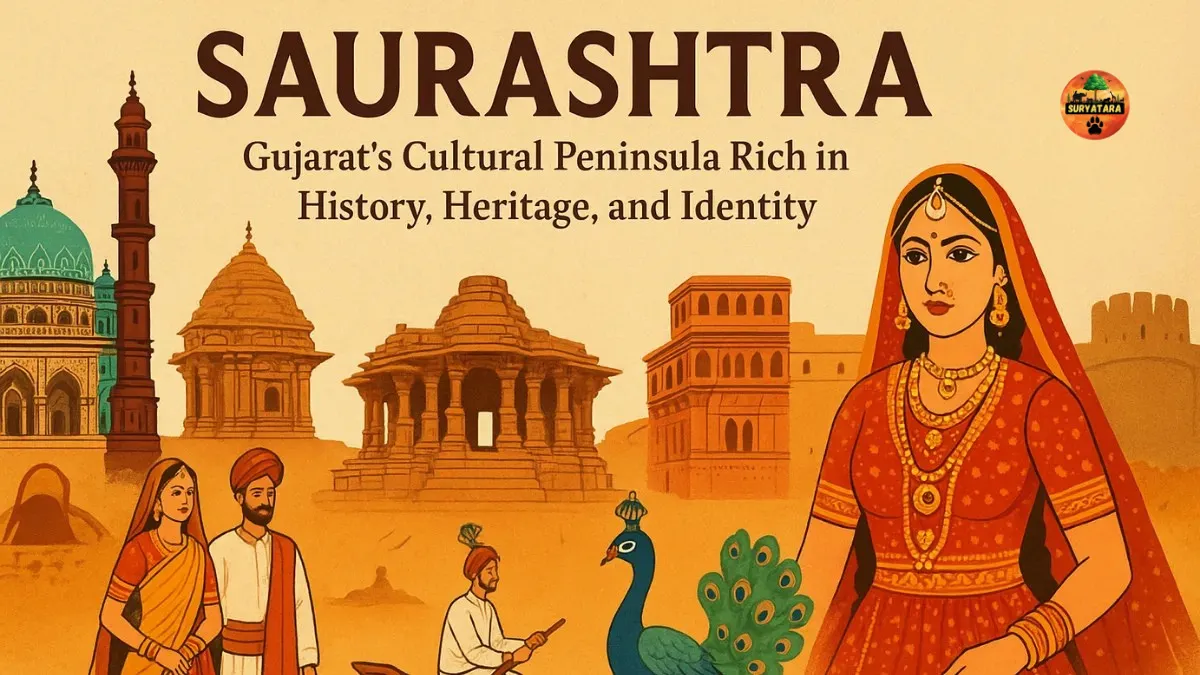
What is Saurashtra has often been a question posed not only by travelers discovering western India but also by readers seeking to understand one of the subcontinent’s most culturally layered regions. Situated on the Arabian Sea coastline and forming a major part of modern-day Gujarat, Saurashtra stands as a land shaped by geography, maritime history, linguistic evolution, dynastic shifts and an enduring spirit of self-identity.
A Land Defined by Identity and Geography
Saurashtra refers to a large peninsula on India’s western flank, historically known as Kathiawar. Stretching across coastal belts, semi-arid plateaus and fertile agricultural pockets, it is bordered by the Gulf of Kutch to the northwest, the Arabian Sea to the south and the Gulf of Khambhat to the east. Over centuries, this territory has been home to ports that linked India with East Africa, the Middle East and Southeast Asia, turning Saurashtra into an active participant in global maritime trade long before modern shipping hubs appeared.
The name itself has undergone several transformations in ancient texts. Early Sanskrit literature mentions the region as “Saurashṭra,” associated with communities who excelled in weaving and coastal commerce. Classical sources mention it as a land governed by the Sun-worshipping clans, and later records identify it with warrior tribes and merchant guilds who played central roles in regional politics. These multilayered identities have produced a distinct cultural temperament that remains visible today.
Historical Layers That Shaped Saurashtra
To understand What is Saurashtra in its present form, one must trace its long chronological arc. Archaeological findings connect some parts of this peninsula to the mature Harappan phase, indicating early human settlement and organized urban patterns. Over time, the region saw rule under Mauryans, Indo-Greeks, Western Kshatrapas, Guptas, Maitrakas, Chudasamas and several Rajput clans.
During the medieval era, Saurashtra’s ports such as Porbandar, Veraval and Mangrol became vital for Indian Ocean navigation. With the rise of the Solanki dynasty in Gujarat and later the influence of the Mughal Empire, the peninsula maintained semi-autonomous states ruled by local chieftains. The arrival of the British further changed the landscape, clustering more than 200 princely states into what came to be known as the Kathiawar Agency.
After India’s independence, these multiple principalities merged to form the United State of Saurashtra in 1948. A few years later, the region was integrated into Bombay State and eventually reorganized into Gujarat when the state was formed in 1960. This political evolution remains central to understanding What is Saurashtra from a modern administrative lens.
The Cultural Heartbeat of the Region
The cultural ethos of Saurashtra is heavily shaped by Gujarati traditions while still maintaining its own regional flavor. Language is an important marker; the local dialect, known simply as Saurashtra or Saurashtri in older references, differs in accent, idioms and vocabulary from mainstream Gujarati. Folk songs recount maritime legends, devotional poetry and tales of Rajput valor. Garba, dayro, bhavai and coastal folk tunes form a strong performing arts tradition.
The region is also home to important pilgrimage centers such as Somnath, Dwarka, Girnar and Palitana. These spiritual sites attract millions each year, giving Saurashtra an almost continuous flow of visitors. Meanwhile, cities like Rajkot—birthplace of Mahatma Gandhi—add a modern character with universities, industries and a vibrant urban lifestyle.
Economic Backbone: Agriculture, Industry and Ports
Saurashtra’s economy is a blend of old and new. Agriculture continues to dominate rural areas, with groundnut, cotton, onion, cumin and sesame forming the major crops. The semi-arid climate has historically challenged farmers, but the advent of check dams, irrigation projects and watershed programs has reshaped the region’s agricultural success.
Industrially, Saurashtra thrives through textile hubs, diamond polishing centers, brass industries, ship-breaking yards in Alang and ceramic manufacturing clusters. Its long coastline remains a strategic asset, supporting fishing communities, salt pans and emerging port developments. All of these dimensions add layers to the ongoing understanding of What is Saurashtra today.
Table: Key Facts About Saurashtra
| Category | Details |
|---|---|
| Location | Western India, major part of Gujarat |
| Geography | Peninsula bordered by Gulf of Kutch, Arabian Sea, Gulf of Khambhat |
| Major Cities | Rajkot, Junagadh, Jamnagar, Porbandar, Bhavnagar |
| Historical Names | Kathiawar, Saurashṭra |
| Cultural Identity | Distinct dialect, strong folk traditions, major pilgrimage sites |
| Main Crops | Groundnut, cotton, sesame, cumin |
| Industries | Textiles, diamonds, brass, ceramics, ports, fisheries |
| Key Attractions | Somnath Temple, Gir Forest, Dwarkadhish Temple, Palitana |
Saurashtra’s Religious and Pilgrimage Landscape
Pilgrimage is intertwined deeply in Saurashtra’s identity. The Somnath Temple, one of the twelve Jyotirlingas of Shiva, stands as a symbol of resilience after having been reconstructed multiple times through history. Dwarka, associated with Krishna, forms part of the Char Dham pilgrimage circuit and remains an anchor of Vaishnavite traditions.
Girnar, with its steep climbs and Jain temples, draws ascetics and trekkers alike. Palitana’s Shatrunjaya hills host thousands of temples, considered the holiest site for the Jain community. These landmarks not only define spiritual geography but also help answer What is Saurashtra in the cultural consciousness of India.
Environment and Biodiversity
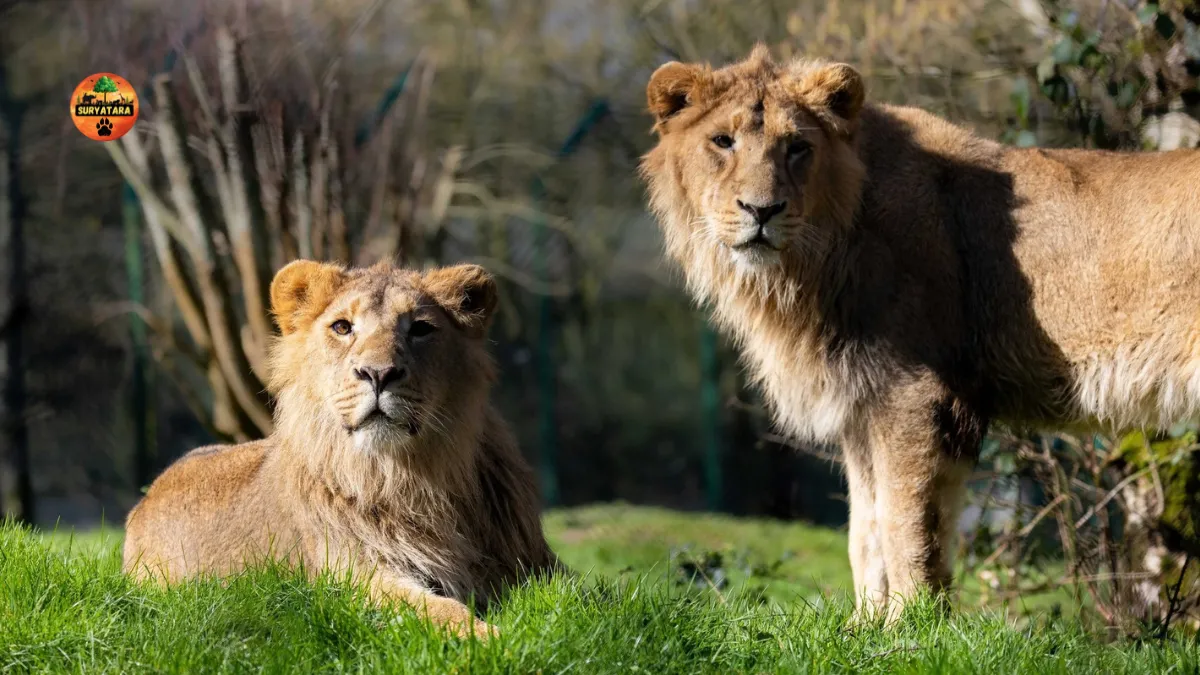
One cannot explore What is Saurashtra without acknowledging its environmental significance. Gir Forest is the only natural habitat of the Asiatic lion, hosting a thriving population protected under stringent conservation programs. The peninsula also supports blackbuck sanctuaries, coastal mangroves, marine national parks and bird habitats along salt marshes.
The varied ecosystem—from grasslands to rocky plateaus to coral-rich coasts—makes Saurashtra an important ecological zone. Monsoon patterns, groundwater challenges and fluctuating temperatures shape life across the region, influencing agriculture, livestock rearing and migration cycles.
Literature, Language and Intellectual Traditions
The region has produced influential writers, poets, reformers and political thinkers. Its literary heritage spans devotional works, folk ballads and modern prose that reflect themes of migration, maritime identity and community life. The Saurashtra dialect preserves older linguistic roots that connect Gujarati with Sanskrit-derived expressions. This linguistic identity shapes how locals perceive questions like What is Saurashtra in a cultural and emotional sense.
Rajkot and Bhavnagar have long served as educational centers, nurturing academic institutions, libraries and artistic movements. Gandhi’s early schooling in Rajkot and the legacy of social reformers from the region continue to inspire local discourse.
Political Evolution and Regional Aspirations
Since independence, Saurashtra has developed a unique political narrative. Agrarian interests, cooperative movements and trading communities have shaped electoral outcomes. While the region is fully integrated into Gujarat, discussions about regional development, water allocation, infrastructure and identity continue to surface. These debates reflect the complexity embedded in any attempt to define What is Saurashtra from a socio-political standpoint.
Food, Festivals and Daily Life
Culinary traditions of Saurashtra include a variety of vegetarian dishes with distinctive flavors. Local cuisine often incorporates groundnut, sesame oil, coconut, jaggery and spices that suit the region’s climate. Khichdi, sev tameta, bhakri, undhiyu, kadhi and coastal seafood specialties highlight diversity within the broader Gujarati culinary framework.
Festivals such as Janmashtami in Dwarka, Maha Shivratri in Girnar and local fairs in rural belts bring communities together. Navratri, celebrated with traditional dance forms, lights up the urban centers, while smaller villages maintain customs passed down through generations.
Daily life in Saurashtra involves a balance of tradition and modernity. Farmers rely on monsoon rains but also adopt new irrigation techniques. Young people seek opportunities in technology and commerce, yet remain deeply connected to family networks and local customs.
Modern Infrastructure and Urban Growth
Urban development in Saurashtra has accelerated in recent decades. Rajkot has emerged as an important industrial and educational hub. Jamnagar, with one of the world’s largest oil refineries, has drawn global attention. Bhavnagar’s industries range from diamond cutting to ship recycling.
Transport networks—highways, rail lines and regional airports—have enhanced connectivity. Ports such as Pipavav and Veraval support trade and fisheries, making the coastline critical for the region’s economic future. The Kutch–Saurashtra pipeline and various renewable energy initiatives indicate a push toward modernization, shaping yet another dimension of What is Saurashtra in the 21st century.
The Peninsular Identity
A peninsula often fosters a distinct identity due to geographical boundaries, sea-facing perspectives and historical trade routes. Saurashtra fits this pattern. Its coastline has exposed it to cultures beyond the subcontinent, from Arab traders to African sailors. This maritime history has influenced local art, language, food and social practices.
The people of Saurashtra often identify themselves with pride, emphasizing resilience, hard work and hospitality. The region’s semi-arid terrain has demanded adaptability, shaping a mindset that values resourcefulness.
Saurashtra in Contemporary Context
In today’s national landscape, Saurashtra is known for its agricultural output, mineral resources, ports, educational institutions and spiritual tourism. It plays a significant role in Gujarat’s politics, economy and cultural life. Sports, especially cricket, have added to regional pride with institutions in Rajkot nurturing many players.
Business growth continues through textiles, handicrafts, engineering goods and global exports. The tourism sector thrives on heritage circuits, wildlife parks and coastal destinations. All these contemporary elements contribute to a broader understanding of What is Saurashtra in modern India.
Also read: How to Reach Gir National Park-Complete Travel Guide for 2025-2026
Challenges and Opportunities
Saurashtra faces challenges such as water scarcity, climate variability, rapid urbanization and the need for sustainable development. Groundwater depletion has long been a concern, though large-scale water management initiatives have created positive impact. Opportunities lie in renewable energy projects, blue economy initiatives, agro-based industries and eco-tourism.
The cultural heritage offers additional avenues for preservation and promotion. Local artisans, folk musicians and storytellers continue to seek platforms to keep traditions alive.
Also read: Gir National Park and Wildlife Sanctuary: India’s Legendary Home of the Asiatic Lion
Conclusion: A Region of Many Dimensions
Asking What is Saurashtra invites answers from multiple angles—historical, geographical, cultural, economic and emotional. It is a region shaped by ancient kingdoms, maritime trade, religious landmarks and resilient communities. It stands at the intersection of tradition and progress, offering a lens into western India’s evolving story.
From its pilgrimage centers to its bustling industrial towns, from its lion forests to its coastal villages, Saurashtra remains a land of contrasts and continuity. Its identity, forged over centuries, continues to evolve, making it a region worth studying, experiencing and understanding in depth.