India’s ambitious wildlife restoration initiative, Project Cheetah, has reached a historic milestone as the country’s cheetah population has now crossed the mark of 50. The achievement comes after the birth of five new cubs at Kuno National Park, marking another success for the landmark conservation programme.
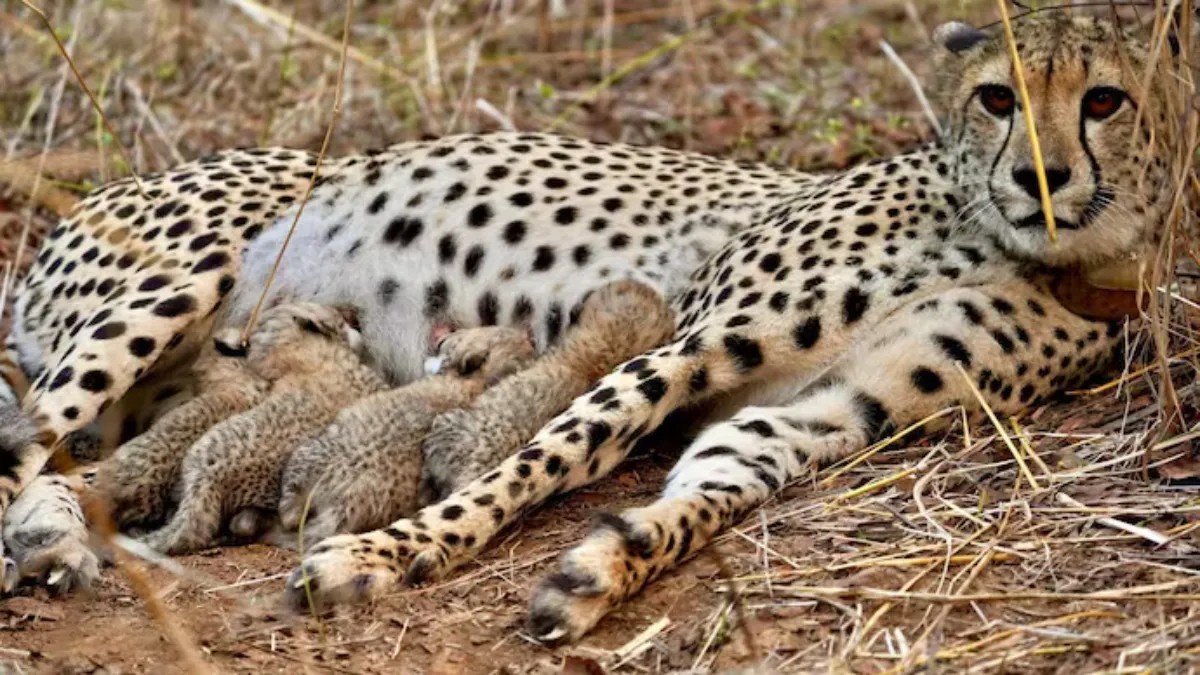
The latest litter was born to Jwala, a female cheetah brought from Namibia as part of India’s reintroduction effort. The announcement was shared by Bhupender Yadav, who highlighted the development as a proud moment for wildlife conservation in the country.
With the addition of these five cubs, India’s total cheetah population has now increased to 53, reflecting steady progress in the long-term mission to bring the world’s fastest land animal back to Indian landscapes.
Cheetahs cross half-century 🐆
— Bhupender Yadav (@byadavbjp) March 9, 2026
A moment of great pride for Project Cheetah as Jwala, the Namibian Cheetah and a successful third-time mother, gave birth to five cubs today at the Kuno National Park.
With this birth, the number of Indian-born thriving cubs has risen to 33,… pic.twitter.com/tzxYYmLPtM
A Landmark Moment for Project Cheetah
The birth of the new cubs is being celebrated as a major milestone for Project Cheetah, a groundbreaking conservation initiative designed to reintroduce cheetahs to India after the species went extinct in the country more than seven decades ago.
The project was launched in 2022, when India brought African cheetahs from Namibia and South Africa to establish a new breeding population. The cheetahs were relocated to Kuno National Park in Madhya Pradesh, a carefully selected habitat with suitable grasslands and prey availability.
The new litter from Jwala represents the 10th successful cheetah litter born on Indian soil since the programme began. With these births, the number of cubs born in India has climbed to 33, demonstrating that the introduced cheetahs are not only surviving but also reproducing in their new environment.
Wildlife officials and conservationists say this milestone highlights the effectiveness of the project’s planning and execution.
Jwala Becomes a Successful Third-Time Mother
The mother of the newly born cubs, Jwala, has emerged as one of the most successful cheetahs in the programme. With this latest litter, she has now given birth three times, strengthening confidence among conservation experts that the animals are adapting well to their surroundings.
Repeated successful breeding is widely considered one of the strongest indicators that a wildlife reintroduction programme is working. In Jwala’s case, the births show that the species is gradually adjusting to India’s ecosystems and climate.
Wildlife experts monitoring Project Cheetah say that if more female cheetahs follow a similar breeding pattern, the population could grow steadily over the coming years.
Dedicated Monitoring by Wildlife Experts
The success of the latest births has also been credited to the relentless work of wildlife teams on the ground. Veterinarians, conservation biologists, and forest officials at Kuno National Park continuously track the health and behaviour of the animals.
Field staff use modern monitoring tools such as GPS collars and regular health assessments to observe the cheetahs’ movements, breeding patterns, and survival rates. Special attention is given during the first few months after cubs are born, as this is the most critical period for their survival.
Experts involved in Project Cheetah say that careful monitoring and rapid response to health issues have played a key role in ensuring that both mothers and cubs remain safe.
Restoring an Extinct Species to India
Cheetahs once roamed widely across the Indian subcontinent. However, excessive hunting and habitat loss eventually drove the species to extinction in the country.
India officially declared cheetahs extinct in 1952, making it the only country where the large cat had completely disappeared from the wild. For decades, wildlife experts debated whether reintroducing the species would be possible.
The launch of Project Cheetah finally turned that idea into reality. The programme is now considered one of the world’s most ambitious carnivore reintroduction efforts.
By bringing African cheetahs into India and establishing a breeding population, conservationists hope to restore a key predator that once played an important role in maintaining ecological balance.
The Ecological Importance of Cheetahs
Cheetahs are not just iconic animals; they also play a crucial role in grassland ecosystems. As apex predators, they help regulate populations of herbivores such as deer and antelope.
This natural balance ensures that vegetation is not overgrazed, allowing grasslands and savanna-like ecosystems to remain healthy.
Experts believe that if Project Cheetah continues to succeed, it could help revive India’s grassland habitats and strengthen biodiversity in these regions.
The presence of cheetahs may also benefit other species that depend on similar ecosystems.
Growing Optimism for India’s Cheetah Future
The increase in India’s cheetah population to 53 has generated optimism among conservationists and wildlife enthusiasts alike. Although challenges remain—including habitat management, cub survival, and long-term population sustainability—the steady growth of the population is seen as a positive sign.
Officials involved in Project Cheetah say that future plans include expanding the cheetah population into other suitable habitats across the country once the population at Kuno National Park becomes stable.
The long-term vision is to create a self-sustaining cheetah population in India, one that can survive and reproduce naturally without continuous human intervention.
Also Read: Choosing the Right Wildlife Photography Camera: A Complete Field Guide for Serious Nature Shooters
A Symbol of Hope for Wildlife Conservation
For now, the spotlight remains on Jwala and her five newborn cubs. Their arrival is more than just another birth in the wild—it represents hope for one of the world’s most ambitious wildlife restoration projects.
Each new litter strengthens the belief that cheetahs can once again become a permanent part of India’s natural heritage.
As Project Cheetah continues to evolve, conservationists see the growing population as proof that determined conservation efforts can reverse even the most devastating losses in wildlife history.
If current trends continue, India may soon witness the full revival of a species that once vanished from its landscapes—bringing the world’s fastest land animal back where it once thrived.