Kutch, Gujarat: Tucked away in the remote western edge of India, near the vast salt deserts and sweeping coastlines of the Arabian Sea, lies one of the country’s most spiritually significant destinations—Narayan Sarovar Kutch. For centuries, this tranquil lakeside settlement has stood as a symbol of devotion, mythology, and cultural heritage. Today, it continues to draw thousands of pilgrims, researchers, travel writers, and spiritual seekers who want to experience its sacred environment and understand its deep-rooted importance in Hindu tradition.
Regarded as one of the holiest water bodies in India, Narayan Sarovar is mentioned in ancient scriptures, celebrated in local folklore, and revered by countless devotees who believe its waters carry divine blessings. The region surrounding the lake is dotted with temples, legends, and historical traces that collectively make it a compelling destination—one that blends spirituality, serenity, and timeless cultural memory.
This comprehensive, in-depth feature explores the history, spiritual beliefs, mythology, and cultural relevance behind Narayan Sarovar Kutch, offering a complete guide for anyone wishing to learn about or visit this extraordinary pilgrimage site.
A Gateway to Divinity: Introducing Narayan Sarovar Kutch
Located in Lakhpat taluka of Kutch district, Narayan Sarovar Kutch stands at the far western boundary of India, just a few kilometres from the meeting point of land and sea. Its isolation has not diminished its significance; if anything, the remoteness enhances its spiritual atmosphere. Pilgrims often describe the region as a place where the earthly world grows quiet, allowing the divine to become more perceptible.
The lake itself is regarded as one of the Panch Sarovar (Five Sacred Lakes) in Hindu belief—alongside Mansarovar, Pampa Sarovar, Bindu Sarovar, and Pushkar Sarovar. Its sacredness, however, is not confined to this classification. The scriptures—including the Shiv Puran, Vishnu Puran, Shrimad Bhagwat, and even episodes from the Ramayan—associate the lake with divine origins and powerful spiritual symbolism.
The aura of Narayan Sarovar Kutch is deeply connected to these mythological references, which reinforce the belief that this site is not merely a geographical location but a devotional landmark where mythology, nature, and faith converge.
A Sacred Union: Where Lake and Sea Meet
One of the most remarkable features of Narayan Sarovar Kutch is the confluence of the freshwater lake with the Arabian Sea. This meeting point is considered extremely rare and spiritually potent. Devotees believe that the merging of the holy freshwater with the vast, mighty sea represents the union of the mortal and the divine, the finite and the infinite.
Historically, the lake is believed to have formed through divine intervention. According to popular belief, the water originated from the toe of Lord Narayan (Vishnu) himself. The sacred flow eventually created the lake that exists today—a lake that is said to carry purifying energy and blessings.
Pilgrims often travel great distances to take a ritual dip at this sacred confluence. Many describe the experience as transformative, emphasizing the strong spiritual charge that the site naturally possesses. The peaceful environment, gentle breeze from the Arabian Sea, and the calm blue water combine to create a setting ideal for prayer, meditation, and introspection.
Temples That Define the Landscape of Narayan Sarovar Kutch
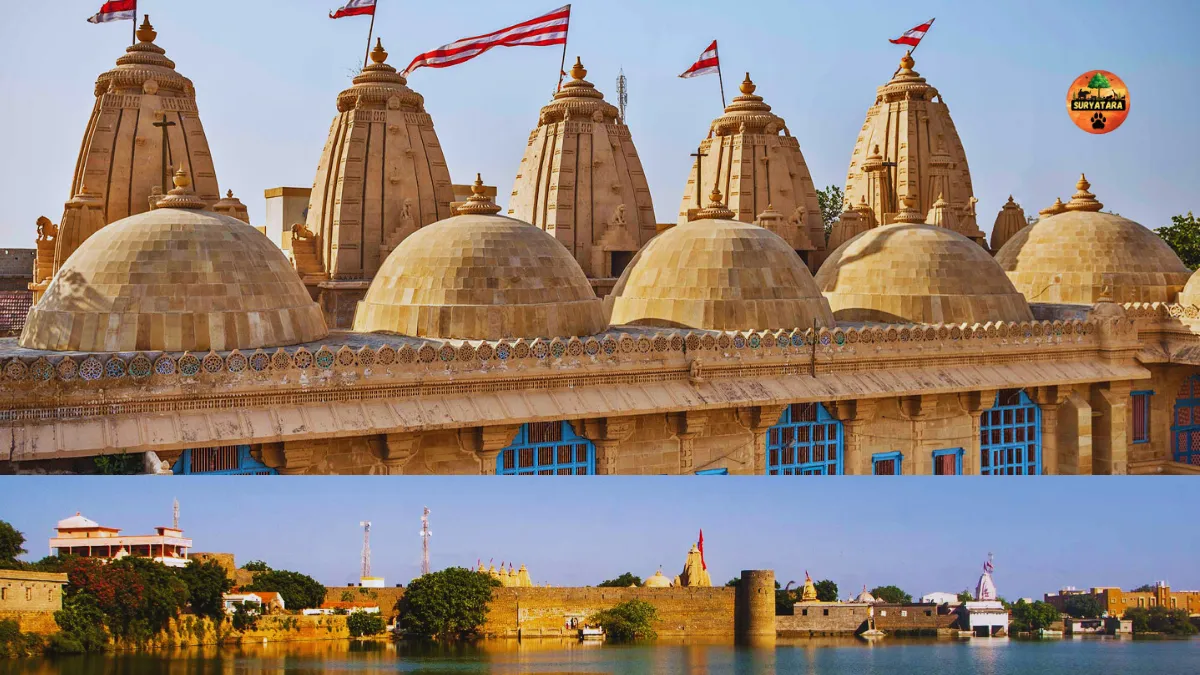
While the lake is the focal point of the pilgrimage, the religious environment surrounding it is enriched by several historically significant temples. Each structure carries stories that date back centuries, adding layers of cultural depth to the region.
1. Trikamrayji Temple at Koteshvar Mahadev
Located just one kilometer from Narayan Sarovar, the Trikamrayji Temple is a major spiritual attraction for devotees visiting the region. The temple is part of the 252 important Vaishnav shrines spread across India and holds high reverence within the Vaishnav tradition.
Visitors often stop at this temple before performing rituals at Narayan Sarovar. Devotees believe that beginning their spiritual journey here enhances the purifying effect of the sacred dip in the Sarovar. Whether rooted in tradition or personal belief, generations of pilgrims continue this practice, making it a defining aspect of the Narayan Sarovar pilgrimage circuit.
2. The Revered Seat of Mahaprabhuji (Bethak Ji No. 63)
Narayan Sarovar Kutch is also home to Seat No. 63 of Mahaprabhuji, one of the 84 bethaks that belong to the Vallabhacharya tradition. These seats mark significant places visited by Mahaprabhuji during his spiritual journey across India.
This location in Kutch holds special significance because it reflects the saint’s connection to the sacred waters and the region’s deep spiritual energy. Followers of the Pushtimarg sect and other devotees across India and beyond travel here to pay homage at this revered seat.
3. Other Temples Surrounding the Lake
The Narayan Sarovar temple complex includes seven smaller temples, often referred to collectively as “Sapta Temples,” dedicated to deities such as:
- Lakshmi-Narayan
- Dwarkareshwar
- Adinarayan
- Govardhannathji
- Trikamji
- Ranchhodrayji
- Keshavji
Each shrine plays a role in the overall sanctity of the region, contributing to the profound spiritual environment that defines Narayan Sarovar Kutch.
Mythology and Legends Interwoven with Narayan Sarovar
A place as ancient and sacred as Narayan Sarovar naturally carries numerous stories and mythological connections. Many of these narratives have been preserved in oral traditions, scriptures, and teachings passed down across generations.
The Divine Origin of the Lake
The most widely accepted belief is that the lake’s water originated from the toe of Lord Narayan. Scriptures describe how divine waters emerged from the Lord’s feet during cosmic events, ultimately creating the sacred Sarovar. This legend contributes significantly to the belief in the water’s purifying abilities.
References in Ancient Texts
Several ancient texts highlight the sanctity of Narayan Sarovar:
- Shiv Puran mentions the lake while describing holy pilgrimage sites.
- Shrimad Bhagwat links the region to significant events related to Lord Vishnu.
- Vishnu Puran emphasizes the divine importance of certain water bodies, including Narayan Sarovar.
- Ramayan connects the region to Lord Rama’s travels and spiritual practices.
These references make Narayan Sarovar Kutch not just a geographic location but a prominent chapter in India’s divine heritage.
Spiritual Practices and Ritual Beliefs at Narayan Sarovar Kutch
For many devotees, the main purpose of visiting Narayan Sarovar is the belief in the lake’s ability to purify sins and uplift the soul. Over centuries, several rituals and practices have become customary for pilgrims.
1. Holy Bathing Ritual
Taking a dip at Narayan Sarovar is believed to cleanse one’s past sins and offer spiritual rejuvenation. Devotees often describe feelings of peace and emotional release after the ritual.
2. Prayer and Meditation
The serene surroundings make the area ideal for meditation. Many visitors spend hours near the water, chanting prayers or silently reflecting. The vast desert landscape and calm waves of the sea only enhance the experience.
3. Temple Darshan and Offerings
Pilgrims typically visit all the temples around the lake. Offerings of flowers, coconuts, and traditional sweets are common. Special ceremonies and aarti sessions further deepen the spiritual atmosphere.
Cultural, Historical, and Geographic Importance
Beyond its religious value, Narayan Sarovar Kutch represents a significant part of Gujarat’s cultural and natural heritage.
1. A Landmark in Western India
Its location near the edge of the subcontinent makes it a geographical curiosity. The region also borders the famous White Rann of Kutch, drawing not just pilgrims but also cultural explorers, photographers, and nature enthusiasts.
2. A Blend of Nature and Devotion
Narayan Sarovar is one of the most peaceful and picturesque areas in Kutch. The waterfront views, open skies, and gentle landscapes create an environment ideal for eco-spiritual tourism.
3. A Link to Gujarat’s Ancient Pilgrimage Network
For centuries, Kutch has been home to numerous temples, including Koteshwar, Somnath (to its southeast), and other lesser-known shrines. Narayan Sarovar Kutch fits into this extensive sacred geography that continues to play a major role in Gujarat’s cultural identity.
Also read: how much does Gir Safari cost per person? Full Price Breakdown for Indian and Foreign Tourists
Why Narayan Sarovar Kutch Remains a Must-Visit Destination
Even in an age of modern travel and fast-paced lifestyles, Narayan Sarovar continues to hold an irresistible charm. What makes it exceptional is not just the mythology or temple architecture, but the unbroken thread of devotion that ties many generations together.
Visitors often speak of:
- A deep sense of calm after spending time near the lake
- A connection to India’s ancient past and spiritual traditions
- An appreciation for Kutch’s natural beauty and cultural depth
- A profound experience of faith and divine energy
Whether one visits as a pilgrim, a historian, a researcher, or simply a traveler seeking beauty and meaning, Narayan Sarovar Kutch leaves a lasting impression.
Conclusion: Narayan Sarovar Kutch—A Journey Into Faith, History, and Divine Serenity
Narayan Sarovar Kutch stands today as one of India’s timeless spiritual destinations—an oasis of divinity on the edge of the desert. Its sacred waters, storied temples, connection to ancient scriptures, and peaceful landscapes together create an experience that transcends geography and enters the realm of inner exploration.
For those seeking spiritual comfort, cultural insight, or the beauty of Gujarat’s legendary heritage, a journey to Narayan Sarovar Kutch promises much more than a visit—it offers transformation. It is a place where myth and reality blend effortlessly, where centuries-old traditions live on, and where the presence of the divine feels profoundly real.
If there is one destination in western India that truly mirrors the soul of devotion, serenity, and ancient wisdom, it is undoubtedly Narayan Sarovar Kutch—a sacred lake whose legacy continues to inspire millions across the world.