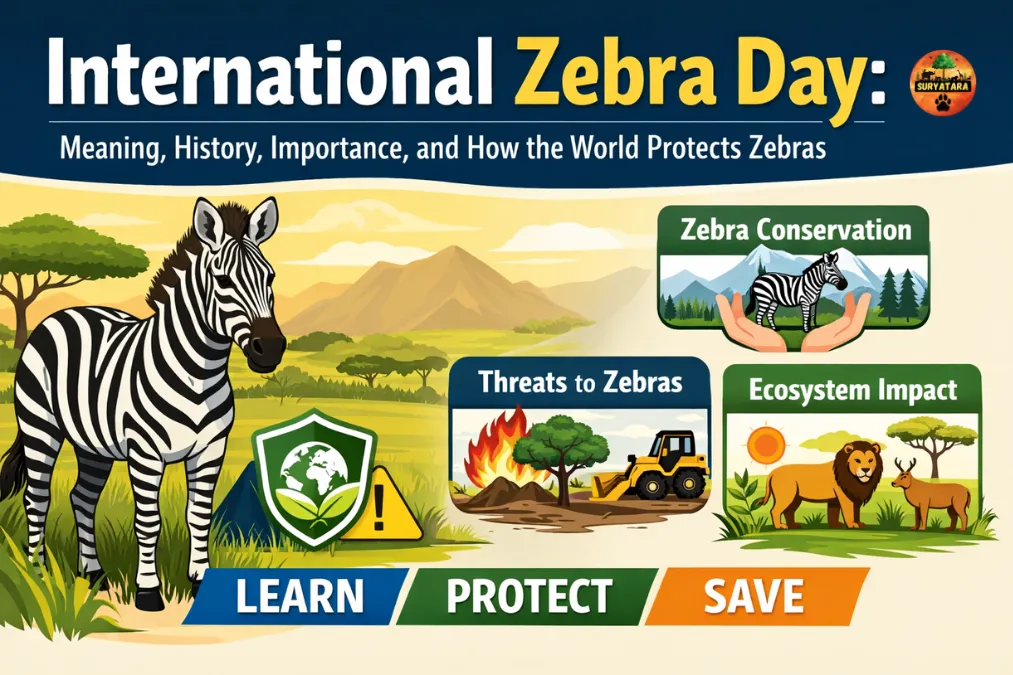
International Zebra Day is observed every year to spread awareness about zebras and the growing need to protect them. International Zebra Day reminds the world that these beautiful striped animals are facing serious threats in the wild and require immediate conservation efforts.
Zebras are one of the most recognizable wildlife species on Earth. Their black and white stripes make them unique, but their survival is becoming more difficult with each passing year. Habitat destruction, climate change, and human activities have reduced zebra populations in many regions. This day plays an important role in educating people and encouraging global responsibility toward wildlife protection.
What Is International Zebra Day
International Zebra Day is a global awareness day dedicated to zebras and their conservation. The purpose of this day is to inform people about zebra species, their natural habitats, and the dangers they face due to environmental and human-related causes.
This observance focuses on education rather than celebration. It encourages governments, conservation groups, schools, and individuals to understand the importance of wildlife preservation and take small but meaningful actions to protect zebras.
When International Zebra Day Is Observed
International Zebra Day is observed every year on January 31. Wildlife organizations and nature lovers use this day to highlight the declining zebra population and promote conservation programs across Africa and beyond.
The date has gained global attention as endangered zebra species continue to struggle for survival in the wild.
History of International Zebra Day
International Zebra Day began as a conservation awareness movement supported by environmentalists and wildlife researchers. The rapid decline of Grevy’s zebra was one of the main reasons behind starting this initiative.
Over time, the day received international recognition through educational campaigns, online awareness programs, and wildlife protection drives. Today, it is recognized worldwide as a symbol of zebra conservation and biodiversity protection.
Types of Zebras in the World
There are three main zebra species found naturally in Africa. Each species has unique features and conservation challenges.
Plains Zebra
Plains zebras are the most common zebra species. They are widely found in grasslands and savannas of eastern and southern Africa. Although their population is higher than other species, they are still listed as near threatened due to habitat loss.
Mountain Zebra
Mountain zebras live in rocky and mountainous regions. They are divided into Cape mountain zebra and Hartmann’s mountain zebra. Conservation efforts have improved their numbers, but they remain vulnerable.
Grevy’s Zebra
Grevy’s zebra is the largest and most endangered zebra species. It has narrow stripes and a white underside. Most of the remaining population lives in Kenya and Ethiopia. Their numbers have dropped sharply because of drought, grazing competition, and poaching.
Why Zebras Are Important to Nature
Zebras play a major role in maintaining healthy ecosystems. Their grazing habits help control grass growth and allow new plants to grow.
By feeding on tough grasses, zebras prepare the land for other herbivores. Their movement across large distances also helps spread seeds, supporting plant diversity.
Zebras are an essential prey species for predators like lions and hyenas, keeping the food chain balanced.
The Mystery of Zebra Stripes
Zebra stripes have fascinated scientists for centuries. Each zebra has a unique stripe pattern, similar to human fingerprints.
Researchers believe zebra stripes may help with:
Protection from insects
Regulating body temperature
Confusing predators
Recognizing individuals within a herd
Although studies continue, zebra stripes remain one of nature’s most remarkable features.
Major Threats to Zebra Survival
International Zebra Day draws attention to the serious dangers zebras face today.
Habitat Destruction
Rapid urban development, farming expansion, and road construction have reduced natural grazing areas. This forces zebras into smaller spaces with limited food and water.
Climate Change
Irregular rainfall and rising temperatures have increased drought conditions in Africa. Water scarcity directly affects zebra survival.
Poaching and Illegal Hunting
In some regions, zebras are hunted for their meat and skins. Illegal wildlife trade continues to threaten already declining populations.
Human-Wildlife Conflict
As human settlements expand near wildlife areas, conflicts increase. Zebras are sometimes injured or killed when they enter farmland.
Conservation Status of Zebras
Different zebra species fall under different conservation categories.
Plains zebra is listed as near threatened
Mountain zebra is considered vulnerable
Grevy’s zebra is classified as endangered
These classifications clearly show why International Zebra Day is becoming more important every year.
Global Efforts to Protect Zebras
Several conservation organizations are actively working to protect zebra populations. Their work includes habitat restoration, anti-poaching patrols, research programs, and community awareness initiatives.
Protected national parks and wildlife reserves have also played a major role in stabilizing zebra numbers in some regions.
Role of Local Communities
Local communities are vital to successful zebra conservation.
When people benefit from wildlife tourism and conservation jobs, they are more willing to protect animals. Community education programs help reduce poaching and encourage coexistence between humans and wildlife.
International Zebra Day promotes partnerships between local residents, governments, and conservation groups.
Importance of Wildlife Tourism
Responsible wildlife tourism provides essential funding for conservation projects. Tourist revenue supports ranger salaries, habitat protection, and medical care for injured animals.
When tourism is managed ethically, it helps protect zebras while supporting local economies.
However, uncontrolled tourism can harm ecosystems, which is why sustainable practices are strongly encouraged.
How International Zebra Day Is Celebrated
International Zebra Day is marked through various awareness activities worldwide.
Environmental organizations host webinars and educational sessions. Schools conduct wildlife awareness programs. Zoos and conservation centers share information about zebra behavior and protection.
On social media, people share facts, photos, and conservation messages to spread global awareness.
What Individuals Can Do to Help
Everyone can contribute to zebra conservation, even from home.
Supporting wildlife organizations through donations helps fund protection programs. Sharing accurate information increases awareness. Choosing eco-friendly products reduces environmental damage.
Learning about conservation and teaching others creates long-term positive impact.
International Zebra Day reminds us that small actions can lead to big change.
Interesting Facts About Zebras
Zebras can run at speeds up to 65 kilometers per hour
No two zebras have identical stripes
They live in strong social groups called herds
Zebras can communicate using sounds and facial expressions
They can sleep while standing
These facts highlight how unique and intelligent zebras truly are.
Why International Zebra Day Is Important
International Zebra Day matters because wildlife loss affects the entire planet. When one species disappears, ecosystems become unstable.
Zebras represent the health of African grasslands. Protecting them also protects many other animals and plant species that share the same habitat.
This day encourages people to understand that wildlife conservation is a shared global responsibility.
Read also: International Jaguar Day: A Global Call to Protect the Americas’ Iconic Big Cat
The Future of Zebras
The future of zebras depends on conservation efforts taken today. Strong wildlife laws, protected habitats, climate action, and community involvement are essential.
Modern technology such as GPS tracking, drone monitoring, and wildlife research has improved conservation success rates.
With continued awareness and global cooperation, zebra populations can recover and thrive again.
Read also: World Kangaroo Day: Celebrating Australia’s Iconic Wildlife and Promoting Peaceful Coexistence
Conclusion
International Zebra Day is not just an awareness event but a reminder of humanity’s duty toward nature.
Zebras are a symbol of beauty, balance, and biodiversity. Protecting them means protecting the ecosystems they support.
By spreading awareness, supporting conservation programs, and respecting wildlife, people across the world can help secure a safe future for zebras.
International Zebra Day inspires hope that with collective effort, these iconic striped animals will continue to roam the African landscapes for generations to come.