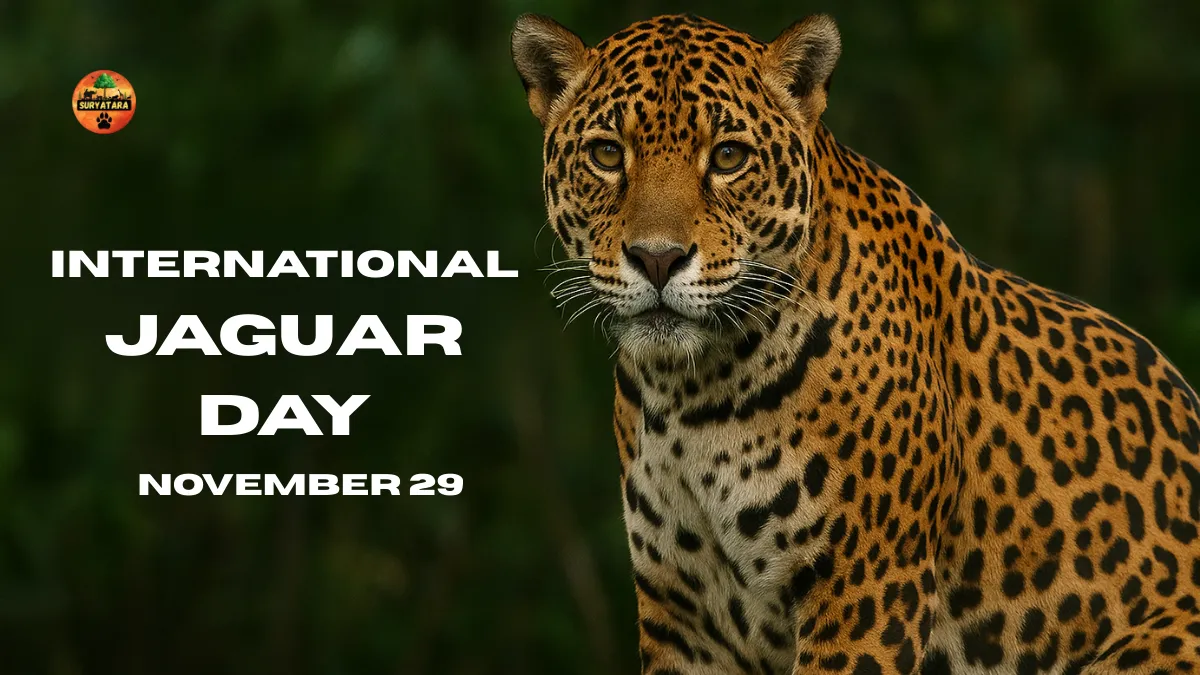
Every year on November 29, countries across the globe come together to observe International Jaguar Day, a dedicated initiative aimed at spotlighting the mounting dangers facing one of the world’s most extraordinary predators. The day not only celebrates the jaguar’s ecological importance but also rallies international support to safeguard the species’ natural habitats and cultural significance.
Origins and Purpose of International Jaguar Day
International Jaguar Day was established with a clear mission: to draw attention to the increasing threats that have pushed jaguars closer to extinction. Conservationists, governments, and environmental organisations use the day to highlight urgent efforts required to protect the species, whose survival is intricately linked to the health of ecosystems across the Americas.
The observance underscores the jaguar’s symbolic and ecological value. As the largest wild cat in the Americas and the third-largest big cat in the world, the jaguar plays an important role in maintaining the balance of the ecosystems it inhabits. Scientists often refer to the jaguar as an “umbrella species”—its protection naturally contributes to the preservation of countless other plants and animals sharing the same environment.
A Cultural and Environmental Icon
In many regions of Central and South America, the jaguar has been celebrated for centuries. Ancient civilizations such as the Maya, Aztec, and Inca revered the animal as a symbol of courage, power, and spiritual connection. Today, International Jaguar Day keeps this cultural heritage alive by honouring the jaguar as a living representation of the deep relationship between local communities and the natural world.
But beyond its cultural legacy, the jaguar also stands as a global icon of sustainable development. Protecting jaguars and restoring their habitats are directly tied to achieving several of the United Nations Sustainable Development Goals (SDGs), particularly those related to biodiversity, climate action, and responsible land management. The day therefore represents a unifying voice for jaguar-range countries, conservation groups, and global partners committed to safeguarding the species for future generations.
Understanding the Jaguar: Panthera onca
The jaguar (Panthera onca) is often confused with the leopard due to their similar coat patterns. However, jaguars can be easily distinguished by the distinct small black spots inside their larger rosettes, a unique feature that sets them apart from other big cats.
Known for their astonishing strength, jaguars are skilled hunters capable of taking down prey much larger than themselves. Their bite is among the most powerful of any big cat, strong enough to pierce the shells of turtles or the skulls of large mammals. Unlike many felines, jaguars are also excellent swimmers. They often navigate rivers, wetlands, and even vast water channels. In fact, several documented sightings show jaguars swimming across large bodies of water—including instances of individuals crossing the Panama Canal.
Where Jaguars Live: Range and Habitat
Historically, jaguars had a vast distribution, ranging from central Argentina to the southwestern United States. This expansive territory reflected the species’ adaptability, allowing jaguars to thrive in a variety of environments—from dense tropical forests to open grasslands and savannas.
However, over the past century and a half, jaguars have lost more than half of their original range. Rapid land-use changes, agriculture, human settlements, and deforestation have dramatically reduced their habitat, isolating jaguar populations and threatening their long-term survival.
Today, the Amazon Basin remains the species’ strongest refuge, home to the largest continuous population of jaguars on the planet. Smaller populations also survive in parts of Central America, including Belize, Guatemala, Honduras, and Panama. Conservationists are also working on restoring jaguars to their historic range in North America, particularly in regions of the United States where they once freely roamed.
Conservation Status and Global Efforts
The jaguar is currently listed as Near Threatened on the International Union for Conservation of Nature (IUCN) Red List. Although not yet classified as endangered, the species faces escalating pressures that could push it into more critical conservation categories if protective efforts fail.
Most countries within the jaguar’s range have implemented national laws to protect the species. In addition, international trade of jaguar parts—including skins, teeth, and bones—is strictly prohibited under the Convention on International Trade in Endangered Species of Wild Fauna and Flora (CITES). Despite these protections, jaguars remain vulnerable to illegal hunting, habitat loss, and human-wildlife conflict, particularly in areas where expanding agriculture encroaches on natural forests.
Conservation organisations across the Americas have launched numerous initiatives to secure jaguar corridors—vast stretches of land that allow the animals to move safely between habitats. These corridors are essential for maintaining genetic diversity and preventing isolated populations from collapsing.
Also read: World Kangaroo Day: Celebrating Australia’s Iconic Wildlife and Promoting Peaceful Coexistence
Why International Jaguar Day Matters
International Jaguar Day serves as a powerful reminder that saving the jaguar requires collective global action. Protecting this species means preserving entire ecosystems, supporting indigenous communities, and securing the natural heritage of the Americas. As advocates continue to raise awareness, the hope is that future generations will inherit thriving jaguar populations and healthier forests, rivers, and grasslands.
The observance is more than a symbolic gesture—it is a rallying call. By recognising the challenges facing the jaguar and strengthening international cooperation, the world can work toward ensuring that this extraordinary predator continues to roam the wild landscapes it has inhabited for thousands of years.