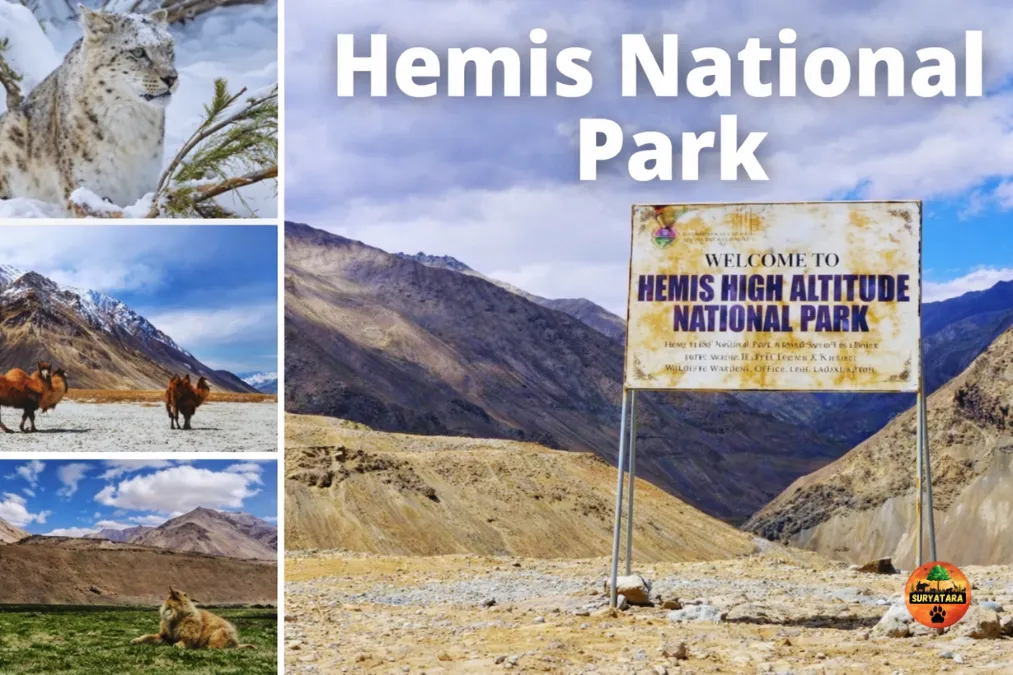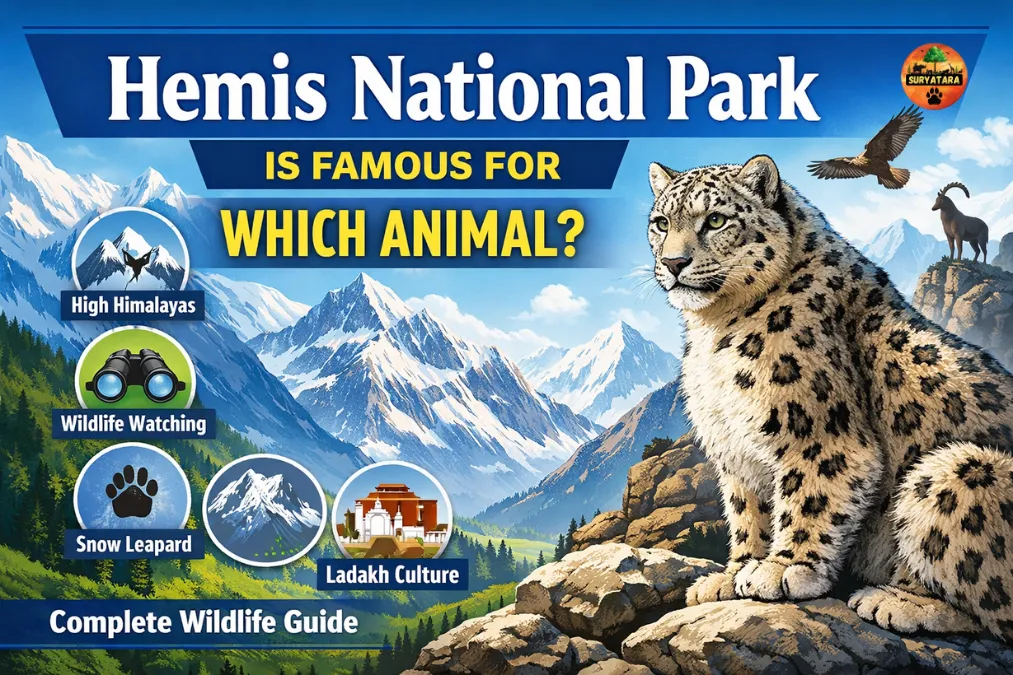
Hemis National Park is famous for which animal is a common question asked by wildlife lovers, students, and travelers planning a trip to Ladakh. Hemis National Park is world-famous for the snow leopard, one of the rarest and most mysterious big cats on Earth. This beautiful national park is often called the Snow Leopard Capital of India because it has the highest population of snow leopards in the country.
Located in the cold desert region of Ladakh, Hemis National Park is not only known for its dramatic mountains and peaceful valleys but also for its rich wildlife. The park plays a very important role in protecting endangered Himalayan animals and preserving the fragile ecosystem of the high-altitude region.
Introduction to Hemis National Park
Hemis National Park is the largest national park in India. It is situated in the union territory of Ladakh, near the famous Hemis Monastery. The park covers an area of more than 4,400 square kilometers and lies at an altitude ranging from 3,300 meters to over 6,000 meters above sea level.
Because of its extreme climate and remote location, human population inside the park is very low. This has helped wildlife survive naturally without much disturbance. The park remains covered with snow for many months, creating perfect conditions for cold-adapted animals.
Hemis National Park Is Famous for Which Animal
Hemis National Park is famous for which animal mainly because of the snow leopard. The snow leopard is the main attraction of the park and the reason why Hemis National Park is internationally famous.
Snow leopards are extremely rare and difficult to spot. However, Hemis National Park has one of the highest densities of snow leopards anywhere in the world. This makes it one of the best places on Earth to observe this elusive animal in its natural habitat.
The presence of the snow leopard has given Hemis National Park global recognition among wildlife researchers, photographers, and nature enthusiasts.
The Snow Leopard: Pride of Hemis National Park
The snow leopard is a large wild cat specially adapted to survive in cold mountain regions. It has thick fur, a long tail for balance, and powerful legs that help it leap across rocky cliffs.
Snow leopards are perfectly camouflaged in the grey and white Himalayan mountains, which makes them almost invisible. They are shy animals and mostly remain active during early morning and evening hours.
In Hemis National Park, snow leopards prey mainly on blue sheep and ibex. The healthy population of prey animals in the park supports a stable snow leopard population.
Why Hemis National Park Is Ideal for Snow Leopards
Hemis National Park provides the perfect natural environment for snow leopards for several reasons.
The park has steep rocky slopes, deep valleys, and high ridges that snow leopards prefer for hunting and resting. The cold climate suits their thick fur, while the remote terrain keeps human interference low.
The abundance of prey species like bharal and Ladakh urial also makes the region ideal for snow leopard survival. Because of these favorable conditions, Hemis National Park supports a strong and breeding population of this endangered animal.
Other Important Animals Found in Hemis National Park
Although Hemis National Park is famous mainly for the snow leopard, many other rare animals live here.
The park is home to the Tibetan wolf, Himalayan brown bear, Eurasian lynx, red fox, and mountain weasel. These animals have adapted to survive extreme cold, limited vegetation, and low oxygen levels.
Among herbivores, the park supports species such as blue sheep, Himalayan ibex, Ladakh urial, Tibetan argali, and yak. These grazing animals form the backbone of the park’s food chain.
Blue Sheep and Their Importance
Blue sheep, also known as bharal, are one of the most common animals in Hemis National Park. They are extremely important because they are the main prey of the snow leopard.
These animals move in large herds and are excellent climbers. Their ability to live on steep cliffs helps them escape predators. A healthy population of blue sheep directly supports the survival of snow leopards in the park.
Birdlife of Hemis National Park
Hemis National Park is also rich in bird species, especially high-altitude Himalayan birds.
Some commonly seen birds include golden eagle, lammergeier, Himalayan griffon, snow partridge, Tibetan snowcock, chukar partridge, and raven.
During summer months, many migratory birds arrive in the region, adding to the biodiversity of the park. Birdwatchers find Hemis National Park a peaceful and rewarding destination.
Flora of Hemis National Park
Due to the cold desert climate, vegetation in Hemis National Park is limited but unique.
The lower areas contain alpine grasslands, shrubs, and medicinal plants. Some commonly found plants include juniper, willow, seabuckthorn, wild roses, and alpine herbs.
These plants provide food for herbivores and are also used by local communities for medicine, fuel, and traditional purposes.
Climate and Geography of the Park
Hemis National Park experiences extreme weather conditions. Winters are long and harsh, with temperatures falling below minus 20 degrees Celsius. Heavy snowfall covers the mountains and restricts movement.
Summers are short but pleasant, with temperatures ranging between 10 and 20 degrees Celsius. Most wildlife sightings occur during summer and early autumn when animals descend to lower altitudes in search of food.
The dramatic landscape of snow-covered peaks, narrow gorges, and wide valleys adds to the beauty of the park.
Best Time to Visit Hemis National Park
The best time to visit Hemis National Park is from June to September. During this period, roads remain open, weather is stable, and wildlife activity increases.
Snow leopard sightings are more common during winter months from January to March. However, winter travel requires special permits and expert guidance due to extreme cold and heavy snow.
Most tourists prefer summer visits for trekking, wildlife observation, and photography.
Snow Leopard Conservation Efforts
The snow leopard is listed as a vulnerable species, and its population is declining in many parts of the world.
Hemis National Park plays a major role in snow leopard conservation in India. The government, wildlife organizations, and local communities work together to protect this species.
Programs such as livestock insurance, eco-tourism, and community-based conservation have reduced human-wildlife conflict and encouraged local people to protect snow leopards instead of harming them.
Role of Local Communities
Local villages inside and around Hemis National Park actively participate in conservation activities.
Many residents work as wildlife guides, homestay owners, trackers, and eco-tourism staff. This provides them with income while reducing dependence on livestock grazing inside sensitive wildlife zones.
Community involvement has been a key reason for the success of snow leopard conservation in this region.
Trekking and Eco-Tourism in Hemis National Park
Hemis National Park is popular not only for wildlife but also for adventure tourism.
Several famous trekking routes pass through the park, including the Markha Valley Trek, Rumbak Valley Trek, and Stok Kangri region.
Eco-tourism promotes responsible travel and creates awareness about wildlife protection. Visitors are encouraged to follow strict guidelines to minimize environmental impact.
Cultural Importance of Hemis Region
The park is closely connected with Ladakhi culture and Buddhism.
The famous Hemis Monastery, one of the largest monasteries in Ladakh, lies near the park. Annual Hemis Festival attracts tourists from across the world and adds cultural value to the region.
The peaceful lifestyle of local people blends harmoniously with nature and wildlife conservation.
Why Hemis National Park Is So Special
Hemis National Park is special because it combines wildlife, culture, landscape, and conservation in one place.
It protects some of the rarest animals on Earth while maintaining harmony between humans and nature. Its high-altitude ecosystem is fragile yet incredibly rich.
The park serves as a living laboratory for scientists studying climate change, mountain ecology, and endangered species.
Also read: Hemis National Park in Which State: Complete Guide to Location, History, Wildlife, and Tourism
Educational Importance of Hemis National Park
Hemis National Park is often included in geography and environmental studies because of its unique features.
Students learn about cold desert ecosystems, high-altitude biodiversity, and wildlife conservation through this park. It stands as an excellent example of sustainable development and community-based conservation.
Interesting Facts About Hemis National Park
Hemis National Park is the largest national park in India.
It has the highest density of snow leopards in the world.
The park is located at altitudes where very few plants and animals can survive.
It remains inaccessible for several months due to heavy snowfall.
The park supports both wildlife conservation and traditional Ladakhi culture.
Also read: Vandalur Zoo Complete Guide: History, Animals, Tickets, Timings, and Visitor Tips
Hemis National Park Is Famous for Which Animal: Final Answer
Hemis National Park is famous for which animal can be clearly answered as the snow leopard. This rare and majestic big cat is the main symbol of the park and the reason for its global recognition.
While many other animals and birds add to the park’s biodiversity, the snow leopard remains its greatest treasure.
Hemis National Park stands as a proud example of India’s commitment to wildlife conservation and ecological balance. Its success in protecting the snow leopard makes it one of the most important national parks not only in India but in the entire Himalayan region.
For anyone interested in wildlife, nature, and adventure, Hemis National Park offers an unforgettable experience in the heart of the Himalayas.