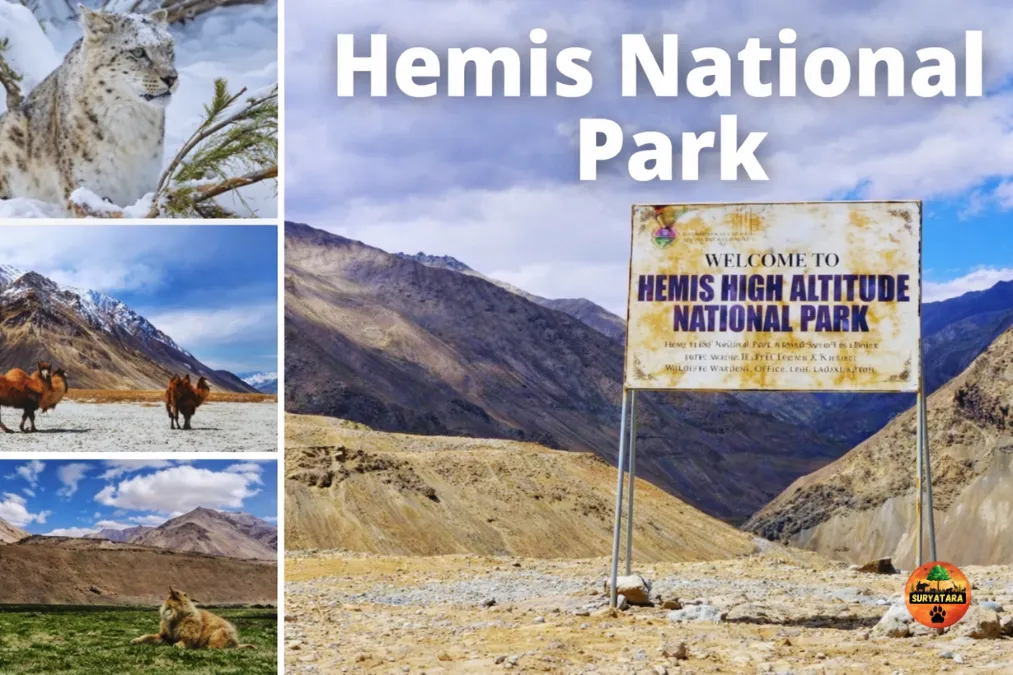
Hemis National Park in which state is a common question asked by nature lovers, students, and travelers who want to learn about India’s famous wildlife destinations. Hemis National Park is located in the Union Territory of Ladakh, in northern India. It is one of the most important national parks in the country and is globally known for its high-altitude ecosystem and rare snow leopard population.
This park is not only the largest national park in India but also one of the highest national parks in the world. Its breathtaking landscapes, rich biodiversity, and cultural importance make it a special place for both wildlife researchers and tourists.
Hemis National Park in Which State and Its Exact Location
To clearly answer the question, hemis national park in which state, the park is located in Ladakh, which earlier was part of Jammu and Kashmir and became a separate Union Territory in 2019.
Hemis National Park lies mainly in the Leh district of Ladakh, along the Indus River valley. It is surrounded by the Zanskar and Ladakh mountain ranges, creating a dramatic high-altitude environment.
The park covers an area of about 4,400 square kilometers, making it the largest protected national park in India. Its altitude ranges from approximately 3,300 meters to over 6,000 meters above sea level.
Overview of Hemis National Park
Hemis National Park was officially declared a national park in 1981. The park is named after the famous Hemis Monastery, one of the largest and richest Buddhist monasteries in Ladakh.
The region is cold, dry, and mountainous, with very little vegetation compared to other forested national parks. Despite this harsh climate, the park supports a surprising variety of wildlife specially adapted to extreme conditions.
Because of its unique geography, Hemis National Park plays a vital role in preserving the fragile Himalayan ecosystem.
Why Hemis National Park Is So Famous
Hemis National Park is internationally famous for several important reasons.
The most significant reason is that it has the highest density of snow leopards in the world. Snow leopards are extremely rare and difficult to spot, and Hemis is considered the best place on Earth to observe them in the wild.
Apart from snow leopards, the park is also known for its untouched landscapes, ancient monasteries, and strong connection between wildlife and local communities.
Its natural beauty attracts photographers, filmmakers, wildlife experts, and adventure seekers from all over the world.
Climate and Geography of Hemis National Park
The climate of Hemis National Park is classified as cold desert climate.
Winters are extremely harsh, with temperatures often falling below minus 20 degrees Celsius. Heavy snowfall occurs in higher regions, cutting off many areas for months.
Summers are short but relatively mild, with temperatures ranging between 10 and 25 degrees Celsius during the day.
The terrain includes rocky mountains, deep valleys, alpine meadows, glaciers, and river systems. Vegetation is limited, but hardy grasses, shrubs, and medicinal plants survive in the cold environment.
Wildlife Found in Hemis National Park
Despite the difficult climate, Hemis National Park supports a remarkable range of wildlife species.
Snow Leopard
The snow leopard is the pride of Hemis National Park. This elusive big cat is perfectly adapted to high-altitude life with thick fur, powerful limbs, and long tails for balance.
Hemis is often called the Snow Leopard Capital of India.
Mammals
Other important mammals found in the park include:
Blue sheep or Bharal
Himalayan ibex
Ladakh urial
Tibetan wolf
Eurasian brown bear
Red fox
Himalayan marmot
These animals play an important role in maintaining the ecological balance of the region.
Birds
Hemis National Park is also home to many bird species, especially during summer.
Commonly seen birds include:
Golden eagle
Lammergeier or bearded vulture
Himalayan griffon
Snow cock
Chukar partridge
Black-necked crane in nearby wetlands
The park is a paradise for bird watchers interested in high-altitude species.
Importance of Hemis National Park in Conservation
Hemis National Park holds great importance for wildlife conservation in India.
It protects endangered species that cannot survive in lowland forests. The snow leopard, Tibetan wolf, and Ladakh urial depend heavily on this protected area.
The park also plays a major role in climate research. Scientists study glacier movement, wildlife migration, and climate change impacts in the Himalayan region through Hemis.
Community-based conservation programs have helped reduce conflicts between humans and wildlife, especially related to livestock losses.
Cultural Significance of Hemis National Park
Hemis National Park is not just about wildlife. It is deeply connected to Ladakh’s culture and traditions.
Many villages and monasteries lie within or near the park boundary. Local people follow Tibetan Buddhism and have lived in harmony with nature for centuries.
The famous Hemis Monastery Festival, held every year, attracts thousands of visitors. The festival features traditional mask dances, music, and rituals celebrating Guru Padmasambhava.
This strong link between culture and conservation makes Hemis unique among Indian national parks.
Best Time to Visit Hemis National Park
The best time to visit Hemis National Park is from May to September.
During these months:
Roads remain open
Weather is relatively pleasant
Wildlife sightings increase
Trekking routes are accessible
July and August are ideal for general tourism, while January to March is best for snow leopard tracking, though temperatures are extremely cold.
Winter visits are suitable only for experienced travelers and wildlife enthusiasts.
How to Reach Hemis National Park
Reaching Hemis National Park requires traveling to Leh, the capital of Ladakh.
By Air
The nearest airport is Kushok Bakula Rimpochee Airport in Leh, which is well connected to major Indian cities like Delhi and Mumbai.
By Road
Leh can be reached by road from:
Manali via the Manali–Leh Highway
Srinagar via the Srinagar–Leh Highway
From Leh city, Hemis National Park is about 40 kilometers away and can be reached by taxi or private vehicle.
Entry Fees and Permissions
Indian and foreign tourists are required to pay a nominal entry fee to enter Hemis National Park.
In some inner areas, special permits may be required, especially for foreign nationals. These permits can be obtained in Leh from government offices or registered travel agencies.
It is always advisable to carry valid identity documents.
Trekking and Adventure Activities
Hemis National Park is one of the most popular trekking destinations in Ladakh.
Famous trekking routes include:
Markha Valley Trek
Rumbak Valley Trek
Stok Kangri region treks
Zanskar connecting routes
These treks pass through remote villages, high mountain passes, and wildlife zones, offering unforgettable experiences.
Photography, camping, and wildlife tracking are also popular activities.
Responsible Tourism in Hemis National Park
Due to its fragile ecosystem, responsible tourism is extremely important in Hemis National Park.
Visitors should:
Avoid plastic waste
Respect wildlife distance
Follow designated trails
Support local homestays
Avoid loud noises
Sustainable tourism helps protect the environment while improving the livelihood of local communities.
Interesting Facts About Hemis National Park
Hemis National Park is the largest national park in India by area.
It is one of the highest altitude protected areas in the world.
The park has more snow leopards than anywhere else on Earth.
Human settlements exist inside the park boundary.
The park was expanded in 1981, doubling its original size.
These unique features make Hemis truly exceptional.
Educational and Research Importance
Hemis National Park serves as an open laboratory for researchers and students.
Universities and conservation organizations conduct studies on:
Snow leopard behavior
Human-wildlife coexistence
High-altitude ecology
Climate change effects
Traditional Ladakhi knowledge
The findings from Hemis contribute to global Himalayan conservation strategies.
Government and NGO Conservation Efforts
Several organizations actively work in Hemis National Park, including:
Snow Leopard Conservancy
Wildlife Institute of India
Ladakh Wildlife Department
Local village conservation groups
These efforts focus on wildlife monitoring, livestock insurance programs, predator-proof corrals, and awareness campaigns.
Such initiatives have significantly reduced retaliatory killings of wild animals.
Read also: Hemis National Park: A Complete Travel Guide to India’s Snow Leopard Capital
Challenges Faced by Hemis National Park
Despite its protected status, Hemis National Park faces several challenges.
Climate change is rapidly melting glaciers and altering habitats.
Increasing tourism puts pressure on natural resources.
Infrastructure development can disturb wildlife corridors.
Human-wildlife conflict still occurs in remote villages.
Continuous planning and community involvement are essential to address these challenges.
Future of Hemis National Park
The future of Hemis National Park depends on balanced development and conservation.
Eco-tourism, scientific research, and traditional lifestyles must work together. Strengthening wildlife protection laws and educating visitors will help preserve this unique landscape.
With proper management, Hemis can remain a global model for high-altitude conservation.
Read also: Dachigam National Park: A Sanctuary of Serenity and Wildlife in Jammu & Kashmir
Conclusion
Hemis national park in which state is a question that leads us to the beautiful region of Ladakh, a land of mountains, monasteries, and rare wildlife. Located in the Union Territory of Ladakh, Hemis National Park stands as India’s largest and most remarkable national park.
From snow leopards and blue sheep to ancient monasteries and dramatic landscapes, Hemis offers a rare combination of nature and culture. Its importance goes far beyond tourism, playing a vital role in biodiversity conservation, climate research, and sustainable living.
Whether you are a student, traveler, or wildlife lover, understanding hemis national park in which state helps you appreciate why this extraordinary park holds such a special place in India’s natural heritage.