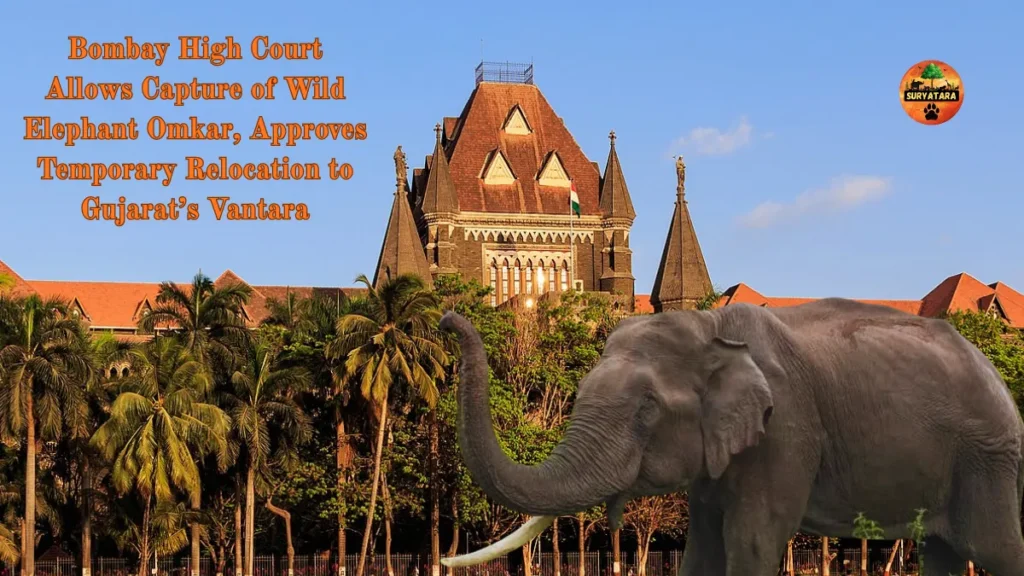
Vantara: In a significant move aimed at ensuring wildlife safety and mitigating rising human–elephant conflict, the Bombay High Court’s Kolhapur bench has granted permission for the capture of a wild elephant named Omkar and its temporary translocation to Vantara, a well-known elephant care and rehabilitation facility in Gujarat. The order, delivered by Justices M. S. Karnik and Ajit Kadethankar, emphasizes that Omkar must be captured with utmost care to avoid stress, injury, or trauma during the operation.
The High Court stated that Vantara will supervise Omkar’s welfare and training with minimal human intervention, ensuring the animal is handled with compassion and according to wildlife care standards.
This directive comes in response to a public interest litigation (PIL) filed by conservation activist Rohit Kamble, who raised concerns about Omkar’s safety after the elephant reportedly strayed from its herd, entered human settlements, and became involved in multiple conflict incidents across the Kolhapur and Sindhudurg districts.
A Wild Elephant Caught Between Forest and Human Habitation
According to the PIL, Omkar entered Maharashtra from Karnataka as part of its natural migratory movement. However, after getting separated from its herd, the young elephant began traveling through multiple villages, farmlands, and semi-urban areas. This created increasing tension between local residents and forest authorities, who struggled to safely guide the elephant back into the wilderness.
Forest officials informed the court that Omkar posed a threat not only to human life and property but also to its own survival, as the region’s fragmented habitat made it difficult for solitary wild elephants to navigate safely. Due to multiple incidents involving crop damage, property destruction, and at least one reported fatality, the department determined that capturing Omkar was the only practical solution to prevent additional harm.
Officials also confirmed that Vantara was the only facility willing to house, rehabilitate, and provide long-term care for the displaced elephant.
Why Vantara Was Selected for Omkar’s Temporary Rehabilitation
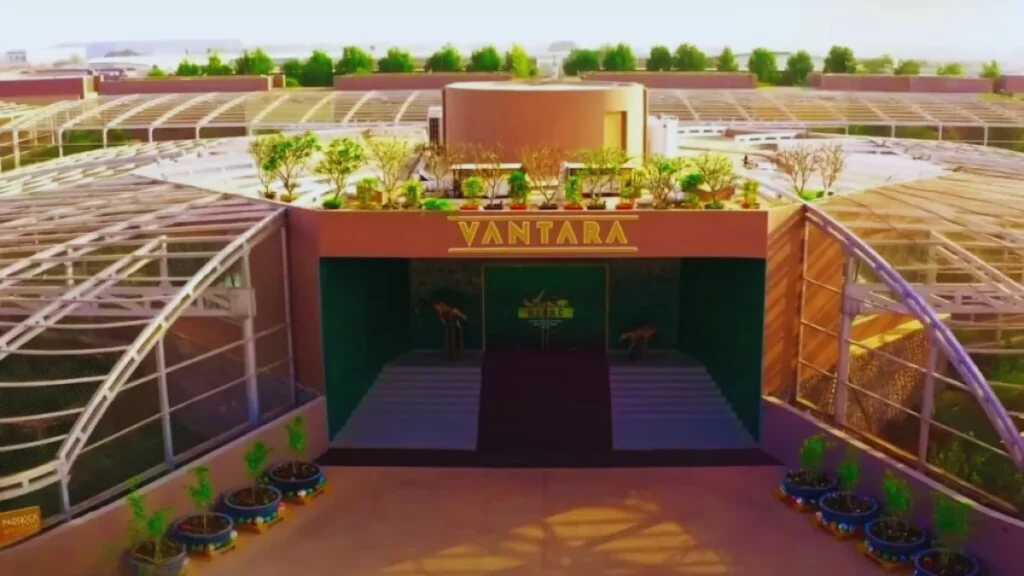
The Radha Krishna Temple Elephant Welfare Trust, commonly known as Vantara, has become one of the country’s most advanced centers for elephant care, therapeutic recovery, and long-term rehabilitation. The forest department told the High Court that Vantara has the necessary space, expertise, veterinary support, and trained mahouts to manage a displaced elephant like Omkar.
Authorities further emphasized that the relocation would be strictly temporary. A high-powered committee appointed by the Supreme Court will later determine Omkar’s long-term future, ensuring that all decisions prioritize ecological balance, wildlife safety, and scientific assessment.
Kamble, however, argued that transferring a wild elephant to Vantara—a facility known mainly for housing captive and rescued elephants—could affect Omkar’s natural instincts. He contended that India’s wildlife laws do not explicitly permit the transfer of wild animals to privately managed entities, and urged the court to consider rehabilitating the elephant at the Radhanagari Wildlife Sanctuary in Kolhapur instead.
Court Notes Escalating Conflict and Omkar’s Rising Vulnerability
Despite the petitioner’s concerns, the High Court noted that Omkar had been involved in several incidents of aggression and damage, including an event in April when the elephant accidentally killed a man in Dodamarg in Sindhudurg district.
The judges also highlighted a shocking incident in November where individuals hurled powerful firecrackers at Omkar while it was bathing, an act the court described as “unfortunate and inhuman.” Such attacks, the court observed, reflect the intensifying strain between local communities and wildlife.
Forest officials estimated Omkar’s age to be around 10 years, a stage of development where young elephants still depend on herd structure for survival and social learning. Releasing Omkar back into the wild without a herd, they said, would significantly reduce the animal’s chances of survival.
Ecological Importance of Elephants Recognized by the High Court
In its detailed order, the bench emphasized the crucial ecological role elephants play in sustaining forest landscapes. Classified as endangered in India, elephants face growing threats from habitat loss, fragmentation, and clashes with expanding human settlements.
The court stated:
“Elephants are officially classified as endangered in India, reflecting the serious pressures they face. The elephant population is under constant threat from habitat degradation and human-elephant conflict. Protecting elephants is essential to maintaining the ecological balance of forests.”
The judges agreed with the forest department’s assessment that Omkar requires a herd-like environment and regular interaction with other elephants, which Vantara can facilitate under controlled conditions.
Legal and Administrative Oversight for Omkar’s Future
While approving the temporary translocation, the High Court stressed the importance of structured oversight. It instructed the Maharashtra forest department to submit a full proposal to the Supreme Court-appointed high-powered committee, detailing both:
- The immediate plan for Omkar’s temporary relocation to Vantara
- A long-term management strategy outlining future rehabilitation or reintegration options
The committee must review the proposal and provide recommendations within two weeks.
This ensures that the decision-making process remains transparent, science-driven, and aligned with India’s wildlife protection laws.
A Complex Conservation Dilemma: Balancing Safety, Ecology, and Welfare
Omkar’s case underscores a broader conservation challenge across India: managing human–elephant conflict in regions where forests continue to shrink and elephant migratory paths are increasingly disrupted.
Wildlife experts note that solitary young elephants are especially vulnerable. Without a herd, they struggle to navigate landscapes, find food, or protect themselves from threats—both natural and human-made. When such elephants enter villages or farming areas, fear and frustration among residents often escalate, leading to dangerous encounters.
In this context, the High Court’s decision reflects an attempt to balance:
- Human safety
- Wildlife protection
- Ecological sustainability
- Legal compliance
- Welfare of the displaced elephant
The temporary relocation to Vantara has been positioned not as a permanent removal of Omkar from the wild, but as an intermediate, welfare-focused intervention until a scientifically informed long-term plan is finalized.
Also read: Vantara Zoo Total Area: Inside India’s Largest Wildlife Rescue and Conservation Project
Vantara’s Role in India’s Evolving Wildlife Rehabilitation Landscape
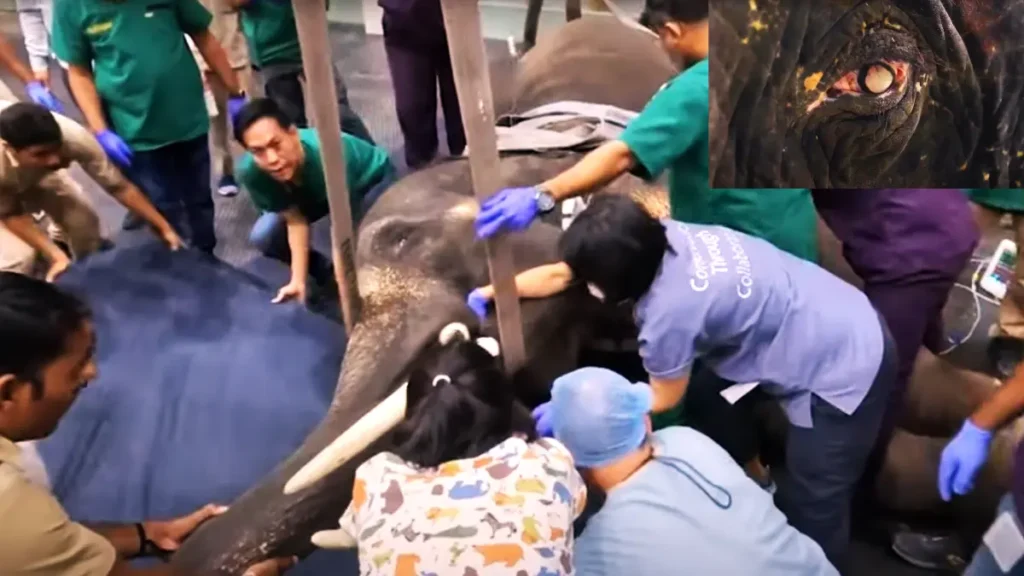
The case has brought renewed attention to Vantara’s growing prominence as a rehabilitation and conservation center. Over the years, Vantara has developed specialized care programs for elephants suffering from injury, abandonment, captivity trauma, or displacement. Its facilities include:
- Open forest enclosures
- Veterinary hospitals
- Hydrotherapy pools
- Nutritional rehabilitation programs
- Highly trained wildlife staff
The High Court acknowledged that Omkar’s temporary placement in such a setting could help stabilize the elephant’s behavior, improve health, and offer social interaction with other elephants—factors essential for long-term reintegration potential.
Also read: Vantara Sanctuary Stories Now Streaming on JioHotstar: A Journey of Rescue, Rehabilitation, and Hope
Conclusion: A Court-Monitored Path Forward for Omkar
The Bombay High Court’s decision marks a pivotal moment in Omkar’s journey from a conflict-prone landscape to a supervised sanctuary environment at Vantara. With strict instructions to protect the elephant from harm during capture and transport, the court has placed wildlife welfare at the center of the process.
As the Supreme Court’s high-powered committee prepares to evaluate the forest department’s proposal, Omkar’s long-term future—whether integration into a herd, continued rehabilitation, or another conservation plan—will be determined with scientific guidance and legal oversight.
The case symbolizes a larger national challenge: ensuring peaceful coexistence between India’s expanding human populations and its endangered wild elephants. Omkar’s temporary shift to Vantara may serve as a benchmark for how India manages similar wildlife conflict situations in the future, prioritizing both ecological integrity and compassionate treatment of endangered species.