
bandhavgadh national park: A serious case of illegal encroachment involving nearly 200 acres of protected forest land inside Bandhavgarh National Park has now escalated to the Madhya Pradesh High Court, triggering renewed attention on environmental protection and administrative accountability. The High Court has taken a strict stance on the issue and issued formal notices to concerned government authorities, demanding immediate action to safeguard the ecologically sensitive land.
Bandhavgarh National Park, globally renowned for its rich biodiversity and one of the highest densities of Royal Bengal tigers, is considered a vital ecological asset not only for Madhya Pradesh but for India as a whole. Any damage to its protected forest land raises major concerns about wildlife conservation, environmental balance, and the enforcement of forest laws.

What Is the Case About?
The controversy centers on approximately 200 acres of forest land within the territorial limits of Bandhavgarh National Park, located in Umaria district. According to complaints and records submitted to the court, several individuals and organized groups allegedly occupied this land illegally over a prolonged period.
Despite repeated complaints from environmental activists, local residents, and wildlife conservation groups, no effective action was taken at the administrative level to remove the encroachments. Temporary structures, agricultural activity, and unauthorized use of forest resources reportedly continued unchecked, causing gradual but significant damage to the protected ecosystem.
The lack of enforcement allowed the encroachment to expand, raising fears that such illegal occupation could become permanent if not addressed urgently.
High Court Takes Suo Motu Cognizance
Recognizing the seriousness of the matter, the Madhya Pradesh High Court took suo motu cognizance, meaning it acted on its own initiative without waiting for a formal petition from affected parties. The court’s intervention underscores the gravity of the issue and the potential long-term consequences of inaction.
The High Court issued notices to senior officials of the Forest Department, district administration, and other relevant authorities, seeking detailed explanations regarding the failure to prevent and remove illegal occupation of protected forest land.
The court also directed officials to submit a clear action plan outlining how and when the encroachments would be removed, and what measures would be implemented to prevent similar incidents in the future.
Importance of Bandhavgarh National Park
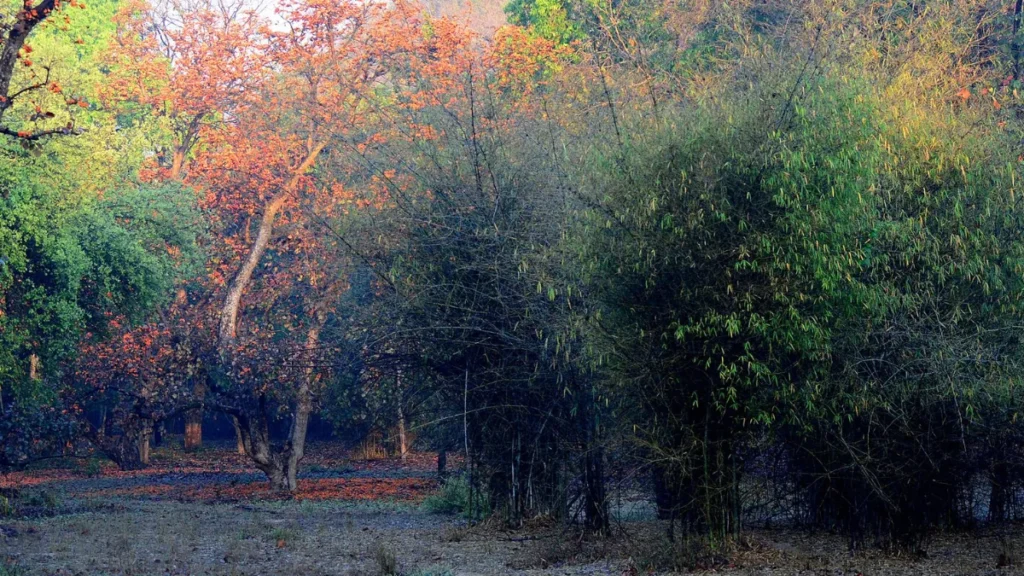
Bandhavgarh National Park holds a special place among India’s wildlife reserves. Spread across dense forests, grasslands, and hilly terrain, the park is home to:
- One of the highest tiger populations in India
- Leopards, deer, wild boars, sloth bears, and numerous bird species
- Ancient caves, historical fort ruins, and tribal heritage
Any encroachment on land within Bandhavgarh National Park directly threatens these fragile ecosystems. Forest land is not just empty territory—it serves as vital habitat corridors, breeding grounds, and water catchment areas essential for wildlife survival.
Environmental experts warn that even limited human activity inside protected zones can disrupt animal movement, increase human-wildlife conflict, and accelerate habitat fragmentation.
Questions Raised on Administrative Failure
The case has sparked widespread criticism of the Forest Department and local administration, with many questioning how such large-scale encroachment was allowed to continue for so long.
Forest laws in India are among the strictest, especially within tiger reserves and national parks. However, critics argue that weak enforcement, lack of monitoring, and possible administrative negligence created an environment where illegal occupation could flourish.
Environmentalists point out that early intervention could have prevented the situation from escalating. Instead, repeated warnings were allegedly ignored, allowing encroachers to establish a stronger foothold.
Environmental and Wildlife Impact
Illegal occupation of forest land inside Bandhavgarh National Park has multiple negative consequences:
- Loss of Wildlife Habitat: Encroachment reduces available space for animals, forcing them closer to human settlements.
- Increased Human-Wildlife Conflict: Tigers and other animals may stray into villages, leading to dangerous encounters.
- Deforestation and Soil Degradation: Clearing land for farming or construction damages forest cover.
- Threat to Biodiversity: Disruption of food chains and breeding patterns affects the entire ecosystem.
Wildlife experts emphasize that tiger reserves like Bandhavgarh depend on strict protection of every acre of forest land. Even minor violations can have far-reaching ecological consequences.
Judiciary’s Role in Environmental Protection
The High Court’s firm response highlights the growing role of the judiciary in environmental governance. In recent years, Indian courts have increasingly stepped in to protect forests, rivers, and wildlife when administrative mechanisms fail.
By issuing notices and demanding accountability, the court has sent a strong message that protected forest land is not negotiable, and violations will not be tolerated—regardless of how long they have existed.
Legal experts believe this case could set an important precedent for future actions against illegal encroachments in national parks and tiger reserves across the country.
Read also: Kanha National Park Ticket Price: A Detailed Breakdown for First-Time Visitors
Expectations from Authorities
Following the court’s intervention, there is now heightened public expectation that authorities will act swiftly and decisively. Conservation groups are urging the administration to:
- Conduct a detailed land survey
- Identify all illegal occupants
- Remove encroachments without delay
- Restore damaged forest areas
- Strengthen surveillance and patrolling
There is also a demand for fixing responsibility and taking disciplinary action against officials found guilty of negligence.
A Test Case for Conservation Enforcement
The illegal encroachment case at Bandhavgarh National Park is more than a local land dispute—it is a test of India’s commitment to wildlife conservation and rule of law.
With increasing pressure on forest land due to population growth and development, protecting national parks has become more challenging than ever. Strong judicial oversight, combined with accountable administration, is crucial to ensure that protected areas remain truly protected.
Read also: Vantara Team in Ujjain: ₹350 Crore International Safari, Rescue Centre, and Zoo Project Underway
Conclusion-bandhavgadh national park
The High Court’s intervention in the illegal encroachment of 200 acres of forest land inside Bandhavgarh National Park has brought renewed hope for conservationists and wildlife lovers. It reinforces the idea that natural heritage cannot be sacrificed to negligence or illegal interests.
As the case unfolds, all eyes will be on how effectively the administration complies with court directives. The outcome will not only determine the future of the encroached land but also set the tone for environmental protection efforts across India.
For one of the country’s most iconic tiger reserves, the stakes could not be higher. Protecting Bandhavgarh National Park is not just about preserving land—it is about safeguarding biodiversity, ecological balance, and the legacy of India’s natural treasures for future generations.