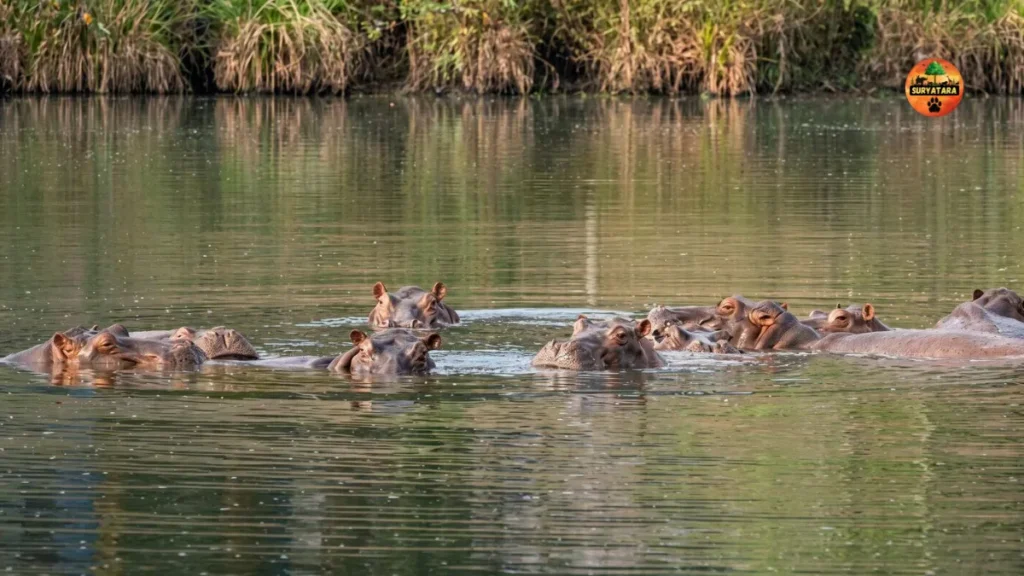
The growing controversy surrounding Colombia’s invasive hippopotamus population has taken a new turn after Vantara, the wildlife rescue and conservation initiative founded by Anant Ambani, offered to relocate dozens of the animals to India instead of allowing them to be euthanised.
Vantara announced on Tuesday that it has formally appealed to the Colombian government to reconsider a recently approved plan permitting the lethal removal of 80 hippos living in the Magdalena River basin. The organisation has proposed transferring the animals to its large-scale wildlife rescue facility in Jamnagar, Gujarat, where they would receive long-term care in a specially designed habitat.
The proposal comes amid increasing international concern over how Colombia plans to manage the rapidly expanding hippo population, which authorities say poses environmental and public safety risks.
Anant Ambani Calls for Humane Alternative
Anant Ambani, Executive Director of Reliance Industries and founder of Vantara, has written to Colombia’s Environment Ministry urging officials to pause the planned cull and evaluate relocation as a non-lethal solution.
According to Vantara, the organisation is prepared to handle every stage of the process, including veterinary supervision, secure capture operations, specialised transport arrangements, quarantine procedures and permanent rehabilitation.
Ambani said the hippos should not be blamed for the circumstances that led to the current crisis.
“These animals did not choose the environment they were brought into,” he said while stressing the need for a compassionate and science-based response. He added that conservation efforts and community safety should be addressed together rather than treated as competing priorities.
Vantara also stated that any relocation would only move forward after receiving approvals from Colombian and Indian authorities, along with all required international clearances.
Colombia’s Hippo Problem Continues to Grow
The hippopotamuses living in Colombia are descendants of animals that were illegally imported during the 1980s and later escaped into the wild. Over the decades, the animals adapted successfully to the country’s tropical conditions and reproduced rapidly due to the absence of natural predators.
Wildlife experts estimate that around 200 hippos now inhabit areas surrounding the Magdalena River basin. Colombian environmental agencies have repeatedly warned that the growing population is damaging local ecosystems, threatening native species and increasing the risk of dangerous encounters with nearby communities.
Hippos are considered one of the world’s most aggressive large mammals and can cause serious harm when humans come too close. Authorities in Colombia argue that population control measures are necessary to prevent long-term ecological imbalance and safety concerns.
The government’s decision to authorise the euthanasia of 80 animals has triggered global debate among conservationists, animal welfare advocates and environmental scientists. While some experts support controlled culling as a practical solution, others have called for sterilisation, relocation or habitat management strategies instead.
Vantara Expands Its Global Conservation Role
Based in Jamnagar, Gujarat, Vantara has emerged as one of India’s most prominent wildlife rescue and rehabilitation centres. The facility houses rescued elephants, big cats, reptiles, birds and several other species requiring specialised care.
The organisation says it has developed advanced infrastructure capable of supporting large-scale animal rescue operations and long-term conservation programmes. Its latest proposal involving the Colombian hippos reflects a broader effort to position Vantara as a participant in international wildlife welfare initiatives.
If approved, the transfer would represent one of the most ambitious wildlife relocation exercises involving hippos in recent years. However, experts note that transporting such large and potentially dangerous animals across continents would involve complex logistical, environmental and legal challenges.
For now, Colombian authorities have not announced whether they will reconsider the approved culling plan. The debate, however, has intensified global attention on how governments balance ecological protection with animal welfare in managing invasive species populations.