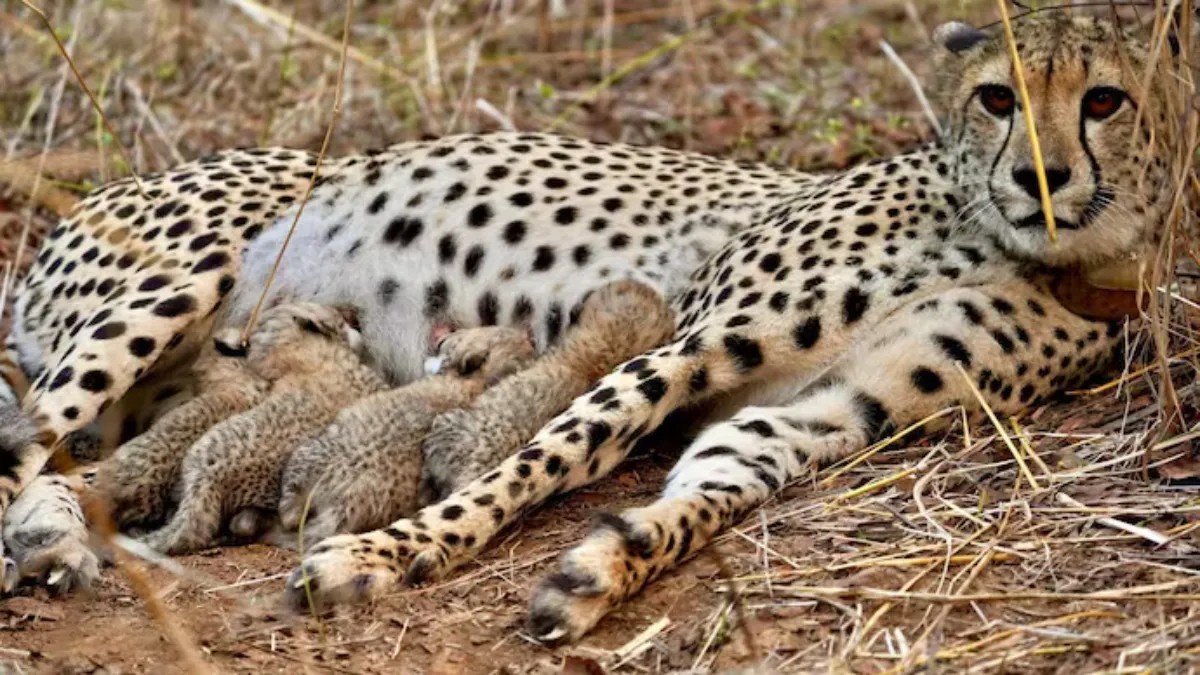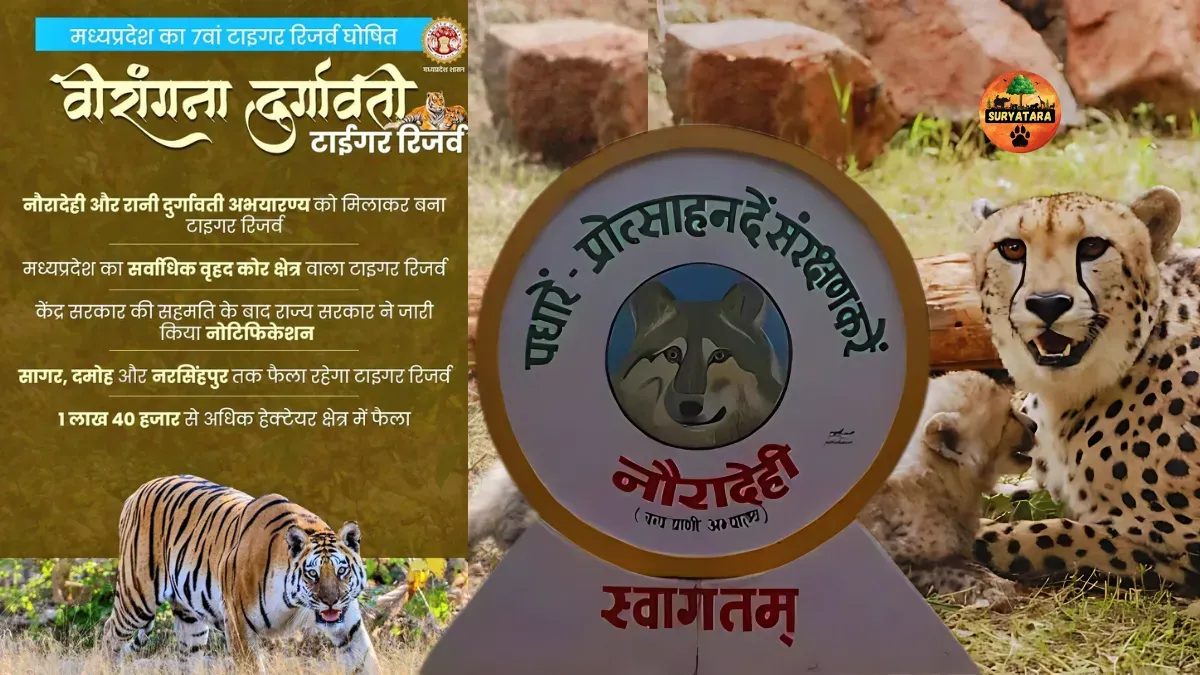
Madhya Pradesh: One of India’s most significant wildlife habitats, Nauradehi Wildlife Sanctuary, is set to play a major role in wildlife conservation as authorities prepare to introduce cheetahs into the sanctuary within the next two months. The move is part of India’s ambitious cheetah reintroduction programme aimed at restoring the species to the country’s ecosystems after it went extinct in India decades ago.
Spread across three districts of Madhya Pradesh, Nauradehi Wildlife Sanctuary is the largest wildlife sanctuary in the state and a vital ecological zone that supports diverse plant and animal species. The sanctuary’s vast landscape, rich biodiversity, and strategic location make it a promising habitat for the reintroduction of cheetahs.
India’s Largest Wildlife Sanctuary in Madhya Pradesh
Located in central India, Nauradehi Wildlife Sanctuary covers an expansive area of approximately 1,187 square kilometres, making it the largest protected wildlife sanctuary in Madhya Pradesh. The sanctuary lies on a plateau in the upper Vindhyan mountain range, which provides a unique geographical setting with varied terrain and natural vegetation.
Due to its strategic location, the sanctuary functions as an important ecological corridor, linking three of India’s major tiger reserves—Panna Tiger Reserve, Satpura Tiger Reserve, and Bandhavgarh Tiger Reserve. This connectivity allows wildlife to move across large forest landscapes, helping maintain healthy populations of several species.
Ecologically, the sanctuary falls under the Deccan Peninsula biogeographic region, which is known for its dry deciduous forests, grasslands, and diverse wildlife.
River Systems and Drainage Network
The landscape of Nauradehi Wildlife Sanctuary is shaped by an extensive river system that supports the region’s biodiversity. Approximately three-fourths of the sanctuary falls within the Yamuna (Ganga) river basin, while the remaining one-fourth lies in the Narmada basin.
Several rivers flow through the sanctuary, providing water resources essential for wildlife. The Kopra River, Bamner River, and Bearma River are among the major water bodies in the area. These rivers flow northward and act as tributaries of the Ken River, contributing to the sanctuary’s rich ecosystem and sustaining both plant and animal life.
Rich Vegetation and Forest Landscape
One of the key features of Nauradehi Wildlife Sanctuary is its diverse vegetation. The sanctuary is covered with lush green forests, small grasslands, and dense tropical dry and mixed deciduous forests. This mix of forest types creates ideal conditions for a wide range of wildlife species.
The sanctuary’s forests are dominated by teak trees, which form the backbone of the region’s vegetation. Alongside teak, several other plant species grow naturally in the sanctuary. Common flora found in the area include Saja, Dhaora, Bhirra, Ber, Bel, Mahua, Tendu, Gunja, and Amla. These plants play a crucial role in maintaining ecological balance while also supporting local wildlife.
Home to Diverse Wildlife Species
The sanctuary supports a rich variety of wildlife, making it one of the most important biodiversity zones in central India. Several mammal species inhabit the forests and grasslands of Nauradehi Wildlife Sanctuary.
Among the major predators found here are Bengal tigers, leopards, Indian wolves, and sloth bears. The sanctuary also supports many herbivorous species such as sambar deer, nilgai, and chinkara, which form an essential part of the food chain. In addition, the sanctuary hosts numerous bird species, making it attractive for birdwatchers and wildlife enthusiasts.
A Key Site for India’s Cheetah Reintroduction Project
The upcoming introduction of cheetahs has brought Nauradehi Wildlife Sanctuary into the global conservation spotlight. India’s cheetah reintroduction programme aims to restore the big cat population in suitable habitats across the country.
Authorities have identified the sanctuary as a suitable site because of its large landscape, prey availability, and ecological connectivity with nearby forests. If successful, the project could significantly strengthen India’s wildlife conservation efforts and revive ecosystems where cheetahs once roamed.
Also Read: Barda Wildlife Sanctuary: Gujarat’s Forgotten Green Shield and a Future Home for Asiatic Lions
A Crucial Conservation Landscape
With its vast forests, diverse wildlife, and strategic ecological location, Nauradehi Wildlife Sanctuary remains one of India’s most important conservation landscapes. The planned arrival of cheetahs is expected to further enhance the sanctuary’s ecological significance while also attracting global attention to India’s wildlife protection initiatives.
As preparations continue for the cheetah introduction, conservationists and wildlife officials remain hopeful that Nauradehi Wildlife Sanctuary will soon become a thriving habitat for one of the world’s fastest land animals, marking a major milestone in India’s wildlife restoration efforts.