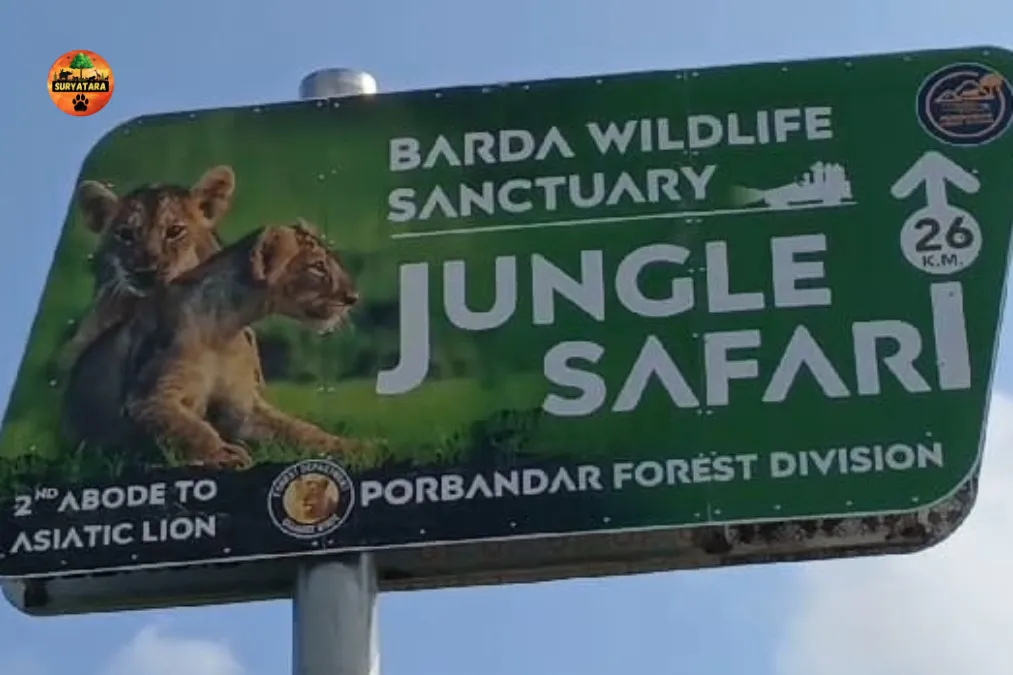
Barda Wildlife Sanctuary: Just 15 kilometres away from the Arabian Sea coastline of Porbandar town lies one of western India’s most ecologically significant yet lesser-known forest regions — Barda Wildlife Sanctuary. Nestled within the Porbandar district of Gujarat, this hilly forest landscape stands as a natural barrier against coastal salinity intrusion while preserving a rich legacy of biodiversity, history, and traditional lifestyles.
Declared a protected wildlife sanctuary in February 1979, Barda Wildlife Sanctuary plays a crucial role in Gujarat’s environmental balance. Despite its relatively modest geographical size, the sanctuary is considered one of the most botanically diverse forest regions in the state and holds long-term potential as a secondary habitat for the Asiatic lion, one of the world’s rarest big cats.
Strategic Location Near Porbandar Coast
Barda Wildlife Sanctuary is strategically located in the semi-arid Saurashtra region, approximately 15 km inland from the Porbandar coastline. Its forested hills act as a critical ecological buffer, preventing saline seawater from advancing inland — a persistent threat to agriculture and groundwater reserves in coastal Gujarat.
The sanctuary’s terrain is dominated by low hills, seasonal streams, and forest patches that support both wildlife and surrounding human settlements. This natural landscape has quietly protected the region for decades, offering ecological services that go far beyond tourism.
Historical Roots: Land of Two Royal States
The region encompassing Barda Wildlife Sanctuary holds deep historical importance. Before India’s independence, the forest fell under two princely states:
- Rana Barda, ruled by the Ranas of Porbandar
- Jam Barda, governed by the Jamsahebs of Jamnagar
These rulers maintained forest traditions that limited large-scale exploitation, allowing Barda’s ecosystems to survive relatively intact into modern times. The sanctuary thus reflects a rare blend of royal heritage and ecological continuity.
Sanctuary Size and Landscape
Covering an area of 192.31 square kilometres, Barda Wildlife Sanctuary is considered small compared to other Indian wildlife reserves. However, conservation experts emphasize that size alone does not define ecological value.
The sanctuary’s landscape includes:
- Rocky hill ranges
- Dry deciduous forest zones
- Seasonal water bodies
- Natural grass patches
This diversity of habitats supports a wide range of plant and animal species, making Barda a compact yet ecologically powerful reserve.
Exceptional Floral Diversity: A Botanical Treasure of Gujarat
One of the most remarkable features of barda wildlife sanctuary is its extraordinary plant diversity. With over 650 documented plant species, Barda is considered to have the highest floral diversity in Gujarat.
Rare and Medicinal Plants
A significant percentage of the plant species found in Barda are classified as:
- Rare
- Endangered
- Medicinally important
Many of these plants are used in traditional Indian medicine systems and have survived due to limited human disturbance within the sanctuary.
Dominant Tree Species
The forest canopy and undergrowth are made up of native species well-adapted to the region’s climate, including:
- Gorad
- Babul
- Dhav
- Rayan
- Ber
- Jamun
- Amla
- Dhudhlo
- Bamboo
These plant species not only support wildlife but also play a vital role in soil conservation, water retention, and climate regulation.
Wildlife Profile: Past Presence and Future Potential
Although barda wildlife sanctuary currently lacks large populations of flagship mammals, historical records confirm the presence of several important species in the recent past.
Ungulates Once Found in Barda
Species such as:
- Sambar deer
- Chital (spotted deer)
- Chinkara (Indian gazelle)
were previously part of Barda’s ecosystem. Conservation experts believe that the sanctuary’s habitat remains highly suitable for reintroducing these ungulates.
Restoring these herbivore populations is seen as a key step in rebuilding the food chain.
Leopard Habitat and Predator Balance
With the reintroduction of prey species, Barda Wildlife Sanctuary could naturally support large carnivores such as the Indian leopard. The forest structure, terrain, and prey availability make it an ideal environment for sustaining predator-prey balance.
A strong prey base would reduce human-wildlife conflict by keeping predators within forest boundaries rather than near villages.
Barda as the Second Home of the Asiatic Lion
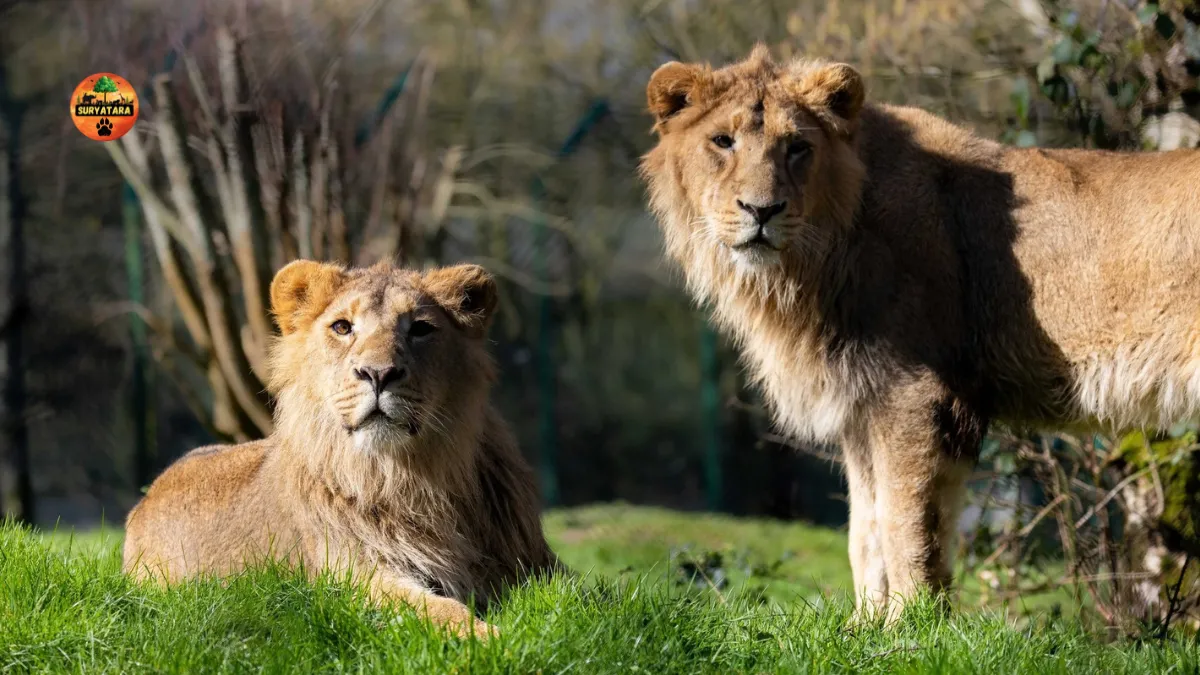
Perhaps the most ambitious and historically significant conservation vision for barda wildlife sanctuary is its role as a second habitat for the Asiatic lion.
Gir-Barda Project
Recognising the ecological similarities between Gir Forest and Barda, the Government of Gujarat launched the Gir-Barda Project in 1979, the same year Barda was declared a sanctuary.
The project aimed to:
- Reduce overdependence on Gir Forest
- Create a backup population zone for Asiatic lions
- Strengthen long-term species survival
Barda’s terrain, climate, and vegetation closely resemble Gir’s ecosystem, making it one of the most viable alternatives for lion conservation.
Importance of Water and Soil Conservation
Experts stress that soil and moisture conservation projects are essential for unlocking Barda’s full ecological potential.
Recommended measures include:
- Construction of small check dams
- Rainwater harvesting structures
- Restoration of seasonal streams
Such interventions would:
- Improve groundwater levels
- Enhance vegetation growth
- Support wildlife year-round
- Strengthen the overall habitat
Tribal Communities and Traditional Life
Several indigenous and pastoral communities have lived around the sanctuary for generations, forming an integral part of the region’s social fabric.
These include:
- Maldharis
- Bharvads
- Rabaris
- Gadhvis
Their traditional knowledge of grazing patterns, medicinal plants, and forest conservation has historically contributed to the region’s ecological balance.
Modern conservation efforts increasingly recognise the importance of involving these communities as partners rather than obstacles.
Need for a Comprehensive Management Plan
Environmentalists and wildlife planners consistently highlight the need for a comprehensive, long-term management plan for Barda Wildlife Sanctuary.
Such a plan should focus on:
- Habitat restoration
- Wildlife reintroduction
- Community participation
- Scientific monitoring
- Eco-tourism development without ecological damage
A well-executed management strategy could transform Barda into one of India’s most successful conservation models.
How to Reach Barda Wildlife Sanctuary
Barda Wildlife Sanctuary is easily accessible due to its proximity to Porbandar city.
By Road
Porbandar is well connected by state transport and private buses to major cities across Gujarat. Regular road services make travel convenient for visitors.
By Train
Porbandar has a railway station with connections to major destinations within the state and beyond, making rail travel a viable option.
By Air
The city is served by Porbandar Domestic Airport, which offers reasonable connectivity to major Indian cities, enabling quick access for travellers.
Also read: Ralamandal Wildlife Sanctuary Distance from Indore: Complete Travel Guide for Visitors
Future of Barda Wildlife Sanctuary
With increasing attention on sustainable conservation and biodiversity protection, barda wildlife sanctuary stands at a crossroads.
If managed effectively, it can:
- Serve as a second stronghold for Asiatic lions
- Protect rare plant species
- Support regional climate resilience
- Promote responsible eco-tourism
- Strengthen local livelihoods
Often overshadowed by more famous reserves, Barda remains one of Gujarat’s most promising ecological assets — a sanctuary not just of wildlife, but of history, culture, and hope for the future.
Also read: Ralamandal Wildlife Sanctuary Indore Complete Travel and Nature Guide
Conclusion:
Barda Wildlife Sanctuary is not merely a forest patch near Porbandar. It is a living ecosystem with the potential to play a decisive role in India’s wildlife conservation story. As awareness grows, Barda may finally receive the recognition it deserves — as Gujarat’s silent green guardian and a future refuge for one of the planet’s most iconic species