Porbandar, Gujarat:
Gujarat has added another jewel to its eco-tourism crown with the official opening of the Barda Wildlife Sanctuary and Jungle Safari, a long-anticipated conservation and tourism project located near the coastal city of Porbandar. Designed to promote wildlife preservation while offering visitors an immersive jungle experience, Barda is being seen as a quieter, more serene alternative to the famed Gir Forest.
The first phase of the Barda Jungle Safari was formally inaugurated on October 29 at the Kapurdi Forest Check Post in Devbhumi Dwarka district. The launch ceremony was attended by Gujarat’s Forest and Environment Minister Mulubhai Bera, along with Jamnagar Member of Parliament Poonam Madam, marking a significant step forward in the state’s wildlife tourism initiatives.
Spanning nearly 192 square kilometres, the Barda Wildlife Sanctuary blends dense forest cover, rolling hills, riverine landscapes, and rich biodiversity, making it one of western India’s most promising new wildlife destinations.
Barda Wildlife Sanctuary: A Strategic Conservation Zone Near Porbandar
Located just 15 kilometres from Porbandar, the Barda Wildlife Sanctuary occupies a unique geographical position. The hilly terrain of the Barda Hills acts as a natural barrier, protecting the forest ecosystem from coastal saltwater intrusion while supporting a wide range of plant and animal species.
The sanctuary was officially declared a protected wildlife area in February 1979, long before tourism infrastructure was developed. For decades, it remained largely inaccessible to the public, serving primarily as a conservation reserve. With the launch of the jungle safari, visitors can now explore this pristine forest in a controlled and sustainable manner.
Wildlife experts have long regarded Barda as an ecologically critical zone, particularly because of its role in supporting Asiatic lion populations outside the Gir landscape.
Official Launch of the Barda Jungle Safari
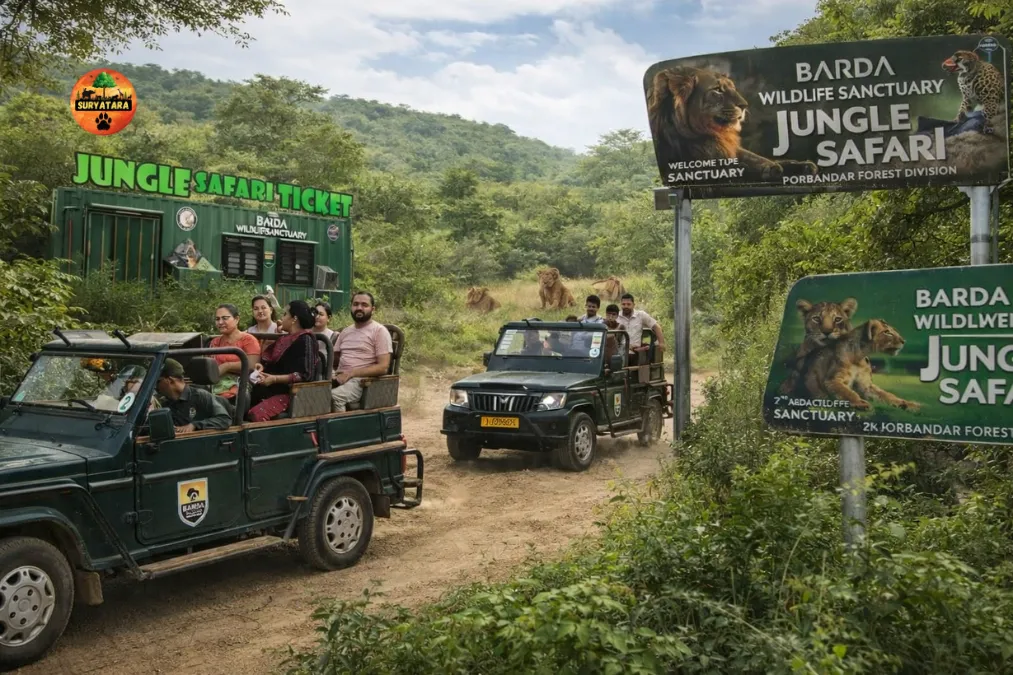
The opening of the barda wildlife sanctuary and jungle safari represents a carefully planned collaboration between conservation authorities and tourism planners. The Phase-1 safari route begins at the Kapurdi Check Post and passes through some of the most scenic sections of the forest.
During the inauguration, officials emphasized that the project aims to balance tourism, conservation, and community involvement, ensuring that wildlife protection remains the top priority.
According to forest department officials, Barda is being developed as a low-impact safari destination, with strict visitor limits, trained guides, and regulated jeep movement to minimize disturbance to animals.
A Calm Alternative to Gir National Park
While Gir National Park remains the most famous home of the Asiatic lion, it often attracts heavy tourist traffic. Barda Wildlife Sanctuary offers a contrasting experience—less crowded, quieter, and more intimate with nature.
Tourists visiting Barda can expect:
- Fewer safari vehicles
- Peaceful forest surroundings
- Greater chances to observe wildlife without noise or congestion
- A more relaxed, immersive jungle experience
For travellers who prefer solitude and natural exploration over high-volume tourism, the Barda Wildlife Sanctuary and Jungle Safari provides an ideal alternative.
How to Book the Barda Wildlife Sanctuary Jungle Safari
At present, online booking for the Barda Jungle Safari is not available. All reservations are handled directly by the Gujarat Forest Department, ensuring transparency and visitor safety.
Booking Options
- Safari permits can be arranged through official forest department contacts
- Advance bookings are available at the Kapurdi Forest Check Post
- On-site assistance is provided by forest staff
Important Advisory
The Forest Department has clearly stated that it does not take responsibility for bookings made through unofficial websites, agents, or third-party platforms. Visitors are strongly advised to rely only on authorized channels to avoid fraud or misinformation.
Barda Jungle Safari Fees: Complete Breakdown
The safari experience at Barda Wildlife Sanctuary includes a guided jeep tour through designated forest routes. The fee structure is straightforward and designed to support conservation efforts.
Safari Charges
- Permit Fee: ₹400
- Guide Fee: ₹400
- Jeep Fee: ₹1,400
These charges collectively cover forest access, trained wildlife guides, and the safari vehicle. Fees may be revised by authorities in the future, so visitors are encouraged to confirm rates at the time of booking.
Safari Timings at Barda Hills Wildlife Sanctuary
To maximize wildlife sightings and ensure visitor safety, safaris operate during specific hours each day.
Safari Schedule
- Morning Safari: 6:45 AM to 9:45 AM
- Evening Safari: 3:00 PM to 5:00 PM
The entry point for all safaris is the Kapurdi Forest Check Post, located in Kapurdi Nes, Taluka Bhanvad, Devbhumi Dwarka district.
Early morning safaris are particularly popular among wildlife photographers due to softer light and increased animal activity.
Exploring the Phase-1 Jungle Safari Route
The first safari circuit of the barda wildlife sanctuary and jungle safari passes through forest tracks surrounding the Kilganga River, a lifeline of the sanctuary.
This riverine ecosystem supports lush vegetation and attracts a wide variety of wildlife, making it one of the most rewarding sections of the safari route.
Visitors often encounter:
- Dense teak and mixed deciduous forests
- Open grasslands
- Rocky hill slopes
- Seasonal water bodies
The route has been carefully selected to minimize environmental impact while offering diverse viewing opportunities.
Wildlife You Can See at Barda Wildlife Sanctuary
Barda is home to an impressive range of fauna, thriving in its protected environment.
Key Mammals
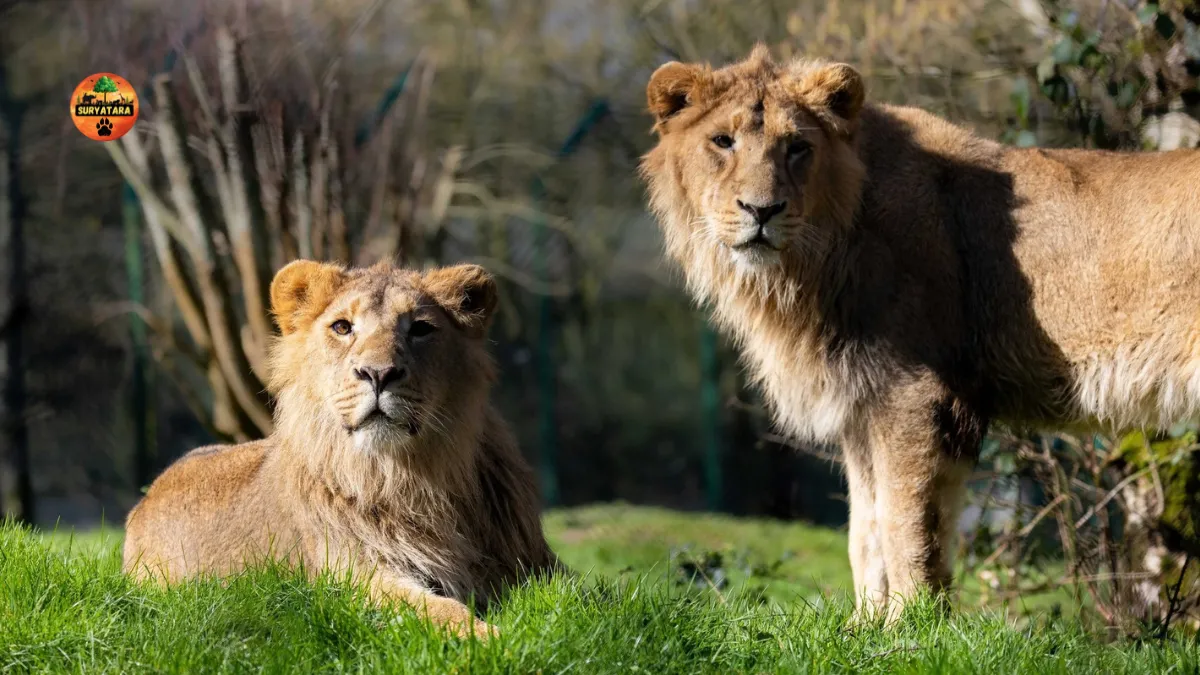
- Asiatic Lions
- Leopards
- Striped Hyenas
- Jackals
- Nilgai and other herbivores
The sanctuary plays a crucial role in providing an extended habitat for Gujarat’s 674 Asiatic lions, reducing pressure on Gir Forest and helping maintain genetic diversity.
Birdlife
With 269 recorded bird species, Barda is a paradise for birdwatchers. Both resident and migratory birds can be spotted throughout the year, especially near water sources.
Reptiles and Smaller Wildlife
The forest also supports reptiles, amphibians, and numerous smaller mammals, contributing to a balanced and thriving ecosystem.
Rich Plant Life and Biodiversity
The ecological richness of Barda Wildlife Sanctuary is reflected in its 368 documented plant species. The forest comprises dry deciduous vegetation interspersed with grasslands and riverine flora.
This diversity supports:
- Wildlife food chains
- Soil conservation
- Climate regulation
- Sustainable forest regeneration
Botanists and nature enthusiasts find Barda particularly fascinating due to its mix of coastal-influenced and inland plant species.
Best Time to Visit Barda Wildlife Sanctuary
The sanctuary operates seasonally, with closures during periods that are unsafe for both wildlife and visitors.
Safari Seasons
- Winter (October to February): Best weather, high visibility
- Summer (March to mid-June): Increased chances of wildlife sightings near water sources
- Monsoon: Safari operations remain closed
Winter is generally considered the most comfortable season for international tourists, especially visitors from the UK and US.
Nearby Attractions and Cultural Landmarks
One of Barda’s biggest advantages is its proximity to important cultural and religious sites, making it ideal for combined nature-and-heritage trips.
Places to Visit Near Barda
- Navlakha Temple – An architectural and historical landmark
- Modpar Fort – A reminder of Gujarat’s medieval history
- Nageshwar Temple – One of the twelve Jyotirlingas of Lord Shiva
Visitors often pair their jungle safari with a Dwarka–Somnath spiritual tour, creating a well-rounded travel experience.
Eco-Tourism and Conservation Focus
The barda wildlife sanctuary and jungle safari has been developed with sustainability at its core. Authorities have placed strong emphasis on:
- Controlled tourism
- Trained naturalist guides
- Habitat preservation
- Awareness about wildlife protection
The project aligns with broader conservation initiatives supported by Prime Minister Narendra Modi and Gujarat Chief Minister Bhupendra Patel, reinforcing Gujarat’s reputation as a leader in wildlife management.
Read also: How to Reach Gir National Park-Complete Travel Guide for 2025-2026
Why Barda Wildlife Sanctuary Matters
Barda is not just a tourism destination—it is a strategic conservation asset. By offering an additional habitat for lions and other wildlife, it reduces ecological pressure on Gir and strengthens long-term conservation outcomes.
For travellers, it offers:
- Authentic jungle exploration
- Fewer crowds
- Ethical wildlife tourism
- A chance to support conservation through responsible travel
Read also: Vantara and Gujarat Forest Department Join Hands to Enrich Wildlife Diversity in Barda Sanctuary
Conclusion: A New Chapter in Gujarat’s Wildlife Tourism
The opening of the Barda Wildlife Sanctuary and Jungle Safari marks a significant milestone for Gujarat’s eco-tourism sector. With its untouched landscapes, rich biodiversity, and strong conservation framework, Barda is set to become a must-visit destination for wildlife enthusiasts from India and around the world.
Whether you are a nature lover, photographer, conservation supporter, or spiritual traveller exploring Dwarka and Somnath, Barda offers a rare opportunity to experience Gujarat’s wilderness in its purest form—quiet, protected, and deeply inspiring.
As awareness grows, Barda Wildlife Sanctuary is poised to emerge as one of India’s most respected and responsibly managed jungle safari destinations.