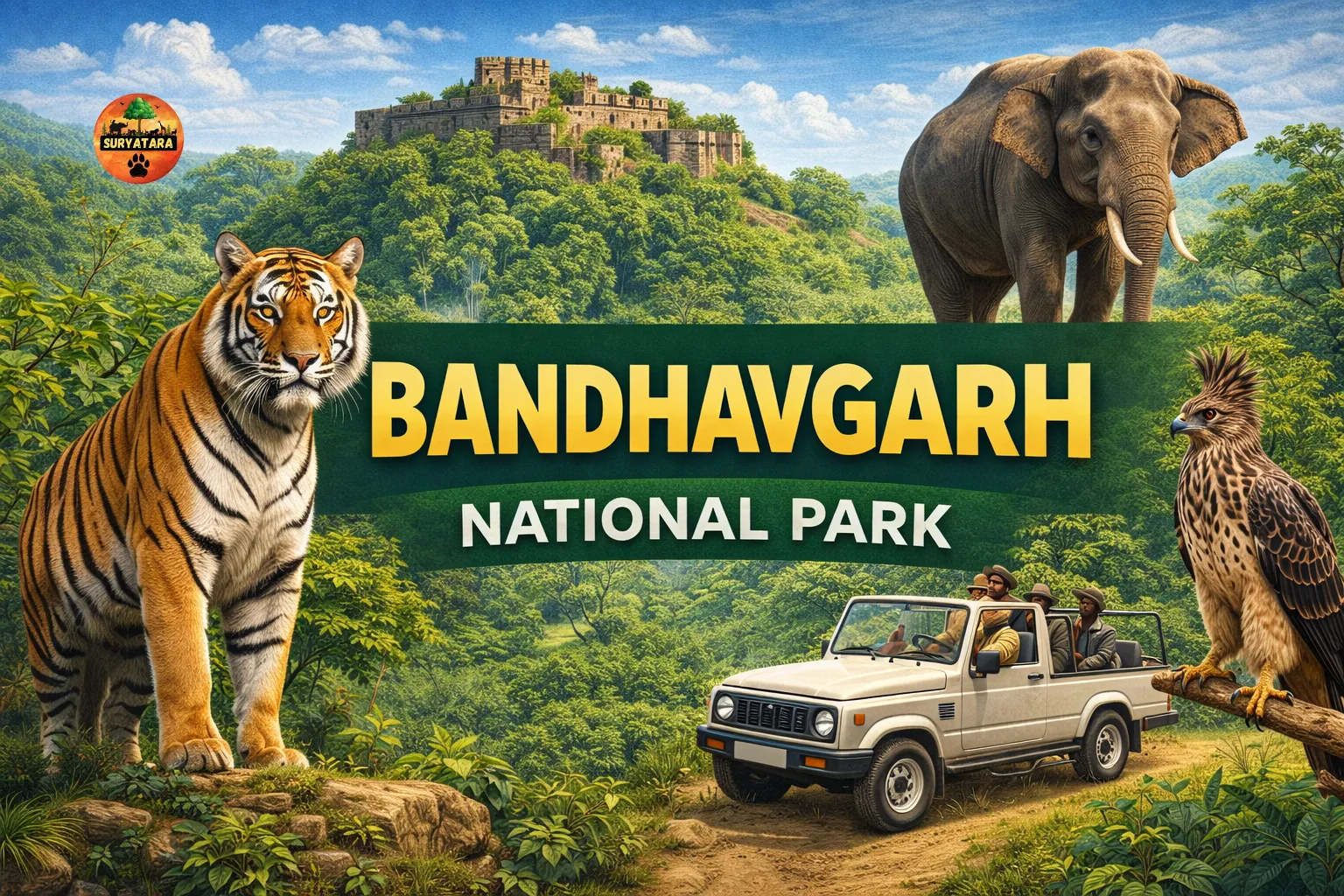
Bandhavgarh National Park, one of India’s most celebrated wildlife destinations, is witnessing a remarkable transformation that could soon redefine tourism in central India. Known globally for its high density of Royal Bengal Tigers, the Bandhavgarh Tiger Reserve is now steadily emerging as a promising habitat for wild elephants, opening up new possibilities such as elephant safaris and enhanced wildlife viewing experiences for visitors.
Over the past few years, the increasing presence and changing behaviour of wild elephants in Bandhavgarh National Park have caught the attention of forest officials, wildlife experts, and tourists alike. Once considered a region outside the traditional elephant corridor, Bandhavgarh is now home to nearly 80 wild elephants that have gradually adapted to the forest ecosystem and human activity within regulated tourism zones.
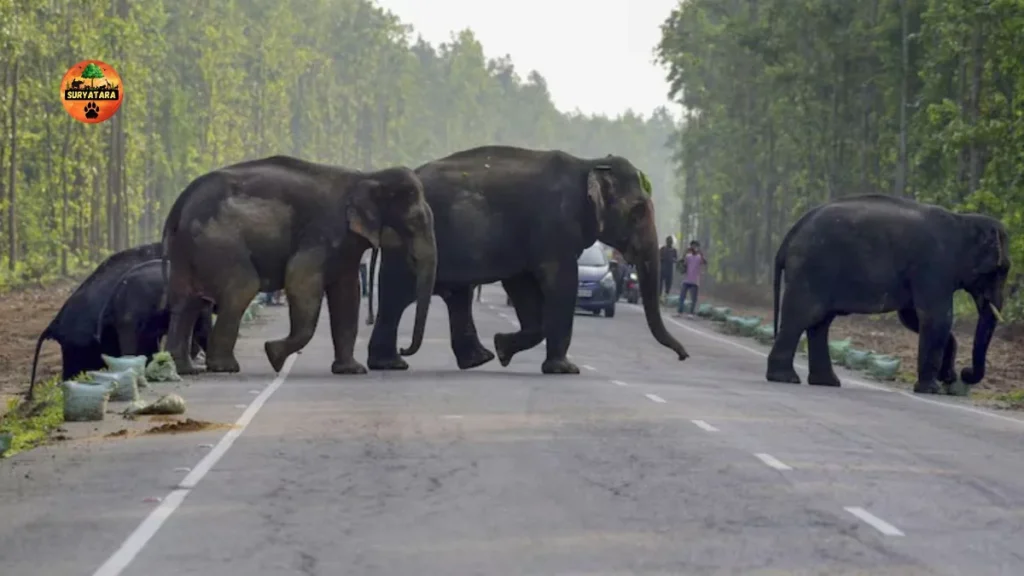
Wild Elephants Becoming a New Attraction at Bandhavgarh National Park
Tourists visiting Bandhavgarh National Park are increasingly finding themselves captivated not only by tiger sightings but also by the unexpected thrill of encountering wild elephants roaming freely through dense sal forests, open meadows, and water bodies. Much like tiger sightings, watching a herd of elephants—or even a lone tusker—move calmly through the jungle has become a deeply immersive experience for wildlife enthusiasts.
Until recently, such elephant sightings were largely associated with South Indian reserves like Nagarhole, Bandipur, or Mudumalai. However, Bandhavgarh National Park in Madhya Pradesh is now offering a similar experience, marking a significant shift in India’s wildlife tourism landscape.
Elephants Arrived in 2018, Now Fully Settled
Wild elephants first entered Bandhavgarh National Park in 2018, migrating from neighbouring forest regions. Initially, their arrival posed serious challenges for park management and tourist safety. The elephants were unfamiliar with safari vehicles and human presence, often reacting aggressively when encountering jeeps inside the reserve.
During this early phase, several incidents were reported in which elephants chased tourist vehicles for considerable distances. As a result, tourism activities in sensitive zones such as Khitauli and Tala were suspended multiple times between 2019 and 2022 to ensure visitor safety.
However, the situation has evolved significantly since then. Forest officials confirm that the elephants have now become largely accustomed to safari vehicles. They no longer perceive jeeps as threats and continue their natural activities—feeding, moving, and socialising—even when tourists are nearby.
Elephant Sightings Across All Zones of the Park
One of the most notable developments is that wild elephants are now being spotted across almost all zones of Bandhavgarh National Park. Small herds and solitary elephants are frequently seen in Khitauli, Magdhi, and Tala zones, while larger groups are often observed in Panpatha and Pataur forest ranges.
In the past week alone, multiple tourist groups reported memorable elephant sightings in Khitauli and Tala zones, describing the experience as equally thrilling as a tiger encounter. Forest guides note that elephants often appear unexpectedly along forest trails, creating moments of awe and excitement for visitors.
Population Nears 80, Says Park Management
According to official estimates from the Bandhavgarh Tiger Reserve administration, the population of wild elephants in the park has reached close to 80 individuals. These elephants are divided into several small herds, each occupying different parts of the forest depending on food availability, water sources, and seasonal movement patterns.
Importantly, park authorities emphasise that no aggressive incidents involving tourists have been reported in recent times. Despite close sightings, the elephants have shown calm behaviour, reflecting their growing comfort with the regulated safari environment.
Safety Measures Remain a Top Priority
While the improving coexistence between elephants and tourists is encouraging, park officials remain cautious. The safety of visitors continues to be a top priority at Bandhavgarh National Park.
Deputy Director of Bandhavgarh Tiger Reserve, P.K. Verma, stated that jeep drivers and guides are regularly briefed and trained to follow strict safety protocols. They are instructed to maintain a safe distance from elephants at all times and to avoid blocking their movement or causing any disturbance.
“Our teams remain on high alert. Guides and drivers are constantly reminded that elephants, despite appearing calm, are still wild animals. Maintaining distance is essential to prevent any risk to tourists or the animals themselves,” Verma explained.
These measures have played a key role in ensuring peaceful interactions and have helped build confidence among visitors eager to witness elephants in their natural habitat.
From Conflict to Coexistence: A Learning Curve
The journey from conflict to coexistence has not been easy. When elephants first arrived in Bandhavgarh National Park, their unfamiliarity with the landscape and human presence led to several tense situations. Temporary tourism bans were necessary to allow the animals to settle without added stress.
Forest officials used this time to study elephant movement patterns, feeding behaviour, and interaction with other wildlife, including tigers. Over time, the elephants established stable ranges and adapted remarkably well to the forest environment.
Today, experts believe that the elephants have become an integral part of the Bandhavgarh ecosystem, contributing to forest regeneration through seed dispersal and natural clearing of vegetation.
Growing Demand for Project Elephant in Madhya Pradesh
With the rising elephant population, conservationists and local stakeholders are renewing their long-standing demand for the implementation of Project Elephant in Madhya Pradesh. Similar to Project Tiger, which has played a crucial role in protecting and increasing tiger populations, Project Elephant focuses on the conservation, management, and welfare of wild elephants.
Advocates argue that extending Project Elephant to Bandhavgarh National Park would bring structured monitoring, improved habitat management, and enhanced conflict mitigation strategies. It could also promote elephant-focused tourism, diversifying attractions beyond tigers and benefiting local economies.
Read also: Where is Madhav Tiger Reserve Located? Complete Guide for Visitors
Potential for Elephant Safari at Bandhavgarh National Park
The growing comfort of elephants with safari vehicles has sparked discussions about the potential introduction of elephant safaris in Bandhavgarh National Park. If implemented responsibly, such safaris could offer visitors a unique opportunity to observe elephants closely while maintaining ethical wildlife tourism standards.
Forest officials clarify that no formal decision has been made yet, but the idea is under consideration. Any future initiative would prioritise animal welfare, visitor safety, and ecological balance.
A New Chapter for Wildlife Tourism
The presence of wild elephants has added a new dimension to Bandhavgarh National Park’s global appeal. International tourists, especially from the UK and US, are increasingly seeking diverse wildlife experiences in India beyond tiger safaris alone. The possibility of witnessing elephants, tigers, leopards, and other species in one reserve enhances Bandhavgarh’s standing as a comprehensive wildlife destination.
As conservation efforts continue and elephants further integrate into the forest landscape, Bandhavgarh National Park stands at the threshold of a new era—one where coexistence, conservation, and responsible tourism move forward hand in hand.
Read also: 19 Tigers Dead in 3 Months, Maharashtra to Launch Suryatara Sanctuary for Wildlife Conservation
Conclusion
Bandhavgarh National Park’s evolving relationship with wild elephants is a powerful example of how nature can adapt when given time, space, and protection. From initial conflict to peaceful coexistence, the journey underscores the importance of patience, scientific management, and community awareness.
With nearly 80 elephants now calling the park home, growing tourist interest, and renewed calls for Project Elephant, Bandhavgarh is poised to become not just India’s tiger capital, but also a significant centre for elephant conservation in central India. The coming years may well see this iconic reserve offering one of the most diverse and enriching wildlife experiences in the country.