Royal Botanic Gardens Victoria history begins with a vision of creating a living sanctuary where science, landscape design, and the natural world could merge to enrich public life. Established in the mid-19th century, the gardens have grown into one of Australia’s most iconic cultural and environmental institutions. Their story spans decades of scientific breakthroughs, social change, and conservation efforts that have shaped the identity of Melbourne and influenced global botanical research. Understanding how these gardens came to be reveals far more than the evolution of a landscape; it uncovers the narrative of a nation learning to interpret, protect, and celebrate its natural heritage.
From their early foundations in colonial Australia to their present status as world-renowned research and conservation hubs, the Royal Botanic Gardens Victoria history offers insight into visionary leadership, ecological transformation, and continuous adaptation to a changing world.
A Living Timeline: Early Foundations and Colonial Ambitions
Australia in the 1840s was a land of rapid expansion, with Melbourne emerging as a prominent city after the discovery of gold. It was during this transformative era that Governor Charles La Trobe recognized the need to create a public garden reflecting both European botanical traditions and the unique flora of the continent. The land selected for the gardens was largely swampy and covered with native vegetation, yet it held immense potential.
By 1846, the site was officially reserved for public use, marking the beginning of what would become a centuries-long narrative of botanical exploration. The earliest years were focused on clearing land, creating pathways, and establishing the first nurseries. These foundational efforts were critical in shaping the future direction of the gardens.
The appointment of botanist Ferdinand von Mueller in 1857 marked a pivotal moment in the Royal Botanic Gardens Victoria history. Von Mueller brought scientific vision and a global perspective, assembling extensive plant collections and establishing the National Herbarium of Victoria. His dedication to research laid the groundwork for the gardens’ future as a center of scientific excellence.
Table: Key Milestones in the Royal Botanic Gardens Victoria History
| Year | Milestone | Significance |
|---|---|---|
| 1846 | Land reserved for public gardens | Official beginning of the gardens’ development |
| 1857 | Ferdinand von Mueller appointed director | Established major scientific foundations and herbarium |
| 1873 | William Guilfoyle becomes director | Introduced artistic landscape design and reshaped garden aesthetics |
| 1900s | Expansion of plant collections | Broadened global botanical representation |
| 1970s | Conservation becomes central focus | Shift toward environmental preservation and native flora |
| 2015 | Launch of Melbourne Gardens Master Plan | Ensured sustainable development for future generations |
The Vision of Ferdinand von Mueller and the Growth of Scientific Excellence
The appointment of Ferdinand von Mueller was instrumental in shaping the Royal Botanic Gardens Victoria history. As a German-born botanist with a passion for discovery, he saw the gardens not merely as a recreational space but as a scientific institution. He embarked on extensive expeditions across Australia, collecting specimens that would form the core of the National Herbarium.
Under von Mueller’s leadership:
- Thousands of native plant species were cataloged.
- International plant exchanges expanded the gardens’ diversity.
- Scientific documentation became a central mission.
However, his vision was primarily scientific and structural, with less emphasis on landscape design. This would change dramatically with the arrival of the next key figure in the gardens’ evolution.
Landscape Transformation Under William Guilfoyle
In 1873, William Guilfoyle succeeded von Mueller as director, bringing a radically different approach. Where von Mueller saw botanical order, Guilfoyle saw artistic possibility. His design philosophy reshaped the landscape into a picturesque, flowing garden that emphasized natural beauty without compromising scientific integrity.
Guilfoyle’s legacy includes:
- Winding pathways that encourage exploration
- Ornamental lakes and sweeping lawns
- The introduction of subtropical species to enhance visual diversity
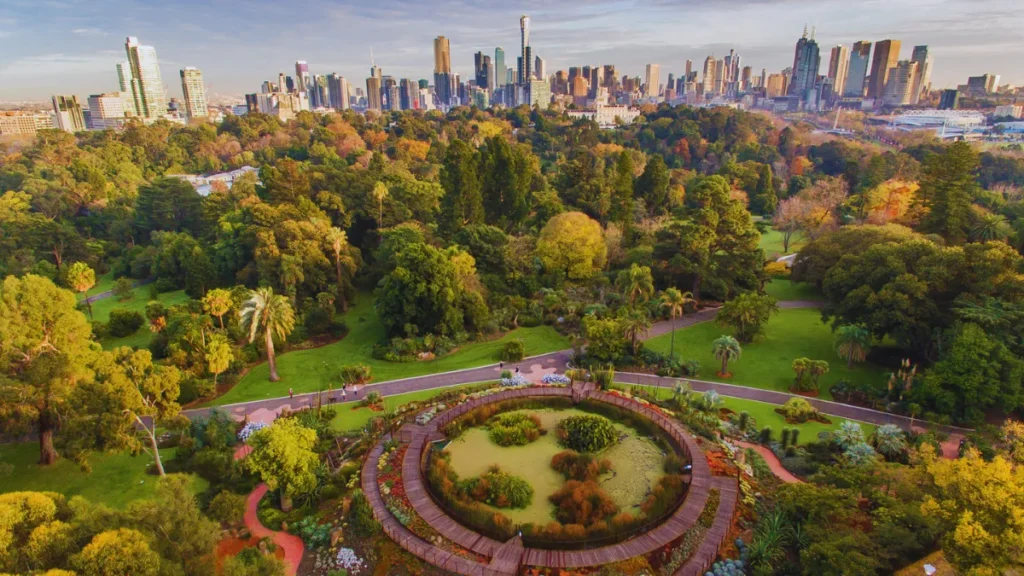
- Elevated viewpoints offering panoramic garden vistas
Under his leadership, the gardens became internationally admired for their design sophistication. The harmony between science and landscape artistry—established during this era—remains a defining feature of the Royal Botanic Gardens Victoria history.
The Gardens in the 20th Century: Conservation, Culture, and Community
As Melbourne grew into a major metropolitan city, the gardens evolved to reflect changing societal values. The early 20th century saw ongoing expansion of plant collections and the development of educational programs. By the mid-1900s, conservation emerged as a driving force.
The gardens responded by:
- Creating specialized collections of endangered species
- Collaborating on national and international conservation programs
- Conducting major ecological studies focused on Australian biodiversity
During this period, the gardens also became an essential cultural space. Musical concerts, art exhibitions, and public festivals became annual traditions, strengthening the gardens’ identity as a community hub.
One of the turning points in the Royal Botanic Gardens Victoria history was the recognition of Australia’s First Peoples. Insights from Indigenous communities enriched scientific understanding and helped reshape the gardens’ interpretative approach. Today, Aboriginal knowledge influences conservation strategies and public storytelling within the gardens.
Melbourne Gardens and Cranbourne Gardens: A Dual Legacy
Royal Botanic Gardens Victoria oversees two major sites: the Melbourne Gardens and the Cranbourne Gardens. Together, they create a dynamic blend of heritage landscapes and modern ecological innovation.
Melbourne Gardens
Located near the heart of the city, Melbourne Gardens reflect more than 175 years of horticultural evolution. Stunning ornamental plantings, lakes, glasshouses, and research facilities coexist within a seamlessly curated landscape.
Cranbourne Gardens
Established later, the Cranbourne Gardens focus on Australian native flora and ecological conservation. The Australian Garden within Cranbourne is a globally celebrated example of contemporary landscape design, emphasizing sustainability and natural systems.
Both gardens play unique roles in botanical education, environmental advocacy, and global research partnerships.
Understanding the Royal Botanic Gardens Victoria History Through Ecological Innovation
In recent decades, the gardens have become internationally recognized for pioneering environmental research. Climate change adaptation, seed banking, landscape restoration, and species recovery programs are now integral to their mission.
The landscape is also actively adapting to Melbourne’s evolving climate. The 2015 Melbourne Gardens Master Plan introduced long-term strategies to protect plant species and transition the landscape toward climate resilience. This approach has become a defining chapter in the Royal Botanic Gardens Victoria history.
Examples of ecological initiatives include:
- Research into drought-resistant species
- Water-saving irrigation technologies
- Protection of threatened Australian plant habitats
- Scientific collaborations with global conservation bodies
Through these efforts, the gardens continue to play a crucial role in preserving biodiversity for future generations.
Art, Education, and Public Engagement
Over the years, the gardens have expanded their public programs to include:
- Guided tours exploring botany and ecology
- Children’s discovery centers
- Art installations inspired by the natural world
- Seasonal exhibitions highlighting rare and exotic species
These programs reflect the gardens’ ongoing commitment to public learning. They also underscore how the Royal Botanic Gardens Victoria history is deeply intertwined with the cultural fabric of Melbourne.
The National Herbarium of Victoria: A Repository of Scientific Heritage
A cornerstone of the gardens’ scientific work is the National Herbarium of Victoria, founded during von Mueller’s tenure. It holds:
- Over 1.5 million preserved plant specimens
- Extensive botanical archives and historical documents
- Critical data used for taxonomy, ecology, and evolutionary studies
The herbarium is one of the largest in the Southern Hemisphere and serves as a vital resource for researchers worldwide. Its collections provide essential insights into environmental change, species diversity, and ecological history.
Indigenous Knowledge and Cultural Reconnection
The gardens acknowledge the deep relationship between Aboriginal peoples and the land. In recent years, initiatives have focused on:
- Integrating Indigenous ecological perspectives
- Conserving culturally significant plants
- Supporting community storytelling and cultural events
This holistic approach honors both scientific methodology and Indigenous heritage, enriching the Royal Botanic Gardens Victoria history with new layers of meaning.
The Gardens in the Modern Era: Sustainability and Global Leadership
Today, the gardens are internationally recognized for their leadership in environmental science, conservation, and landscape design. Their work includes:
- Climate resilience planning
- Genetic research on rare plant species
- Public campaigns promoting sustainable gardening
- Worldwide partnerships supporting ecosystem restoration
Their scientific and cultural programs attract visitors, researchers, and students from across the globe. The balance of historical legacy and contemporary innovation is what sets the gardens apart.
Also read: Buckingham Palace: A Living Symbol of Britain’s Royal Heritage
Why the Royal Botanic Gardens Victoria History Matters Today
The gardens’ history is not merely a record of past achievements; it serves as a foundation for future progress. In the context of modern environmental challenges, their role has become more vital than ever. They demonstrate how botanical institutions can uphold heritage while driving forward-thinking research and ecological responsibility.
Through more than 175 years of transformation, the Royal Botanic Gardens Victoria history reveals a story of resilience, creativity, and unwavering dedication to understanding and protecting the natural world. From colonial-era ambition to global conservation leadership, the gardens continue to evolve while preserving the principles that shaped their origins.
Also read: Five Visa-Free Travel Destinations for Indian Tourists Offering Perfect January Weather
Conclusion
The Royal Botanic Gardens Victoria history encompasses a timeline rich with scientific discovery, artistic innovation, cultural evolution, and environmental leadership. From the groundwork laid by early visionaries like Ferdinand von Mueller and William Guilfoyle to the modern era of climate-focused research, the gardens reflect centuries of growth and adaptation.
Their legacy lies not only in their spectacular landscapes but in their enduring commitment to education, conservation, and community. As living museums and ecological sanctuaries, the gardens remain an essential part of Australia’s identity and a testament to the power of nature-inspired knowledge.
With every new generation of visitors and researchers, the story of the gardens continues to grow—rooted in history, strengthened by science, and flourishing with hope for the future.