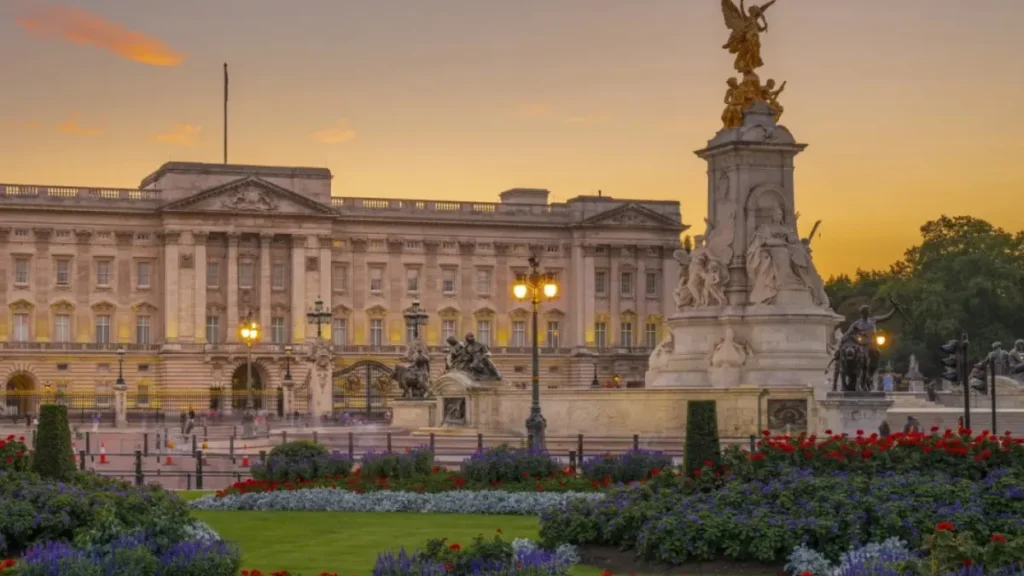
Buckingham Palace: stands at the heart of London as one of the world’s most recognizable royal residences, a working palace that has evolved across centuries while continuing to represent the cultural and constitutional identity of the United Kingdom. As the official London residence of the British monarch, it remains a place where history, tradition, and national ceremonies converge, attracting millions of visitors every year. From its architectural grandeur to the significance of its state rooms, Buckingham Palace offers a compelling narrative of monarchy, heritage, and public life.
The Historical Evolution of Buckingham Palace
The story of Buckingham Palace begins in the early 18th century, long before it became the central seat of the monarchy. Originally known as Buckingham House, it was built in 1703 for the Duke of Buckingham as a large townhouse. Its location, on what was then the rural outskirts of London, would later become strategically important as the city expanded.
The transformation of Buckingham House into a royal residence began in 1761 when it was acquired by King George III for Queen Charlotte. The property was subsequently named “The Queen’s House” and served as a private retreat for the royal family. Over time, successive monarchs initiated expansions, culminating in a magnificent palace that reflected the rising prestige and power of the British Empire.
King George IV played a pivotal role in reshaping the residence into a grand palace. His vision led to extensive renovations starting in 1820 under architect John Nash, who introduced neoclassical elements that defined the building’s modern appearance. The façade, courtyard, and state apartments were redesigned to create a space suitable for official functions and ceremonial occasions.
Queen Victoria, who ascended the throne in 1837, was the first monarch to use Buckingham Palace as her official London residence. Under her reign, additional wings, including the now-iconic front facing The Mall, were constructed. The palace continued to grow in prominence as it became the backdrop for public celebrations, national mourning, and royal milestones.
Buckingham Palace as a Working Royal Residence
Although Buckingham Palace is often perceived primarily as a symbol of luxury and grandeur, it remains an active working environment. It hosts official events, receptions, and meetings involving heads of state, diplomats, and international dignitaries. The palace also serves as the administrative headquarters of the monarchy, with staff coordinating public engagements, charitable work, and ceremonial duties.
The State Rooms—ornate spaces used for official functions—play a central role in diplomatic hospitality. Decorated with artworks, historic furnishings, and precious artifacts, these rooms showcase the cultural legacy of the monarchy. They open to the public during specific months of the year, allowing visitors a glimpse of the craftsmanship and ceremonial spaces traditionally reserved for state occasions.
Beyond the State Rooms, Buckingham Palace includes private apartments, offices, a post office, a doctor’s clinic, and even a swimming pool. With over 775 rooms, the palace is a self-contained community, supporting daily royal and administrative activity.
Key Facts About Buckingham Palace
Below is a simple, informative table presenting essential details about Buckingham Palace:
| Feature | Information |
|---|---|
| Location | Westminster, London, United Kingdom |
| Original Construction | 1703 (as Buckingham House) |
| Became Official Royal Residence | 1837 |
| Architectural Style | Neoclassical |
| Number of Rooms | 775 |
| Notable Areas | State Rooms, Ballroom, Throne Room |
| Public Opening | State Rooms open seasonally |
| Primary Function | Official residence and administrative headquarters of the British monarch |
Architectural Grandeur and Interior Design
The architecture of Buckingham Palace is a testament to the evolving tastes of British royalty. Its neoclassical façade, with ornate detailing and symmetrical lines, sets the tone for the elegance found within. The central balcony, perhaps the palace’s most famous exterior feature, has become synonymous with major public appearances by the royal family during national celebrations.
Inside the palace, the State Rooms represent the finest craftsmanship. The Grand Staircase, with its sweeping design and portrait-lined walls, creates an immediate impression of ceremonial splendor. The Throne Room, designed for formal receptions and investitures, features rich crimson fabrics, gilded molding, and historic thrones used during significant occasions.
Among all the spaces, the Ballroom stands out as the largest and one of the most important rooms in Buckingham Palace. Completed in the mid-19th century, it hosts state banquets attended by world leaders. The richly decorated ceilings, chandeliers, and symbolic motifs reflect the monarchy’s role in British history and diplomacy.
The Royal Collection, one of the largest and most important art collections in the world, is displayed throughout the palace. Paintings by artists such as Rembrandt, Vermeer, and Canaletto, along with exquisite sculptures, porcelain, and tapestries, align the palace with centuries of artistic heritage.
The Gardens of Buckingham Palace
Often overshadowed by the grandeur of the palace itself, the gardens provide a contrasting natural sanctuary in central London. Covering more than 39 acres, the palace gardens feature a diverse array of flora, a lake, winding pathways, and meticulously maintained lawns.
These gardens host the annual royal garden parties, where thousands of guests are invited to recognize contributions to society, charity, and public service. The landscape design incorporates both formal and informal elements, preserving the historical charm while supporting wildlife and environmental conservation.
Buckingham Palace and National Ceremonies
Buckingham Palace plays a vital role in the ceremonial life of the United Kingdom. It is here that many national events unfold, making it a central stage for moments of unity, celebration, and remembrance.
Changing the Guard
One of the most recognizable traditions connected with Buckingham Palace is the Changing of the Guard ceremony. Taking place at the forecourt, it symbolizes the continuity and discipline of the British military. The precise movements, regimental music, and vibrant uniforms attract large audiences, offering a glimpse of royal protocol.
State Visits
During state visits, the palace becomes a center of diplomacy. Ceremonial arrivals, banquets, and official meetings take place within its historic rooms. These events strengthen international relations and highlight the monarchy’s role in modern governance.
Royal Celebrations
Buckingham Palace is frequently associated with royal weddings, jubilees, birthdays, and commemorative events. The central balcony provides a symbolic platform where monarchs and family members appear before the public during significant national moments.
Also read: Five Visa-Free Travel Destinations for Indian Tourists Offering Perfect January Weather
Cultural Influence and Global Recognition
Buckingham Palace has transcended its role as a royal residence to become a global cultural icon. From films and literature to documentaries and artworks, the palace often appears as a symbol of British identity. Its association with respected traditions and national events reinforces its influence on public imagination around the world.
The palace also contributes significantly to tourism in the United Kingdom. Millions of visitors gather at its gates each year, drawn by curiosity, admiration, and the timeless allure of royal history. During the months when the State Rooms open, visitors have the rare opportunity to walk through some of the most important ceremonial halls in Britain.
The Future of Buckingham Palace
While deeply rooted in tradition, Buckingham Palace continues to adapt to the modern era. Ongoing conservation and renovation efforts focus on preserving its architectural integrity while updating essential infrastructure such as heating, electrical systems, and accessibility features. These improvements ensure that the palace remains functional, safe, and sustainable for future generations.
The role of the monarchy itself has evolved over time, and Buckingham Palace reflects this evolution. As the administrative heart of the royal household, it continues to support charitable work, international relations, and public engagement. The palace stands as a constant in a rapidly changing world, symbolizing continuity, duty, and national unity.
Also read: Taronga Zoo Sydney: A Complete Visitor Guide for an Unforgettable Wildlife Experience
A Landmark of History and Legacy
Through centuries of transformation, Buckingham Palace has maintained its status as a central symbol of Britain’s monarchy and heritage. It has witnessed national celebrations, historical milestones, and generational shifts, all while preserving its architectural splendor and ceremonial significance. As both a working palace and a cultural landmark, it continues to captivate global audiences and inspire a sense of connection to the enduring traditions of the United Kingdom.
Whether viewed as a seat of political symbolism, an architectural masterpiece, or a historic home filled with stories, Buckingham Palace remains an irreplaceable part of British identity. Its legacy—shaped by monarchs, architects, artists, and public events—continues to unfold, offering new chapters in a narrative that spans more than three centuries.