Pench National Park stands among India’s most celebrated wildlife reserves, admired for its thriving biodiversity, dramatic landscapes, and a legacy that inspired Rudyard Kipling’s timeless classic The Jungle Book. Spanning the central Indian states of Madhya Pradesh and Maharashtra, this protected forest is more than just a tiger habitat—it is a living ecosystem where nature, history, and conservation come together.
For travellers, wildlife photographers, conservationists, and nature lovers from across the world, Pench National Park offers an authentic jungle experience that feels both raw and deeply immersive. With its high tiger density, scenic river systems, and well-managed safaris, the park has steadily gained global recognition, particularly among visitors from the UK and the United States seeking responsible wildlife tourism in India.
A Glimpse into the History of Pench National Park
The forests of the Pench region have been referenced in historical records since ancient times. These woodlands once served as hunting grounds for local rulers, particularly the Gond and Maratha dynasties. Recognising its ecological importance, the area was declared a wildlife sanctuary in 1977.
In 1983, Pench was officially granted national park status, marking a major milestone in central India’s conservation journey. Later, it was incorporated into India’s prestigious Project Tiger initiative, earning the title of Pench Tiger Reserve. Since then, the park has played a crucial role in protecting Bengal tigers and restoring forest ecosystems that were once under threat.
Location and How to Reach Pench National Park
Pench National Park is strategically located along the southern border of Madhya Pradesh, extending into parts of Maharashtra. The park lies mainly within the Seoni and Chhindwara districts of Madhya Pradesh, with its southern buffer spreading into Nagpur district of Maharashtra.
Nearest City
- Nagpur – approximately 90 kilometres away
By Air
The closest airport is Dr. Babasaheb Ambedkar International Airport, Nagpur, which is well connected to major Indian cities such as Delhi, Mumbai, Bengaluru, and Hyderabad. International connections make it convenient for overseas travellers as well.
By Rail
Nagpur Railway Station is the nearest major railhead, serving as a key junction on India’s railway network.
By Road
From Nagpur, Pench National Park is easily accessible by taxi, private car, or state-run buses. The drive takes around 2 to 2.5 hours and offers scenic views of rural Maharashtra and forested landscapes.
Key Features That Make Pench National Park Unique
One of the defining features of Pench National Park is the Pench River, which flows through the heart of the forest and divides the reserve into eastern and western zones. This river system supports rich flora and fauna and enhances the park’s scenic appeal.
High Tiger Density
Pench is renowned for its healthy population of Royal Bengal Tigers. Thanks to effective conservation practices, the chances of tiger sightings here are significantly higher compared to many other reserves.
Diverse Landscapes
Visitors are treated to a varied terrain that includes:
- Dense teak forests
- Bamboo thickets
- Open grasslands
- Seasonal streams and waterholes
This diversity supports a wide range of wildlife and offers excellent opportunities for photography.

Wildlife and Birdlife at Pench National Park
Pench National Park is home to an impressive array of mammals, reptiles, and birds, making it a biodiversity hotspot in central India.
Major Mammals
- Royal Bengal Tiger
- Indian Leopard
- Sloth Bear
- Wild Dog (Dhole)
- Indian Gaur (Bison)
- Sambar Deer
- Chital (Spotted Deer)
- Nilgai
- Wild Boar
Reptiles
The park also shelters several reptile species, including pythons, cobras, kraits, and monitor lizards.
Birdlife
Bird enthusiasts will find Pench especially rewarding, with over 250 recorded bird species, such as:
- Indian Roller
- Malabar Pied Hornbill
- Crested Serpent Eagle
- Grey-headed Fish Eagle
- Peafowl
During winter, migratory birds add to the park’s avian diversity.
Jungle Safari Experience in Pench National Park
A visit to Pench National Park is incomplete without embarking on a jungle safari. The park offers Jeep Safaris and Canter Safaris, both conducted under the supervision of trained forest guides.
Safari Timings
- Morning Safari
- Evening Safari
Timings vary slightly depending on the season.
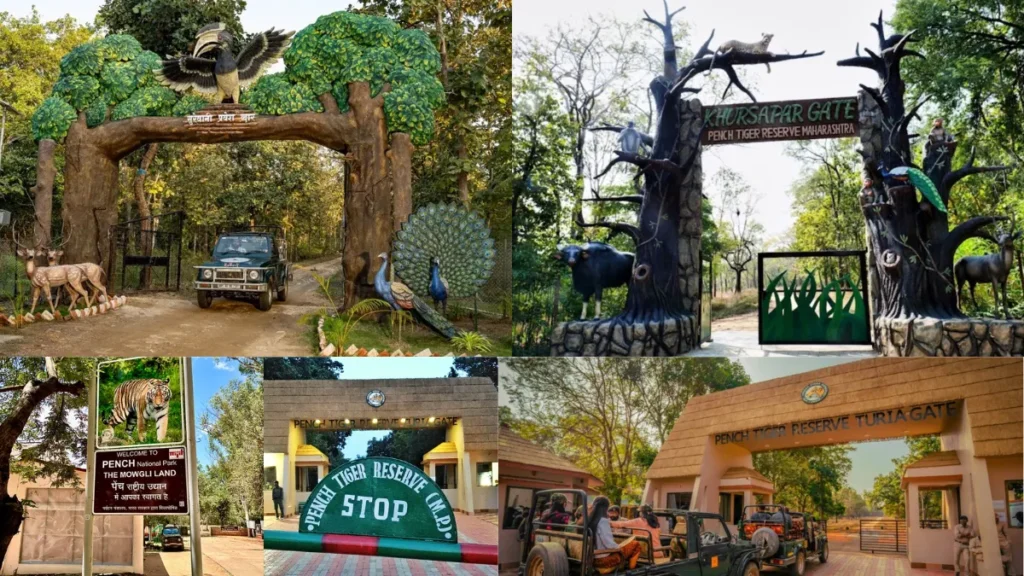
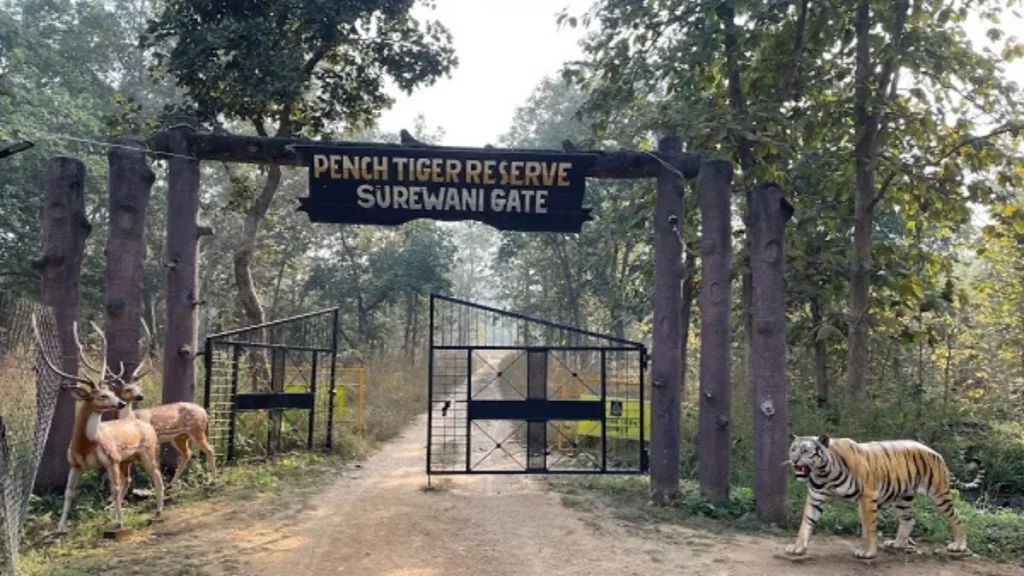
Major Entry Gates
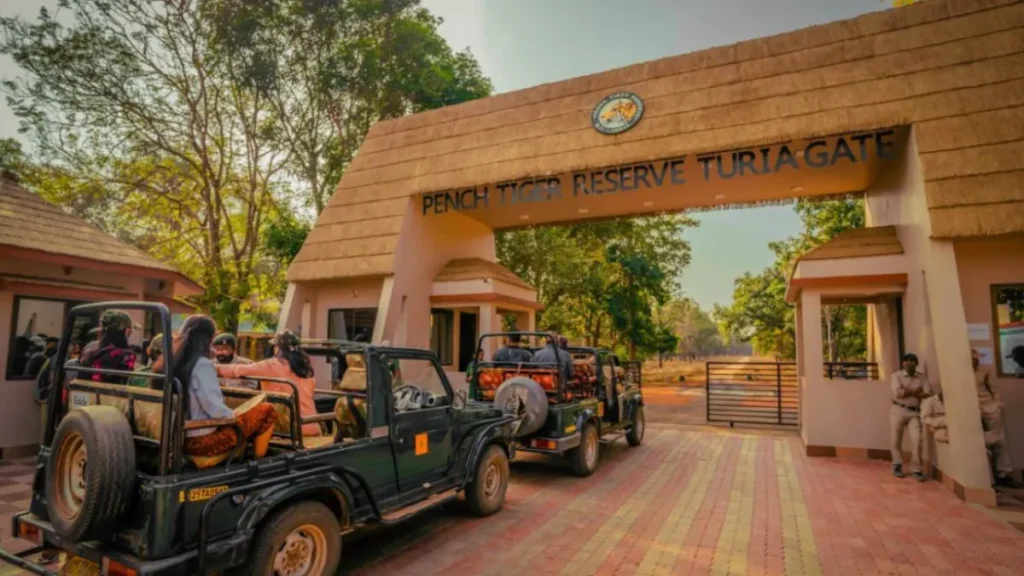
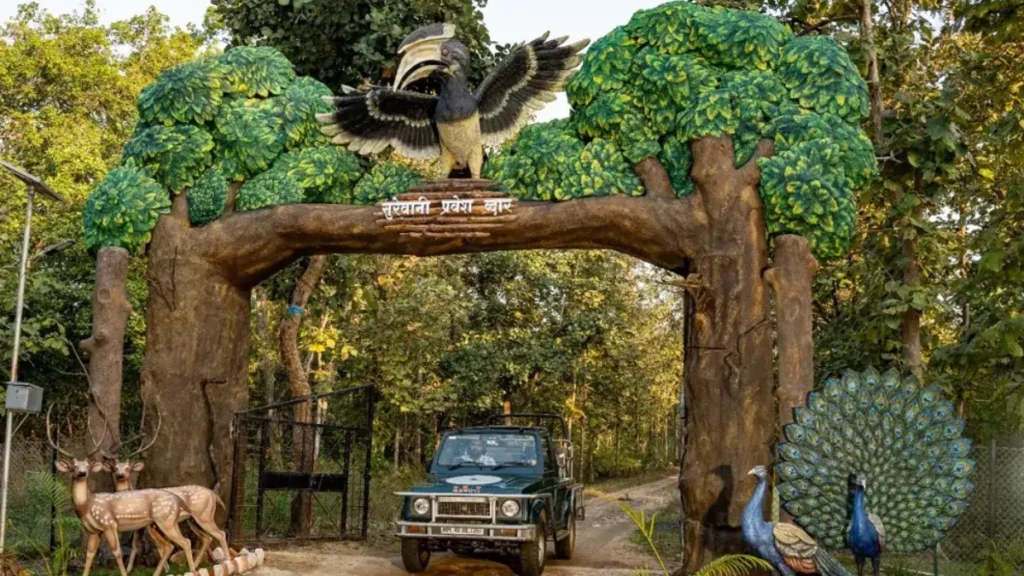
- Turia Gate (most popular and well-developed)
- Karmajhiri Gate
- Silari Gate
Each gate offers a unique forest route and wildlife viewing experience.
Safari Booking Tip
Safari slots are limited and in high demand, especially during peak months. Advance online booking is strongly recommended to avoid disappointment.
Best Time to Visit Pench National Park
Pench National Park remains open to visitors from October to June each year.
- February to April is widely considered the best period for tiger sightings, as animals frequent water sources during warmer months.
- October to January offers pleasant weather and lush greenery, ideal for birdwatching and photography.
- The park remains closed during the monsoon season (July to September) to allow forest regeneration and ensure visitor safety.
Accommodation Options Near Pench National Park
Pench offers a wide range of accommodation choices, catering to luxury travellers as well as budget-conscious visitors. Most resorts are located near the main safari gates and focus on eco-friendly tourism.
Popular Stays
- Pench Tribal Camp
- Jungle Book Safari Lodge
- Taj Baghvan Safari Lodge
These properties provide comfortable stays, guided nature walks, cultural experiences, and curated safaris, making them especially popular among international tourists.
Important Travel Tips for Visitors
- Carry a good camera and binoculars for wildlife spotting
- Wear neutral or light-coloured clothing to blend with the surroundings
- Follow the instructions of forest guides at all times
- Maintain silence during safaris and avoid disturbing animals
- Carry sun protection and stay hydrated
Responsible tourism plays a vital role in preserving Pench National Park’s delicate ecosystem.
Conservation Significance of Pench National Park
Beyond tourism, Pench National Park holds immense conservation value. It serves as a critical corridor connecting other tiger reserves such as Kanha and Satpura, enabling genetic diversity among tiger populations. The park’s success has become a model for wildlife conservation in India and is often cited in global conservation discussions.
Also read: How to Reach Ranthambore National Park: Complete Travel Guide for First-Time Visitors
Conclusion
Pench National Park is not merely a tiger reserve-it is a symbol of India’s commitment to wildlife conservation and sustainable tourism. From its legendary connection to The Jungle Book to its thriving tiger population and scenic landscapes, Pench delivers an unforgettable jungle experience.
Whether you are a first-time visitor to India or a seasoned wildlife explorer, Pench National Park promises adventure, tranquillity, and a deep connection with nature. For anyone planning a meaningful wildlife journey, this iconic national park deserves a prominent place on the travel list.